
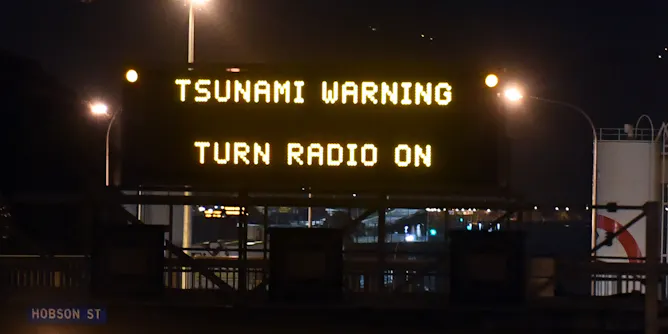
The threat of any tsunami following an earthquake can take time to assess, so it’s important people who live in risk zones are ready for any event.
Articles on Earthquakes
Displaying 241 - 260 of 336 articles
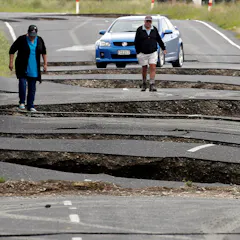
Early analysis of the New Zealand earthquake shows it may be a complex event, involving several faults on the South Island.

Sonification is a technique for converting data into sound. It could transform the study of distant worlds.

Tents and food parcels are one thing, ready-built accommodation is another.
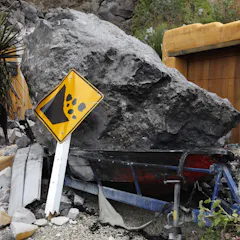
A new study of the 2011 Christchurch earthquake shows boulders from rockfalls fell much further than in earlier quakes that happened before humans arrived and changed the landscape.
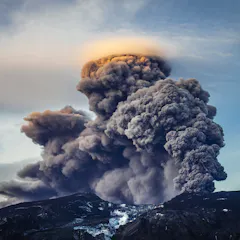
One of Iceland’s most active volcanoes is showing signs of waking up after nearly 100 years.
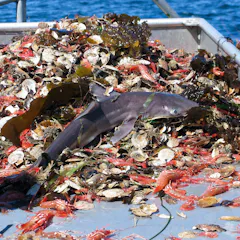
Large-scale natural experiments such as oil spills, tsunamis and climate change are things you wouldn’t want to do on purpose. But that doesn’t mean they’re not scientifically useful experiments too.
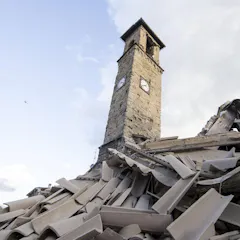
Amatrice’s still-standing ancient clocktower has become an iconic image from last week’s deadly earthquake. But it is not the only unusual survivor.
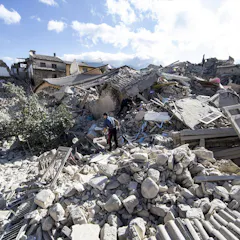
Yesterday’s earthquake in central Italy has resulted in many deaths. But it is not the earthquake that claims victims but our built infrastructure. Why is this so?
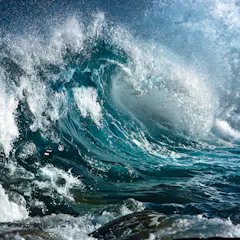
Scientists in Japan have discovered a way to ‘hear’ storms on the other side of the planet and use them to study the Earth’s crust.
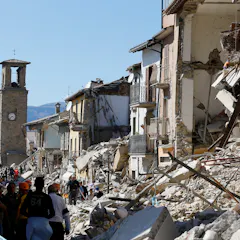
There are already early warning systems for earthquakes, but advances in seismology provide hope that experts will be able to predict when new ones will occur.
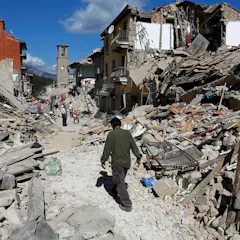
Central Italy has been hit by a magnitude 6.2 earthquake, only seven years after a similar devastating quake in the region.
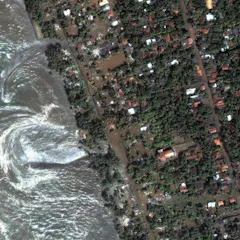
Australia is surrounded by ocean, so is not immune to the effects of tsunamis. But how significant is the risk?
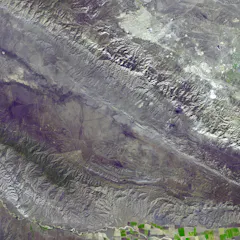
Fifty years on from a groundbreaking paper, geophysicists have progressed from believing continents never moved to thinking that every movement may leave a lasting memory on our planet.
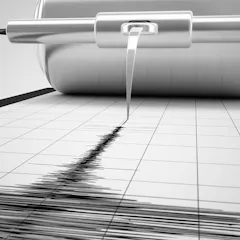
Expect $33 billion of damage … and that’s just for starters.
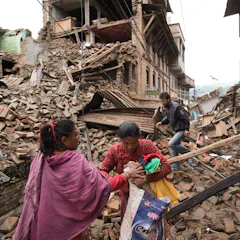
Over 8,500 were killed in the 2015 Nepal earthquake, so how is the country coping?
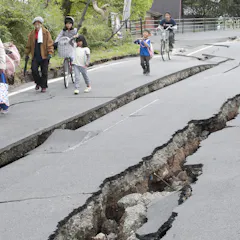
When two major earthquakes occur within days of each other thousands of kilometres apart, it can look like they’re connected. But are they? Here’s what the science says.
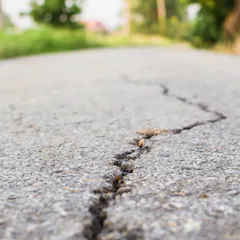
The earth around you might seem static but it’s constantly in motion. We need to track this motion in fine detail if we’re to keep our GPS networks up to date.
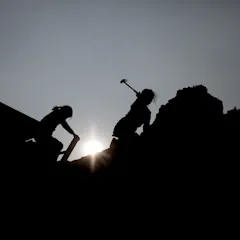
The destruction wrought by two earthquakes in Nepal opened up a major opportunity for child traffickers.
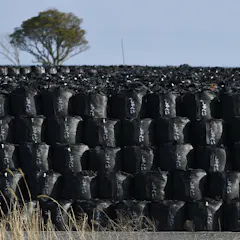
The nuclear operator was nowhere near adequately covered for the disaster. And it’s not just a Japanese problem.
Top contributors
-

Professor of Earthquake Science, The University of Melbourne
-
Earthquake Scientist, Monash University
-
Professor in Earth Sciences, Nanyang Technological University, Singapore, and Emeritus Professor of Mineral Physics, University of Cambridge
-
Adjunct Research Fellow, Curtin University
-
Reader in Physical Geography and Natural Hazards, Coventry University
-
Professor of Geophysics, Durham University
-
Professor, Australian National University
-
Honorary Professor of Tsunami Research, PANGEA Research Centre, UNSW Australia, UNSW
-
Honorary Fellow in Structural Geology and Tectonics, The University of Melbourne
-
Senior Scientist in Disaster and Climate Risk at Earth Sciences NZ & Senior Research Fellow (adjunct), Humanitarian Emergency and Disaster Management, Charles Darwin University
-
Professor of Geophysics and Department Head, Colorado State University
-
Redmond Barry Distinguished Professor Emeritus, The University of Melbourne
-
PhD Candidate & Researcher, School of Architecture, Université de Montréal
-
Honorary Professor of Hazards and Disaster Risk Sciences, University of Sydney
-
PhD Candidate in the Department of Earth Sciences, Durham University