
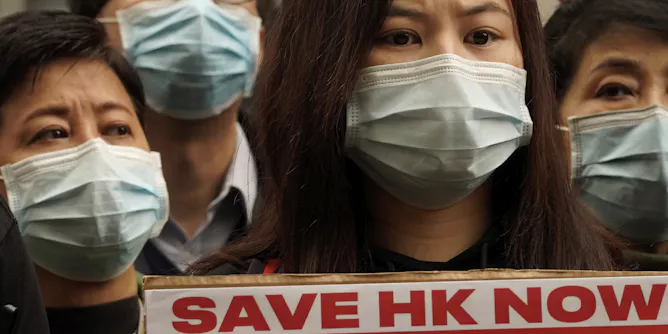
The prevalence of racism and scapegoating in the face of catastrophes and disasters has a much longer history than the new coronavirus outbreak.
Articles on Disaster
Displaying 141 - 160 of 198 articles

How could a nation like Australia came close to a humanitarian crisis during the recent bushfires? A problem-solving theory called “systems thinking” can help us find out.
Encouraging people with disabilities to lead in the emergency response is vital if we want to prevent more people becoming disabled, or dying, as a result of disaster.
Is it possible to plan for the unforeseen? Some basic principles allow careful preparation to be reconciled with quickly shifting circumstances.
Post-earthquake aftershocks are often assumed to be less violent, but that’s not always the case.
Researchers like myself are finding transformative new ways to help planners, leaders and first responders tackle disasters from afar.
Governments fail to imagine how worst-case scenarios can come about – much less plan for them. But there are things we can do.
Most of the time, these operations were not urgent – unlike the one following this disaster that summoned some 600,000 people to the site of the worst nuclear accident of all time.
Meet the unsung aid workers who put their lives on the line during war and natural disaster to make sure the dead are treated with respect – and that their grieving families get closure.
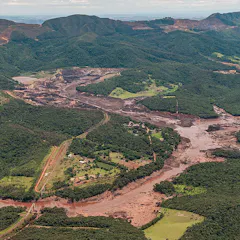
Population growth is creating a huge demand for infrastructure, even as environmental risks grow. To detect problems early, satellites can provide rich data to help assess infrastructure “health”.
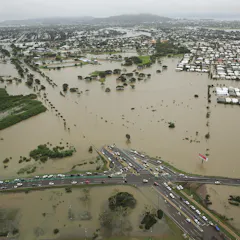
Disaster information needs to come from all sections of a community at risk, and we need to leave nobody marginalised.
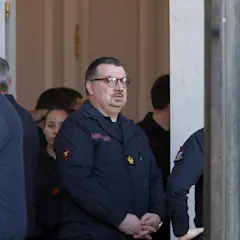
A chaplain of the Paris Fire Brigade helped save several items during the fire at Notre Dame Cathedral. Rarely seen, fire chaplains often take enormous risks to provide support during disasters.
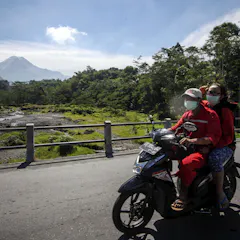
Whether in direct response to these events or as a way of coping with their consequences, many Indonesians react to the unpredictability of the natural world with a “wait and see” attitude.

Donald Trump has threatened to use funds allocated for disaster relief to fund his border wall. It’s time to rethink how we frame disasters to stop politicians from using them for political gain.
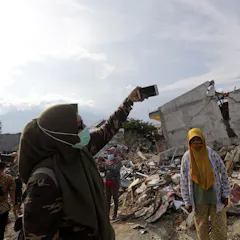
Taking selfie at disaster sites is so wrong at many levels. Not only it poses risks but the action also indicates mental issues
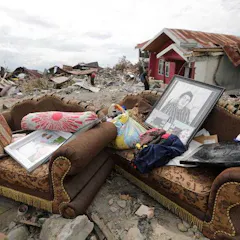
The last two major disasters show that Indonesia needs to embrace a new chapter in its disaster risk governance.

The flight data may only shed light on what happened. Investigators must systematically investigate other evidence to find out why JT-610 crashed.
A peaceful society requires us to trust our public institutions, but in order to do so, we must question them. Questions are a healthy and necessary response to a world filled with uncertainty.

Indonesia’s tsunami early warning system failed to provide adequate warnings to people in Palu.

The damage to coal ash sites from Hurricane Florence demonstrates how a community’s vulnerability to natural disasters is closely linked to how stringent environmental regulations are.
Top contributors
-

Associate Professor of Disaster and Emergency Management, York University, Canada
-
Senior Scientist in Disaster and Climate Risk at Earth Sciences NZ & Senior Research Fellow (adjunct), Humanitarian Emergency and Disaster Management, Charles Darwin University
-
Professor of Geology and Environmental Geosciences, University of Dayton
-
Professor of Disasters and Health, UCL
-
Assistant Professor and Co-Director, Center for Emergency Management and Homeland Security, Watts College, Arizona State University
-
PhD Candidate in Political Science and International Relations, Queen's University, Ontario
-
Professor of Public and International Affairs, former Director of the Center for Disaster Management, University of Pittsburgh
-
Professor of Computer Science and Engineering, Texas A&M University
-
Professor of Oceanography, University of Miami
-
Associate Professor, Macquarie University
-
Professor and Inaugural Judith Neilson Chair in Architecture, UNSW
-
Senior Research Associate, Institute for Environment and Human Security (UNU-EHS), United Nations University
-
Associate Professor, Florida Institute for Built Environment Resilience, University of Florida
-
Professor of Climate Science, UMass Lowell
-
Associate Professor of Civil Engineering, Boise State University; United Nations University