
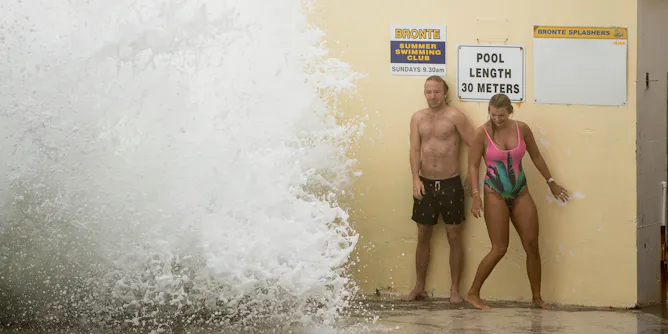
Long-period swell is a classic hidden hazard that can trick even the most experienced beach goers.
Articles on Cyclones
Displaying 21 - 40 of 161 articles

Huge volumes of sand have been swept offshore by Cyclone Alfred’s waves, leaving beaches and dunes looking very different.
This is a particularly tough time for people who have lived through other disasters. Here are some signs of retraumatisation to watch out for.

Albanese has been hit by the twin disruptors, one natural and one man-made. Both complicate Albanese’s election thinking

How do you stay safe while you begin the clean up and recovery? It can be helpful to have a plan of action ready.
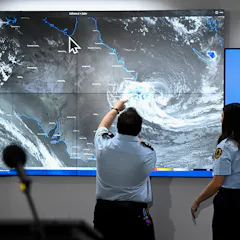
Both geostationary and polar orbiting satellites collect data in the visible and infrared regions. There are polar satellites collecting data in the microwave range.
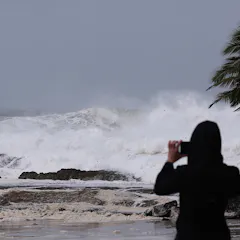
Warmer oceans, more rain and higher seas are likely to heighten Cyclone Alfred’s impact
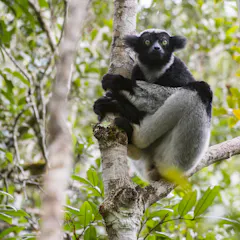
Lemurs show traits associated with resilience to living in a disaster-prone environment.

For millions of people, Cyclone Alfred will be their first. From “go bags” to sandbags, here’s what you should do to be as ready as possible.

The seas off southeast Queensland are unusually warm, which helped ex-Cyclone Alfred intensify as it barrelled towards the coast.
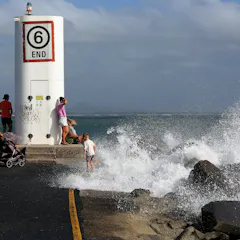
Heavily populated south-east Queensland is bracing for Cyclone Alfred to make landfall on Thursday.
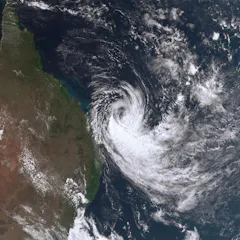
Talk to your neighbours. Do they have a generator or a camping fridge you can use? This is an opportunity to get to know your community and pool your resources.
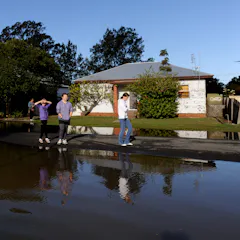
Researchers examined how disaster risk informs decisions about new housing. They found crucial problems that leave communities exposed.

Even if Zelia doesn’t hit towns directly, it’s likely to cause a lot of damage.
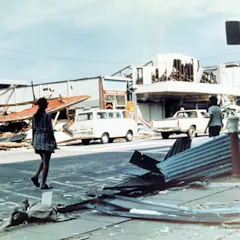
Cyclone Tracy reshaped Darwin and marked a turning point in Australia’s approach to disaster resilience.
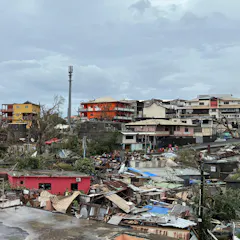
The ongoing conflict and terrorist violence, coupled with cyclones like Kenneth in 2019, has caused repeated evacuations and worsening living conditions.
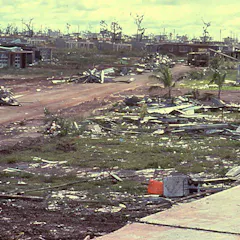
On Christmas Eve 1974, Tracy flattened Darwin, killing 66 people. The city is still at risk of cyclones, and not enough has been done to mitigate it.
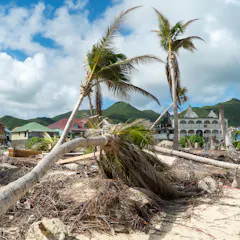
Around 38% of these costs can be attributed to climate change – new study.

With Hurricanes Helene and Milton reminding us of the destructive force of such storms, the tropical cyclone forecast for Australia is for an average number but with a higher risk of severe cyclones.
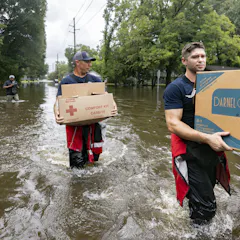
With Debby’s storm track, much of the East Coast is forecast to get soaked. Climate change also plays a role in the downpours.
Top contributors
-

Adjunct Professor of Environmental Geography, CQUniversity Australia
-
Professor of Atmospheric Sciences, Monash University
-
Principal Research Scientist in Extreme Weather, The University of Melbourne
-
Professor of Physical Geography, University of the Witwatersrand
-
Professor of Disasters and Health, UCL
-
Adjunct Senior Lecturer, Centre for Disaster Studies, James Cook University
-
Professor of Physical Geography, James Cook University
-
ARC Future Fellow and Associate Professor in Climate Science, ARC Centre of Excellence for 21st Century Weather, The University of Melbourne
-
Adjunct Professor (Practice) in the School of Earth, Atmosphere and Environment, Monash University
-
Assistant Professor, Université Mohammed VI Polytechnique
-
Honorary Professor of Hazards and Disaster Risk Sciences, University of Sydney
-
Climate scientist, Australian Bureau of Meteorology
-
Professor of Intersectional Justice, UCL
-
Postdoctoral research associate, University of Edinburgh
-
Senior Climatologist, Australian Bureau of Meteorology