
For decades, we couldn’t trace the link between new fossil fuel projects and their damage to people and planet. But now we can.
Articles on Coral bleaching
Displaying 1 - 20 of 153 articles
Global warming is set to surpass the 1.5°C limit if governments worldwide fail to act.
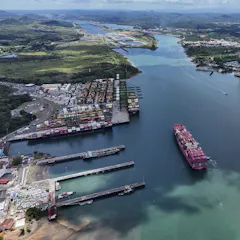
El Niño can affect agriculture, marine life and economies in profound ways, including slowing commerce at the Panama Canal. This El Niño is likely to be the strongest in over a century.

These underwater disasters can trigger coral bleaching and massive fish kills.

Scientists have been monitoring the reef’s health for the past 40 years.

While many Indonesian reefs have remained surprisingly stable despite decades of ocean warming, this resilience has its limits.
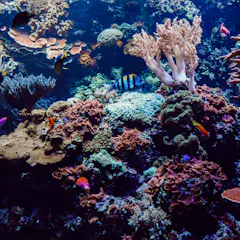
The Earth has already experienced three mass coral bleaching events over the last few decades, with a fourth happening now. Researchers are trying to find ways to make corals more adaptable to heat.
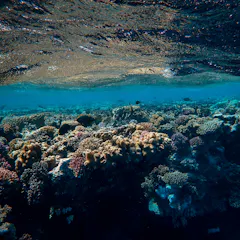
Connectivity isn’t a nice-to-have for coral reefs – it’s their lifeline. And now scientists know which reefs serve as vital ‘stepping stones’ for coral larvae.
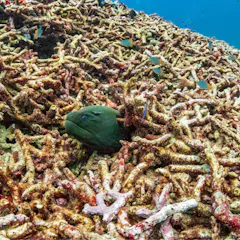
Many coral reefs are already very vulnerable, and another El Niño is forecast.

This is especially worrying because these massive corals are normally quite resilient to heat stress. Even the strong are now struggling to survive.
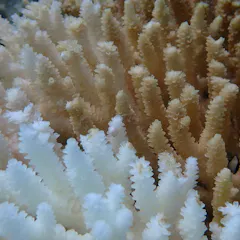
Mounting evidence shows the state of coral reefs is worsening despite concerted local conservation. The answer is public pressure for meaningful climate action.
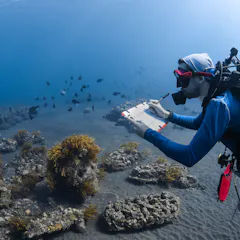
Most restoration programmes focus their efforts on increasing coral growth, but rarely ask whether the reef is actually functioning as a living ecosystem.

The results challenge claims that the climate risks posed by an individual fossil fuel project are negligible or cannot be quantified.
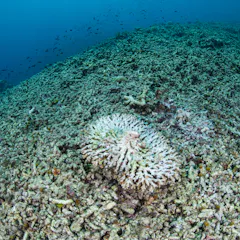
Blast-fished reefs are unlikely to recover naturally without human intervention.
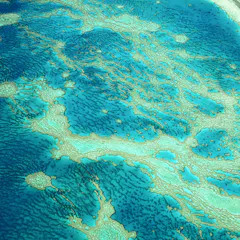
In the late 1960s, oil and gas companies began exploring the Great Barrier Reef for oil. It took campaigners, unionists and a royal commission to protect the reef.
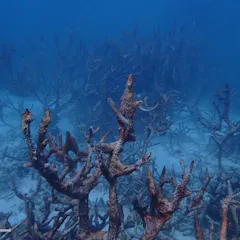
Luck seems to have run out for many Western Australian coral reefs, as an off-the-charts marine heatwave leaves a trail of bleaching and coral death.

The latest report from Australia’s tropical marine research agency shows hard corals on the Great Barrier Reef have been hit hard by an extreme marine heatwave.
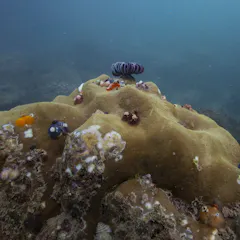
Coral reef conservation needs to take an equitable approach and include local impacted communities in decision-making and resource distribution.
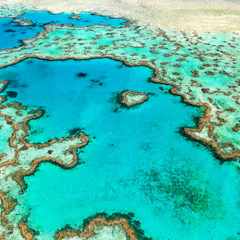
Corals can drown. But a new study shows sea level rise isn’t the only factor at play.
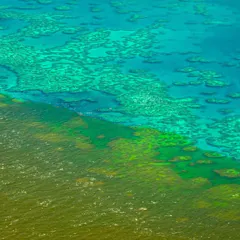
UNESCO’s comments confirm what experts already know: despite substantial money and effort, threats to the Great Barrier Reef aren’t going away.
Top contributors
-

Professor, School of the Environment, The University of Queensland
-
UNESCO Chair on Climate Change Variability of Natural and Cultural Heritage and Professor in Physics, James Cook University
-
Distinguished Professor, James Cook University
-
Adjunct Principal Research Fellow, College of Science and Engineering, James Cook University
-
Research Program Director, Australian Institute of Marine Science
-
Senior Research Scientist in Reef Ecology, Australian Institute of Marine Science
-
ARC Future Fellow and Associate Professor in Climate Science, ARC Centre of Excellence for 21st Century Weather, The University of Melbourne
-
Associate Professor, Marine Ecology, School of Molecular and Life Sciences, Curtin University
-
Professor of Marine Biology, James Cook University
-
Reef Fish Ecologist, Australian Institute of Marine Science
-
Deputy Director, Engagement and Impact, The ARC Centre of Excellence for the Weather of the 21st Century, Australian National University
-
Research Scientist: Coral Ecology, Australian Institute of Marine Science
-
-
Research Program Director – Reef Ecology and Monitoring, Australian Institute of Marine Science
-
Professorial Fellow, ARC Centre of Excellence for Coral Reef Studies, James Cook University