
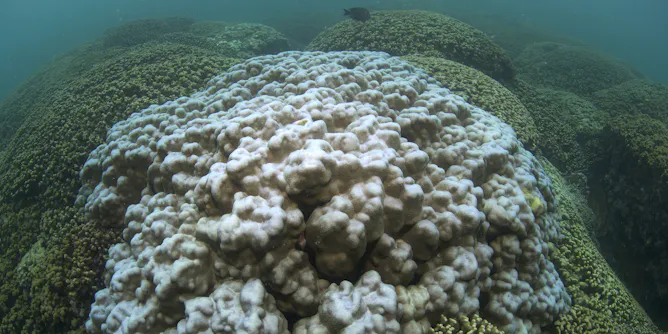
Many corals can’t make it through the bleaching events caused by warming ocean waters. But some can – and scientists are trying to learn more about the sources of their resilience.
Articles on Coral bleaching
Displaying 141 - 153 of 153 articles
Corals are experiencing only the third global bleaching event in recorded history, caused by warming seas. But worse is yet to come.
Coral reefs are the poster child for the damage people are doing to the world’s oceans. Overfishing, pollution and declining water quality have all taken their toll on reefs around the world. Perhaps the…

Reef historian Iain McCalman, in Sydney, and reef scientist Stephen Palumbi, in California, are monitoring reef degradation from opposite sides of the planet. They compared notes. Iain McCalman: A recent…
New research from Stanford University has revealed that certain types of coral are able to acclimatise to rising sea temperatures…
Australia’s coral reefs and mountain-top ecosystems are set to suffer from climate change, according to the Intergovernmental Panel on Climate Change’s latest summary of the research. The threats to these…
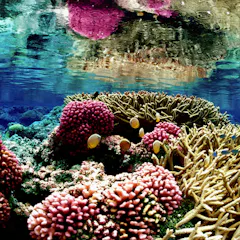
Greenhouse gas emissions have warmed the oceans in regions such as the Baltic by as much as 1.3°C. It is now thought that 90% of the heat added to the climate system by humans has been absorbed in the…
A direct correlation between the amount of pre-historic reefs and the population of decapod crustacean species has been observed…
A loss of shelter is threatening the survival of the world’s clownfish. An international study has found that the effects…
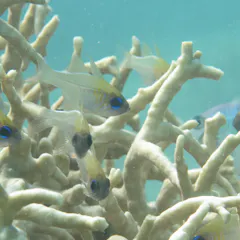
The fire coral (Millepora boschmai) is one of the rarest species of coral in the world. It is known only from a small number of locations in the Pacific Ocean, Panama and Indonesia, and it appears this…
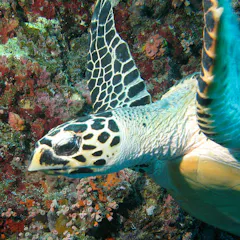
There is a myth about Australia’s Great Barrier Reef, that goes like this: because it is so big, biodiverse, so well-managed and generally bloody awesome, the GBR is immune to climate change and other…
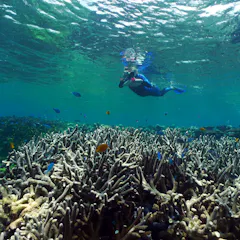
The Great Barrier Reef has lost half its coral cover in the last 27 years, and it could halve again by 2022 say researchers from the Australian Institute of Marine Science. A study published today in the…
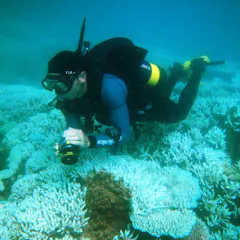
Unconventional tactics, including using shade cloth to protect corals from heat stress, must form part of future ocean management and conservation plans, argues a scientist from the University of Queensland…
Top contributors
-

Professor, School of the Environment, The University of Queensland
-
UNESCO Chair on Climate Change Variability of Natural and Cultural Heritage and Professor in Physics, James Cook University
-
Distinguished Professor, James Cook University
-
Adjunct Principal Research Fellow, College of Science and Engineering, James Cook University
-
Research Program Director, Australian Institute of Marine Science
-
Senior Research Scientist in Reef Ecology, Australian Institute of Marine Science
-
ARC Future Fellow and Associate Professor in Climate Science, ARC Centre of Excellence for 21st Century Weather, The University of Melbourne
-
Associate Professor, Marine Ecology, School of Molecular and Life Sciences, Curtin University
-
Professor of Marine Biology, James Cook University
-
Reef Fish Ecologist, Australian Institute of Marine Science
-
Deputy Director, Engagement and Impact, The ARC Centre of Excellence for the Weather of the 21st Century, Australian National University
-
Research Scientist: Coral Ecology, Australian Institute of Marine Science
-
-
Research Program Director – Reef Ecology and Monitoring, Australian Institute of Marine Science
-
Professorial Fellow, ARC Centre of Excellence for Coral Reef Studies, James Cook University