
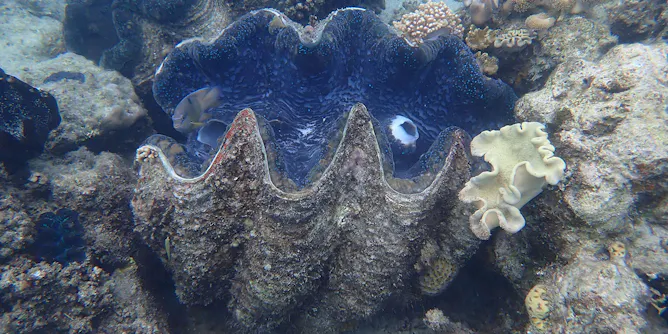
The clam fills a crucial gap in our records of what the reef was like before industrial-era global warming.
Articles on Coral reefs
Displaying 1 - 20 of 264 articles
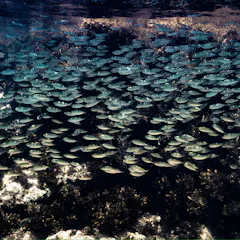
Due to the remote location and croc-inhabited waters, these northern reefs are largely overlooked and understudied.

As part of our research we interviewed and followed hundreds of scuba divers.
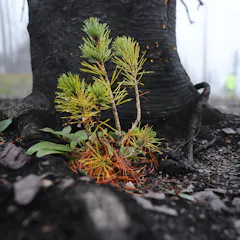
The dead remains of foundation species can boost or deter how well future generations are able to grow and thrive.

While many Indonesian reefs have remained surprisingly stable despite decades of ocean warming, this resilience has its limits.

Healthy coral reefs can significantly reduce hurricane damage for coastlines, yet many still face harms, including pollution and ship damage, that people have the power to stop.
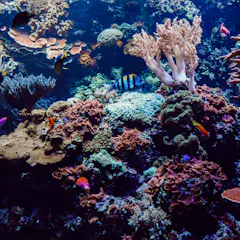
The Earth has already experienced three mass coral bleaching events over the last few decades, with a fourth happening now. Researchers are trying to find ways to make corals more adaptable to heat.
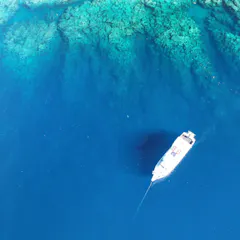
Coral reefs underpin tourism and small fisheries, but are under threat from rising ocean temperatures.
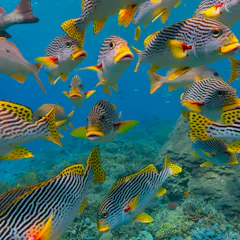
Some parts of this epic coral reef system weren’t even where the greatest reefs are found today. But remnants have survived.
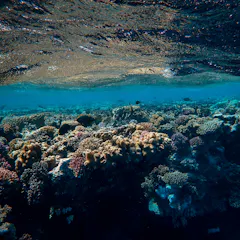
Connectivity isn’t a nice-to-have for coral reefs – it’s their lifeline. And now scientists know which reefs serve as vital ‘stepping stones’ for coral larvae.
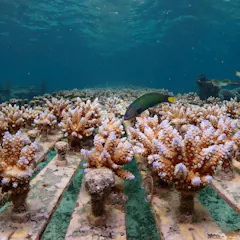
Scientists and reef managers are calling for ‘assisted evolution’ to help accelerate coral reef adaptation in the face of global warming.

Coral reefs are likely to erode even under low-emission scenarios, but some reefs may persist if corals evolve to become more resistant to ocean warming.
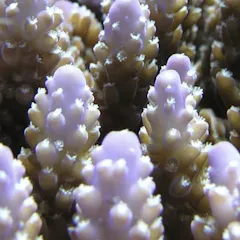
Several years worth of findings from a floating laboratory have tapped into a well-stocked coral library of taxonomic, genetic and chemical diversity, previously unknown to Science and Medicine.
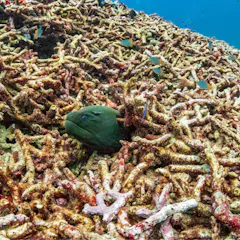
Many coral reefs are already very vulnerable, and another El Niño is forecast.

This is especially worrying because these massive corals are normally quite resilient to heat stress. Even the strong are now struggling to survive.
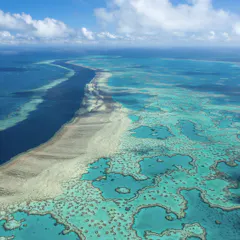
Coral reefs have shaped Earth in much deeper ways than we usually appreciate.
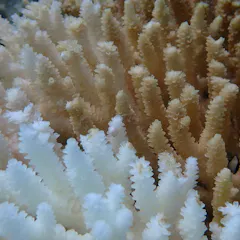
Mounting evidence shows the state of coral reefs is worsening despite concerted local conservation. The answer is public pressure for meaningful climate action.
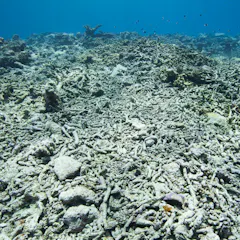
Dangerous climate tipping points will threaten food, water and coastlines. They’re irreversible and only radically accelerated climate action can stop them now.
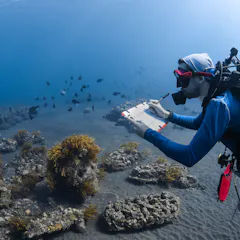
Most restoration programmes focus their efforts on increasing coral growth, but rarely ask whether the reef is actually functioning as a living ecosystem.

The crucial reef-building corals were decimated by a marine heat wave in the Florida Keys. Can advances in restoration help them recover?
Top contributors
-

Distinguished Professor, James Cook University
-
Professor, School of the Environment, The University of Queensland
-
Adjunct Principal Research Fellow, College of Science and Engineering, James Cook University
-
UNESCO Chair on Climate Change Variability of Natural and Cultural Heritage and Professor in Physics, James Cook University
-
Adjunct Research Associate, Faculty of Fisheries and Marine Sciences, IPB University
-
Professor of Marine Ecology, Universidad Nacional Autónoma de México (UNAM)
-
Assistant Professor, School of Energy, Geoscience, Infrastructure and Society // CEO MarFishEco Fisheries Consultant Ltd, Heriot-Watt University
-
Reader in Coral Reef Ecology, Newcastle University
-
Postdoctoral Research Associate in Coral Reef Ecology, Newcastle University, Newcastle University
-
Associate Professor, Coral Reef Laboratory, University of Southampton
-
Postdoctoral Research Associate in Climate Change Ecology and Evolution, Newcastle University
-
Professor of Biological Oceanography & Head of the Coral Reef Laboratory, University of Southampton
-
Professorial Fellow, ARC Centre of Excellence for Coral Reef Studies, James Cook University
-
DECRA Research Fellow in molecular ecology, James Cook University
-
Coral Reef Ecologist, National Oceanic and Atmospheric Administration