
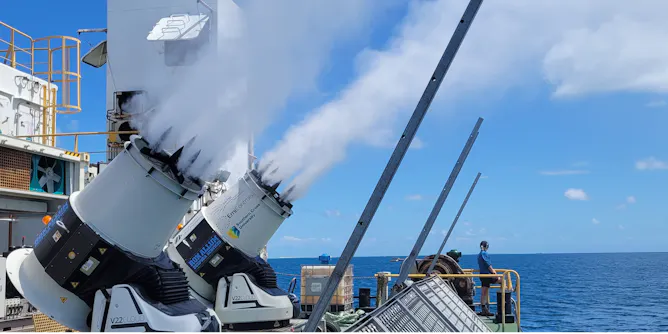
Australian is experimenting with marine cloud brightening to cool and shade the Great Barrier Reef. Here’s how it works.
Articles on Coral bleaching
Displaying 41 - 60 of 153 articles
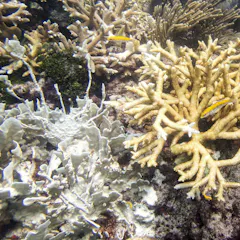
Understanding how both cloud cover and temperature work to promote coral bleaching provides valuable insight into how reefs will change over various climate scenarios.

Coral has been incorporated into traditions, art and even religion in communities around the world.
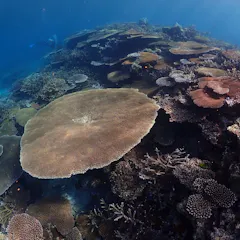
This may buy us time, but many reefs are still doomed without serious action on climate change.
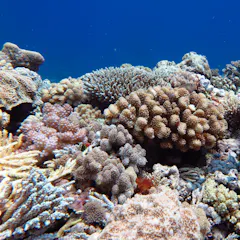
We used to focus just on protection of vital ecosystems like the reef. But as climate change and other threats accelerate, we need to actively help nature get ready for the heat.
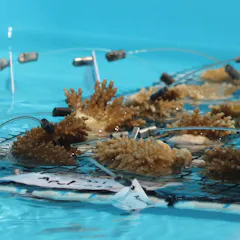
Ocean temperatures have hit record highs off the Florida Keys. Scientists and volunteer divers are racing to save these valuable creatures.
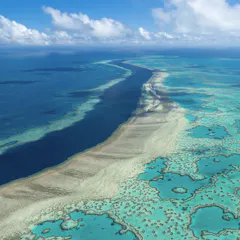
In recent years, the Barrier Reef has had a reprieve – and coral has regrown strongly. But now the reprieve looks to be over and the heat is back on
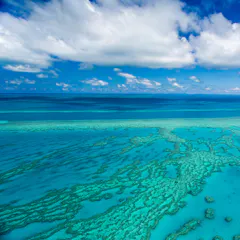
Incrementalism and politics as usual cannot save the Barrier Reef from the largest threat it faces – the heat ramping up from climate change

This knowledge is particularly important if we want to help reefs recover devastating events such as mass bleaching and cyclones.

The scale of climate threat is beyond the tools we have to manage the Great Barrier Reef. New measures and sustained effort are needed.
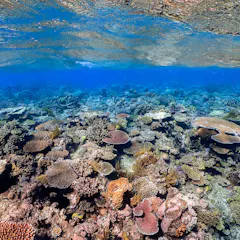
Environment ministers from both sides are determined not to see the Barrier Reef listed as in danger. The question is – why?
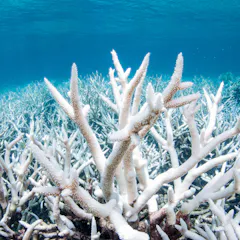
Efforts to save the reef aren’t tackling the main cause: climate change. What we need from our next federal government is strong leadership to avert the climate crisis.
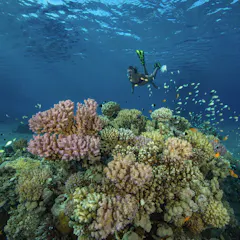
Researchers have long suspected that an ingredient in sunscreen called oxybenzone was harming corals, but no one knew how. A new study shows how corals turn oxybenzone into a sunlight-activated toxin.
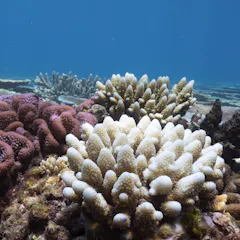
Coral reefs that suffer widespread bleaching can still recover if conditions improve, but it’s estimated to take up to 12 years. And that’s if no more bleaching events occur.
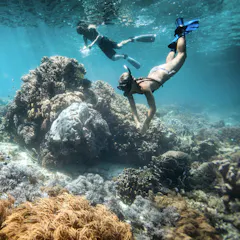
Laboratory studies suggest sunscreen chemicals are dangerous to coral reefs. But in real world conditions, that’s not true. Bleaching must have another cause.
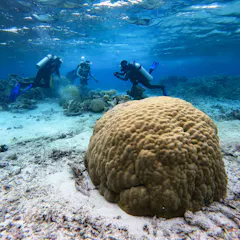
Coral in the Great Barrier Reef is once again bleaching, with water temperatures up to 3°C higher than normal in some places.
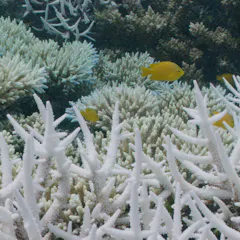
The reef is suffering environmental conditions that are so extreme, scientists are struggling to simulate these scenarios in laboratories.
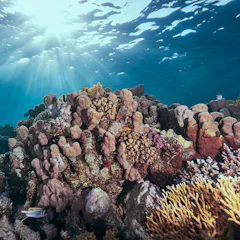
Marine heatwaves will happen so often that reefs will struggle to weather successive bleaching events.
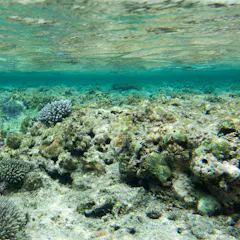
The package comes as the Morrison government tries to convince the World Heritage Committee it is making every effort to preserve the reef.
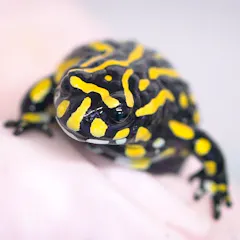
The rapid rate of species declines means we should trial potential solutions before it’s too late.
Top contributors
-

Professor, School of the Environment, The University of Queensland
-
UNESCO Chair on Climate Change Variability of Natural and Cultural Heritage and Professor in Physics, James Cook University
-
Distinguished Professor, James Cook University
-
Adjunct Principal Research Fellow, College of Science and Engineering, James Cook University
-
Research Program Director, Australian Institute of Marine Science
-
Senior Research Scientist in Reef Ecology, Australian Institute of Marine Science
-
ARC Future Fellow and Associate Professor in Climate Science, ARC Centre of Excellence for 21st Century Weather, The University of Melbourne
-
Associate Professor, Marine Ecology, School of Molecular and Life Sciences, Curtin University
-
Professor of Marine Biology, James Cook University
-
Reef Fish Ecologist, Australian Institute of Marine Science
-
Deputy Director, Engagement and Impact, The ARC Centre of Excellence for the Weather of the 21st Century, Australian National University
-
Research Scientist: Coral Ecology, Australian Institute of Marine Science
-
-
Research Program Director – Reef Ecology and Monitoring, Australian Institute of Marine Science
-
Professorial Fellow, ARC Centre of Excellence for Coral Reef Studies, James Cook University