
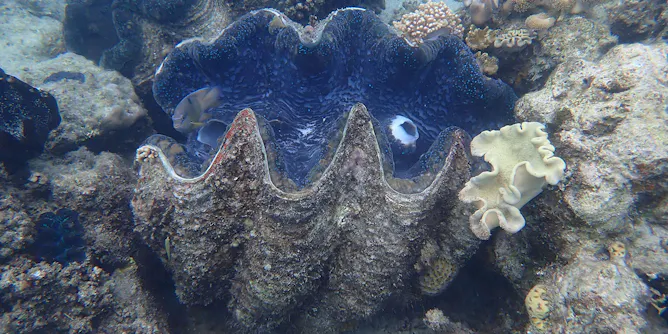
The clam fills a crucial gap in our records of what the reef was like before industrial-era global warming.
Articles on Great Barrier Reef
Displaying 1 - 20 of 310 articles
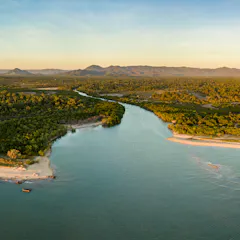
Sediment and nitrogen runoff carried by rivers is a major challenge to the Great Barrier Reef. Science confirms efforts to improve water quality are paying off.
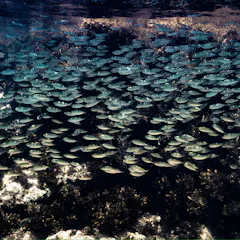
Due to the remote location and croc-inhabited waters, these northern reefs are largely overlooked and understudied.

Scientists have been monitoring the reef’s health for the past 40 years.
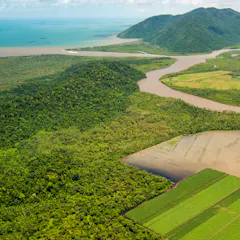
There’s one big threat facing the Great Barrier Reef which Australian authorities can solve. But will they?
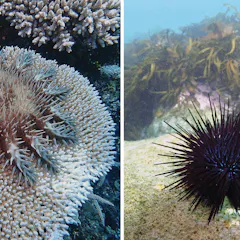
Crown-of-thorns starfish and long-spined sea urchins can rapidly devour healthy reefs.

This is especially worrying because these massive corals are normally quite resilient to heat stress. Even the strong are now struggling to survive.
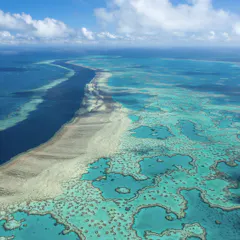
Coral reefs have shaped Earth in much deeper ways than we usually appreciate.

The results challenge claims that the climate risks posed by an individual fossil fuel project are negligible or cannot be quantified.

Globally important natural areas such as Ningaloo and Shark Bay have been hard hit in recent years. But Macquarie Island is recovering.
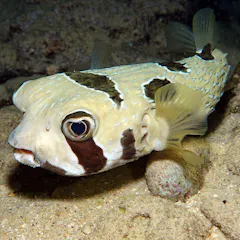
Tracking these shifts is crucial for understanding how climate change is transforming our oceans.
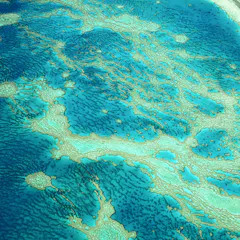
In the late 1960s, oil and gas companies began exploring the Great Barrier Reef for oil. It took campaigners, unionists and a royal commission to protect the reef.

The latest report from Australia’s tropical marine research agency shows hard corals on the Great Barrier Reef have been hit hard by an extreme marine heatwave.
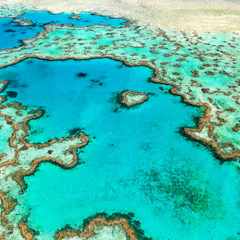
Corals can drown. But a new study shows sea level rise isn’t the only factor at play.
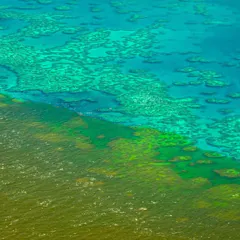
UNESCO’s comments confirm what experts already know: despite substantial money and effort, threats to the Great Barrier Reef aren’t going away.
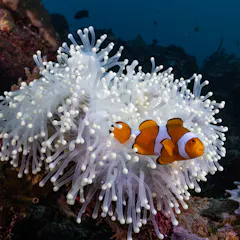
Shrinking appears to help clownfish survive stressful periods.
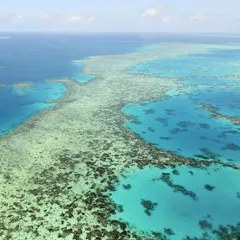
A new study of water quality in Australian rivers reveals surprising changes since the turn of the century: good for the Murray-Darling Basin but bad for the reef.
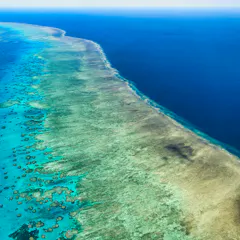
A few reefs on the Great Barrier Reef have been largely untouched by bleaching. We found upwellings of cold water are protecting them – for now
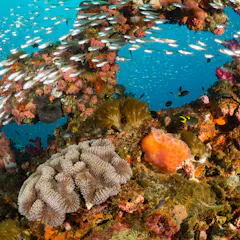
Scientists have been gathering coral spawn to create baby corals via ‘coral IVF’. Until now, much of this research has been done without consultation with Traditional Custodians.
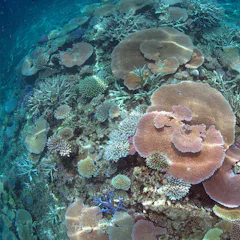
Remarkable diversity in heat tolerance can help coral reefs under climate change.
Top contributors
-

Adjunct Principal Research Fellow, College of Science and Engineering, James Cook University
-
Professor, School of the Environment, The University of Queensland
-
Distinguished Professor, James Cook University
-
Professorial Fellow, ARC Centre of Excellence for Coral Reef Studies, James Cook University
-
Professorial Fellow, University of Canberra
-
UNESCO Chair on Climate Change Variability of Natural and Cultural Heritage and Professor in Physics, James Cook University
-
Associate professor, James Cook University
-
Professor, Conservation Planning, ARC Centre of Excellence for Coral Reef Studies, James Cook University
-
Honorary Fellow in Economics, The University of Queensland
-
Research Program Director, Australian Institute of Marine Science
-
ARC Future Fellow and Associate Professor in Climate Science, ARC Centre of Excellence for 21st Century Weather, The University of Melbourne
-
Adjunct Associate Professor in Marine Science, James Cook University
-
Professor of Marine Biology, James Cook University
-
Adjunct Professorial Research Fellow, Partner Investigator, ARC Centre of Excellence for Coral Reef Studies, James Cook University
-
ARC Laureate Professor, The University of Melbourne and James Cook University, The University of Melbourne