
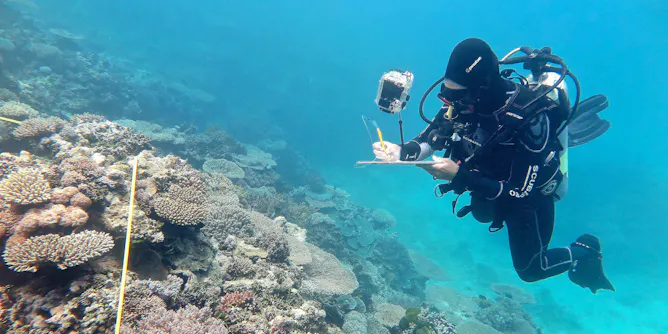
Few feel the pain of the Great Barrier Reef’s decline more acutely than the scientists trying to save it. Ahead of a UN climate summit, two researchers write of their grief, and hope.
Articles on Coral bleaching
Displaying 81 - 100 of 153 articles
It’s official. The outlook for the Great Barrier Reef has been downgraded to “very poor”, and the window to act is closing.
In the days before scuba technology, the celebrated photographer sought to capture the beauty of the reef by placing corals in an aquarium and shooting them. But under stress, they released algae.

Corals, mangroves and seagrass habitats have been affected by extreme weather events, and some may never recover.
Severe coral bleaching may have been the crucial factor in bringing home the reality of climate change for many people.

The Western Australian coral reefs may not be as well known as the Great Barrier Reef, but they’re just as large and diverse. And they too have been devastated by cyclones and coral bleaching.
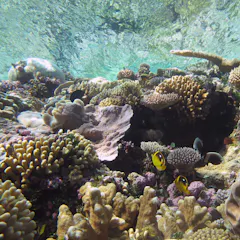
A new study found shallow water corals with high temperature tolerance in their DNA. Could they make reefs more resilient to climate change?
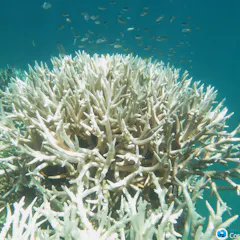
After repeated bleaching in 2016 and 2017 corals on the Great Barrier Reef are producing far fewer offspring.
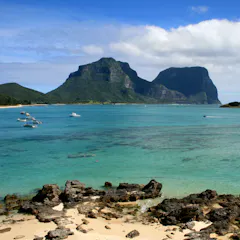
Marine heatwaves have caused coral bleaching in one of the most isolated ecosystems in the world.

As the mid-winter break draws crowds to beaches, tourists may be wondering if their sunscreen is toxic to coral reefs.
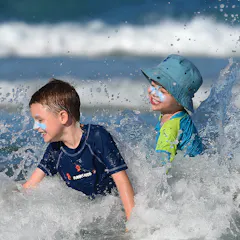
Despite bans around the world, there’s no empirical evidence sunscreens cause coral bleaching.
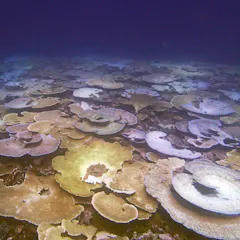
A coral biologist sampled corals from the most remote reaches of the Indo-Pacific and discovered that all of them show signs of stress.
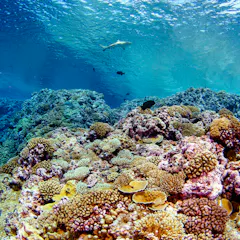
Field samples, satellite measurements and isotopic data have shed new light on corals’ eating habits.
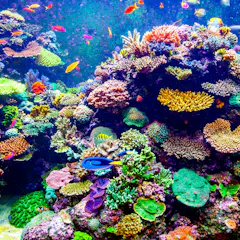
Researching the most resilient corals could help us find ways to better protect reefs in the future.
Coral reefs are in crisis around the world, and may disappear entirely. 3D printing is a new idea to help them – but it won’t be a cure all.
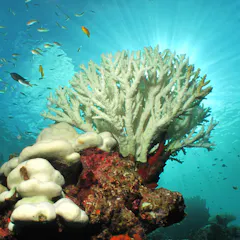
Scientists have used ‘tree rings’ in coral to identify centuries of stress.
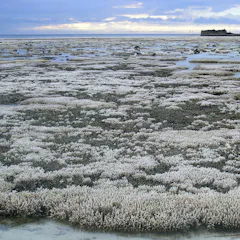
Climate mitigation efforts are unlikely to be enough to save critical ecosystems like the Great Barrier Reef. We may need to consider more radical environmental engineering.
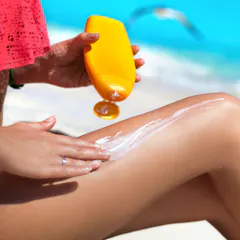
Scientists have discovered a natural sunscreen – made by microbes – that may be better for humans and the marine critters they are hoping to see.
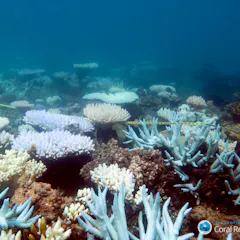
The 2016 bleaching event resulted in 30% mortality on the Great Barrier Reef, with many corals dying of the heat before they bleached and the loss of branching corals creating less complex reef structure.
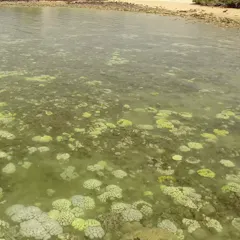
Coral bleaching has struck the Northern Territory, adding urgency to the need for better national management strategies for our warming oceans.
Top contributors
-

Professor, School of the Environment, The University of Queensland
-
UNESCO Chair on Climate Change Variability of Natural and Cultural Heritage and Professor in Physics, James Cook University
-
Distinguished Professor, James Cook University
-
Adjunct Principal Research Fellow, College of Science and Engineering, James Cook University
-
Research Program Director, Australian Institute of Marine Science
-
Senior Research Scientist in Reef Ecology, Australian Institute of Marine Science
-
ARC Future Fellow and Associate Professor in Climate Science, ARC Centre of Excellence for 21st Century Weather, The University of Melbourne
-
Associate Professor, Marine Ecology, School of Molecular and Life Sciences, Curtin University
-
Professor of Marine Biology, James Cook University
-
Reef Fish Ecologist, Australian Institute of Marine Science
-
Deputy Director, Engagement and Impact, The ARC Centre of Excellence for the Weather of the 21st Century, Australian National University
-
Research Scientist: Coral Ecology, Australian Institute of Marine Science
-
-
Research Program Director – Reef Ecology and Monitoring, Australian Institute of Marine Science
-
Professorial Fellow, ARC Centre of Excellence for Coral Reef Studies, James Cook University