

As digital replicas of real people become more common in image-based industries like fashion, urgent questions are emerging about the future of work in the cultural economy.
Articles on Consumers
Displaying 61 - 80 of 321 articles
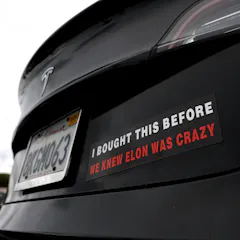
In an increasingly fragmented society, even a bumper sticker can be a subtle form of moral positioning.

When artificial intelligence knows consumers can’t afford to walk away, price increases and quality decreases.

A survey shows people with healthy eating habits tend to waste less food than those who focus on choosing ethical and environmentally friendly products.

The way ratings are displayed — as stars versus numbers — can shape consumer perceptions in subtle, yet predictable ways.

Corporate decisions made in boardrooms and through initiatives with nonprofits have created an important kind of private climate governance.

From black stars on European goods to apps showing what’s Canadian, consumers can respond to tariffs with their wallets.

The demise of Hudson’s Bay raises broader questions about the viability of traditional department stores in today’s retail environment.

The fragile global economy could fuel the boycotts of companies that have aligned themselves with the policies of Donald Trump.

Household and government spending contributed to the strongest growth in two years, data on Wednesday showed.

Most of us as consumers decide what to buy based on the price and quality of goods. But our values play a role in our decision-making: what we buy and where we buy it is influenced by our beliefs.

Advertisers’ rules of engagement explained.

By simplifying its range, Coles is moving a step closer to Aldi’s strategy.
‘Forecasting is for the weather,’ economists say. But it can be fun anyway.
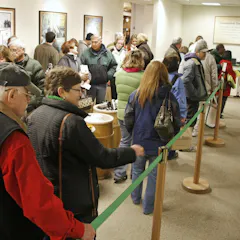
Even those consumers who said they usually don’t return any products often reacted negatively during an experiment that simulated what happens when shoppers face stricter rules.

An economist swears by this technique.

Growing health and wellness consciousness, accompanied by changing social patterns, have sparked Gen Z’s interest in the ‘sober curious’ movement.

Economists have traditionally viewed inequality through those directly affected or distant observers. But the informed-consumer perspective offers a path to reduce inequality through purchases.

It’s never been easier to sign up for subscriptions – and they’ve never been harder to manage.

The ‘vibecession’ struck fear into retailers’ hearts, but spending on candy, costumes and pumpkins remains high.
Top contributors
-

Associate Professor of Business, Boston University
-
Emeritus Professor of Marketing, University of Birmingham
-
Professor of Law, St. John's University
-
Professor of Marketing and Consumer Behaviour, Queensland University of Technology
-
Susman Professor in Sustainability and Professor of Marketing, Penn State
-
Associate Professor of Quantitative Marketing and Analytics, Binghamton University, State University of New York; Indiana University
-
Professor of Clinical Education, St. John's University
-
Director, Master of Business Administration Program (MBA); Co-Director, Better Consumption Lab, Deakin University
-
Professor of Marketing, The Ohio State University
-
Assistant Professor, Faculty of Business, University of New Brunswick
-
Associate Professor of Marketing, Tasmanian School of Business and Economics, University of Tasmania
-
Professor of Clinical Education, St. John's University
-
Professor of Energy and Environmental Economics and International Affairs, Penn State
-
Lecturer in Marketing, Newcastle University
-
Professor of Law, Monash University