

A bill now being considered in the Senate would make daylight saving time permanent, but research suggests moving to standard time would bring more benefits.
Articles on Daylight saving time
Displaying 1 - 20 of 48 articles

The adoption of permanent DST in B.C. raises significant concerns about social jetlag and long-term health impacts, especially for young people.

Winter doesn’t have to be a season we simply endure. With intention and a evidence-based practices, it can become a time of meaning, connection and even joy.

While the rest of nature rises and slumbers to lunar and solar cycles, humans work and sleep to the resetting of their artificial clocks.

Is it equally detrimental to us all – or do some groups of people suffer more than others?

Folklore suggests that a full moon has a strong effect on sleep. But the reality is more complex, and lifestyle habits like screen use before bedtime are likely to have a larger effect.

Here’s how your body might respond when you turn your clock back an hour on Saturday night.

Waking up early may help you to adjust faster though.

The current system − daylight saving time and early school start times − wastes billions while causing more car accidents, workplace injuries and health issues.

With the clocks going back an hour this weekend most of us are looking forward to an extra hour in bed. But will we actually get more sleep?

Being a night or morning person isn’t a personality trait - it’s in your biology.

Earth’s tilt means the Sun both rises earlier and sets later as we head towards summer.

Even in states that don’t have daylight saving, most people favour it. However, support is strongest in the country’s south, where the difference between summer and winter daylight hours is greater.

Americans have long been divided over adopting permanent standard versus permanent daylight saving time. But support for permanent standard time grew dramatically between 2021 and 2024.

Americans are divided on their preference for daylight saving time versus standard time. But research shows that our bodies fare better when aligned with the natural light of standard time.

Research shows that young adults and women are particularly susceptible to seasonal affective disorder.

Adolescent biology, early morning classes and too much evening screen time are a few of the key drivers behind teen sleep deprivation.
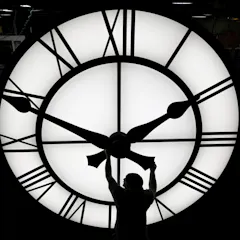
Research suggests that permanent daylight saving time would save lives as well as energy and prevent crime.

From boosted mood, to improved sleep, to more impetus to be outdoors and socialise, longer daylight can have a variety of direct and indirect benefits on our wellbeing.

Two sleep doctors offer some survival tips to help you adjust to losing that hour of sleep as clocks spring forward into daylight saving time.
Top contributors
-

Professor of Neurology and Pediatrics, Vanderbilt University
-
Director of the Pediatric Sleep Evaluation Center, UPMC Children’s Hospital of Pittsburgh, University of Pittsburgh
-
Vice Chair, Department of Neurology, University of Florida
-
Assistant Professor of Economics, Claremont McKenna College
-
Co-Director Pediatric Sleep Evaluation Center and Associate Professor of Pediatrics, University of Pittsburgh
-
Associate Professor of Neurology, University of Pittsburgh
-
Professor of Law, University of Washington
-
Emeritus Professor of Psychology, Adelaide Institute for Sleep Health, Flinders University
-
Professor, School of Medicine, University of Connecticut
-
Senior Lecturer in Psychology, Psychophysiology, Stress, Well-being, University of Westminster
-
Professor of Psychology, Iowa State University
-
Professor of Finance, University of Toronto
-
Senior lecturer, The University of Melbourne
-
Associate Professor of Neurology, Northwestern University
-
Associate professor of economics, Queensland University of Technology