
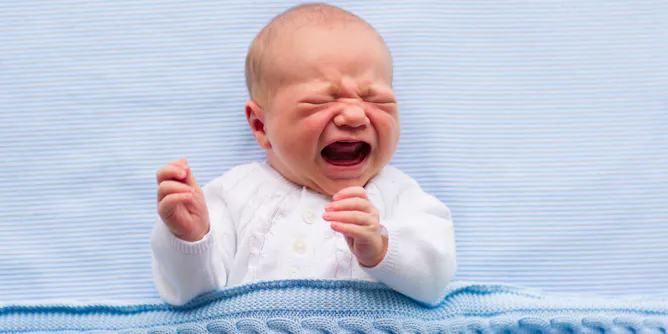
Many baby books promote sleep-training methods that involve leaving babies to cry at night. But there are gentler ways to get a good night’s sleep.
Articles on Circadian rhythms
Displaying 81 - 100 of 155 articles
Research shows how decision making by investors is affected by the one-hour clock change.

Daylight saving time starts this weekend, and it can often be the beginning of new dramas getting kids to bed. Here’s how to make the transition a little smoother.

Plant cells signal between each other in order to agree what time it is.

Breast milk contains ingredients in concentrations that change over the course of the day. Researchers think milk is chrononutrition, carrying molecular messages to help set a baby’s internal clock.

Travel is commonly perceived as “the” major factor affecting a team’s performance.

You are tired. Would nine more minutes really hurt? Is hitting the snooze button a good idea? Should you just get out of bed? Or is snoozing a sign of a more serious medical issue?
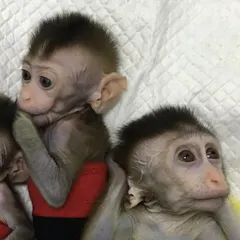
Researchers in China have produce a world first: gene edited, cloned macaque monkeys. They say such animals will be vital for research on human health – but ethical concerns remain.

Researchers find 351 genetic variants associated with a person’s chronotype. Before this study, we knew of only 24.
The old saying ‘the early bird catches the worm’ might be especially fitting when it comes to peak mental and physical performance.
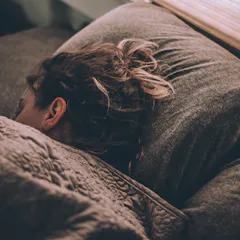
Daylight saving time begins this weekend, which means many of us will get an hour less sleep. But the health effects go beyond sleep – and can last two weeks or more. Here’s what the research says.
Everybody has a personal internal clock in their brain that dictates when we feel like eating, waking and sleeping. But what happens when our life doesn’t match our body clock? And how do we read it?
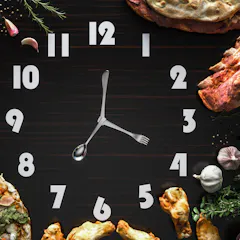
You’ve heard the adage, you are what you eat. But a new study suggests that you are ‘when’ you eat may be more accurate. Restricting eating times can keep chronic diseases at bay and ward off obesity.
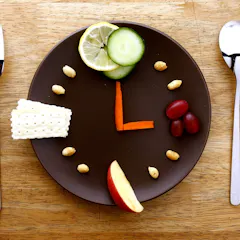
When you eat is as important as what you eat. The mounting evidence for chrononutrition.

Largest study to date finds link between disturbed circadian rhythm and mood disorders.
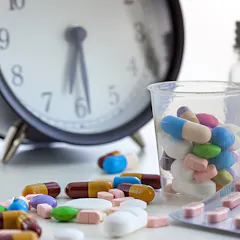
Circadian clocks regulate the timing of hundreds of processes in the cell, suggesting that matching medications with your biological clock could improve the outcome

A recent study suggested that a chemical responsible for getting the body ready for sleep was suppressed in children by too much evening light. A circadian rhythm expert explains the dangers.

Pity the poor night owls of the world, who already must adjust to a life that doesn’t align with their natural sleep patterns. Now it appears that being a night owl even raises the risk of death.
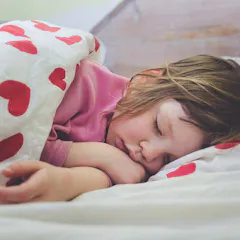
The shift from daylight saving time will leave kids’ body clocks an hour “out of sync”, in a similar way to jet lag. Here are some evidence-based strategies to deal with this.

Most Americans dread the time switch to daylight saving time, which results in a loss of an hour’s sleep. The downside is more serious than that – it can lead to workplace injuries and traffic fatalities.
Top contributors
-

Professor, School of Medicine, University of Connecticut
-
Emeritus Professor of Psychology, Adelaide Institute for Sleep Health, Flinders University
-
Director, Appleton Institute, CQUniversity Australia
-
Associate Professor, Physiology of Circadian Rhythms, Institute for Molecular Bioscience, The University of Queensland
-
Professor of Neurology and Pediatrics, Vanderbilt University
-
Associate Professor of Neurology, University of Pittsburgh
-
Professor (Assoc), School of Pharmacy and Biomolecular Sciences (PBS), RCSI University of Medicine and Health Sciences
-
Professor of Chronobiology and Integrative Physiology, University of Surrey
-
Personal Chair in Nutrition, The Rowett Institute, University of Aberdeen
-
Conjoint Senior Lecturer, School of Medicine and Public Health, University of Newcastle
-
Research fellow, The University of Queensland
-
Associate Professor of Physical & Biological Sciences, University of California, Santa Cruz
-
Professor of Endocrinology, University of Oxford
-
Postdoctoral Research Officer, University of Surrey
-
Professor and Director, Centre for Mental Health, Swinburne University of Technology