
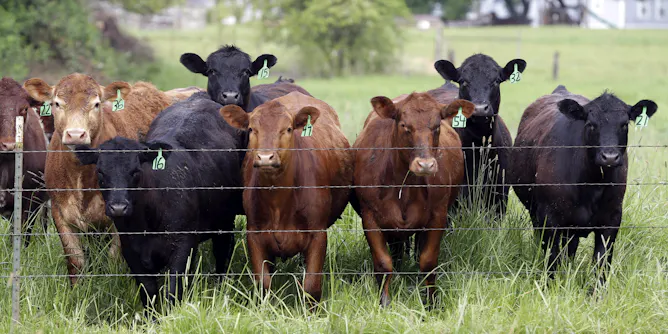
The use of antibiotics in raising livestock is complex. We could be moving towards a less-than-ideal result due to poor understanding, over-simplistic messaging and a rush for competitive advantage.
Articles on Antibiotics
Displaying 161 - 180 of 303 articles

Antibiotic-munching microbes may prove useful for mopping up contaminated water supplies and land.

The problem of antimicrobial resistance won’t go away as long as people in poor countries don’t have access to clean water.

New research shows just 1% of E. coli bacteria’s genetic mutations are lethal.
Superbugs used to pose the greatest risk to people with compromised immune systems and those who had surgery. But their sexual transmission means antibiotic resistance can spread much more widely.
Pharmaceutical companies focus on small molecules they’ve devised – and can easily patent. But nature’s already come up with many antibacterial compounds that drug designers could use to make medicines.
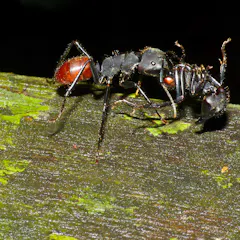
Ants produce their own antimicrobial chemicals to fight bacteria.

The risk of bacterial or fungal infection from potting mix is very low. Wearing gloves and washing your hands will keep it even lower.
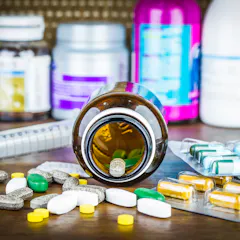
Antimicrobial stewardship is proving effective, but we’re not fully across what is happening.
Bacteria don’t just mutate to beat antibiotics, they also make changes on the fly.
India’s laissez-faire attitude to drug regulation is a serious threat to global efforts to tackle antimicrobial resistance.

We know overuse and inappropriate use of antibiotics contribute to resistance, so it’s important we develop strategies to improve practice.

Manuka honey has a lot of evidence-based benefits, and a lot of rubbish claims too.
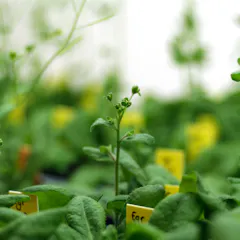
Inserting a random DNA mishmash into a plant or bacterium directs it to make a novel protein. Sifting through the resulting molecules, researchers may find ones have medical or agricultural uses.
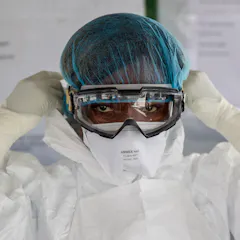
Speaking with: Dr. John Gerrard on infectious diseases
The Conversation, CC BY-ND23.2 MB (download)
William Isdale speaks to Dr. John Gerrard about the constant threat of infectious diseases and what we can do to prevent a deadly pandemic from establishing itself in Australia.
Promising scientific consensus is a perilous principle on which to found meaningful engagement between experts and the public.

New reports that stopping antibiotics when you feel better is better for you could do more harm than good. But it has reopened the debate on how long antibiotics should be used.
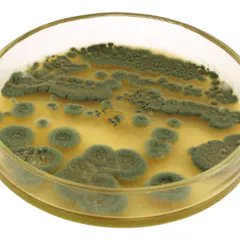
We’ve been told for a long time that we must take all of our antibiotics. But maybe we didn’t need so many to begin with. Here’s why.
An article in a leading health journal causes confusion and undoes years of hard work in raising awareness of antibiotic resistance.
Simple and inexpensive gene-editing technology such as CRISPR has made the creation of genetically modified organisms much easier. But could nature still keep the upper hand?
Top contributors
-

Senior Research Fellow, School of Medicine, The University of Western Australia
-
Professor of Infectious Diseases and Microbiology, Australian National University
-
Professor, The University of Queensland
-
Prof. Institute for Molecular Bioscience, The University of Queensland
-
Professor of Infectious Diseases, Monash University
-
Dean of the College of Science, Professor of Biochemistry, Rochester Institute of Technology
-
Senior Lecturer in Microbiology, Aston University
-
Professor of Biochemistry and Biomedical Sciences, McMaster University
-
Professor of Public Health, Bond University
-
Professor of Public Health, Newcastle University
-
Professor of Molecular Evolution, Macquarie University
-
Professor of Infectious Diseases, University of Cape Town
-
Professor at ANU Medical School; Senior Staff Specialist Infectious Diseases; General Physician, Australian National University
-
Director Of Medicine, The Maitland and Kurri Kurri Hospital, University of Newcastle
-
Assistant Professor, Johns Hopkins University