
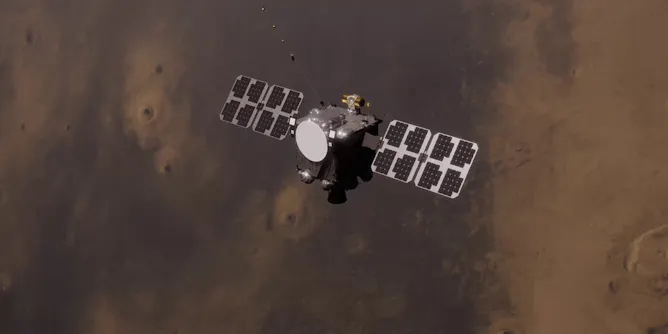
The twin spacecraft Blue and Gold could open a new era in space exploration and planetary science, powered by commercial partnerships and innovations.
Articles on Space
Displaying 121 - 140 of 1098 articles
Phones can often take great photos, but why photos of the Moon typically disappointing? The Moon itself and camera design are both part of the answer.

Radio astronomy opened up the universe for scientists. They could map new elements across galaxies and also search for signals from extraterrestrial civilizations.
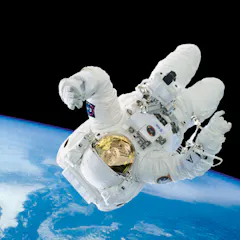
Spaceflight rewires the human body. Muscles shrink, bones thin and fluids shift towards the brain – but these changes may help improve life on Earth.
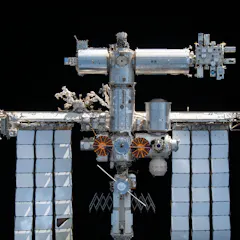
Archaeologists have studied how astronauts use the International Space Station to improve its potential future successors.
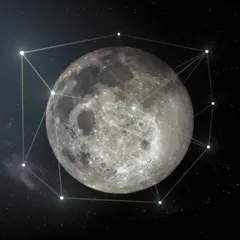
The US doesn’t currently have much ability to monitor what’s going on in the space around the Moon. An effort by the Air Force Research Laboratory could help.
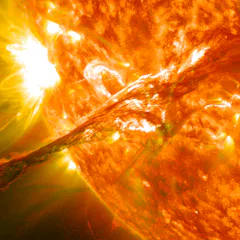
From communications outages to a brush with nuclear war, solar events like flares and coronal mass ejections have shaped human history.
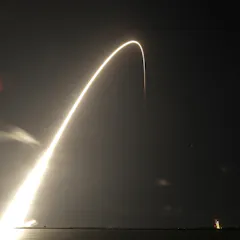
While a recent executive order directed the Department of Commerce to elevate this office, budgetary actions threaten it.

Astronauts generally can’t look out the window like you might in a car – a ‘virtual window’ could instead serve that purpose.
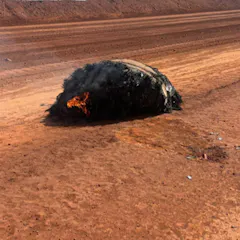
A piece of a suspected rocket found on fire in Western Australia highlights the growing problem of space junk – and how humanity is dealing with it.

A planetary scientist who has participated in analog missions describes their value for planning space exploration – and learning about extreme environments on Earth.
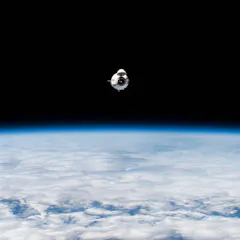
Earth is the only home humans have ever known. But that might not be the case for much longer.
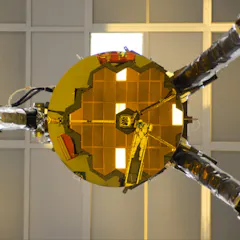
The only Australian hardware on board the legendary telescope is starting to fulfil its duties.
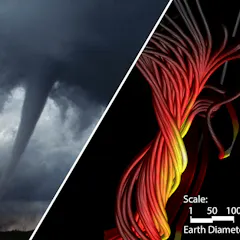
Unprecedented simulations show the formation of space tornadoes capable of causing strong geomagnetic storms around Earth, calling for earlier and more accurate warnings.

The mission should launch on a flyby of the Moon in February 2026.
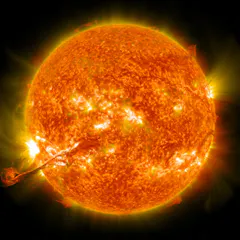
Space weather isn’t referring to rain clouds that float through the galaxy. Instead, it’s caused by massive explosions of particles that shoot out from the Sun.

In the 30 years since the discovery of 51 Pegasi b, more than 6,000 planets outside our Solar System have been catalogued. Two modern-day explorers explain how.
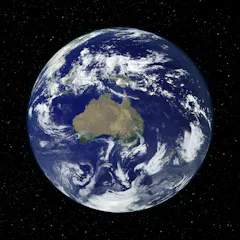
Every single day, space technology impacts our lives. But a new report reveals gaps between what Australians think and what they know about space.
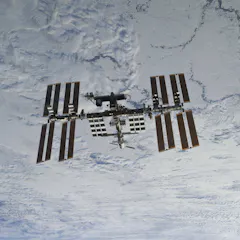
The International Space Station has hosted astronauts and spacefarers continually for 25 years.
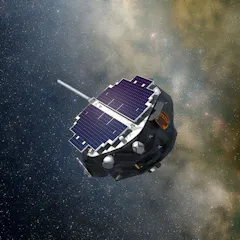
Studying the Sun helps researchers understand how space weather can affect technology back on Earth.
Top contributors
-

University Distinguished Professor of Astronomy, University of Arizona
-
Professor of Strategy and Security Studies, Air University
-
Professor (Astrophysics), University of Southern Queensland
-
Professor of Planetary and Space Sciences, The Open University
-
Associate Professor in Archaeology and Space Studies, Flinders University
-
Associate Professor in Astronomy, Monash University
-
Reader in Astrophysics, Keele University
-
Emeritus Professor of International Law, Western Sydney University
-
Senior Lecturer in Physics, Nottingham Trent University
-
Associate Dean of Innovation and Engagement, Swinburne University of Technology
-
Professor of Air and Space Law, University of Mississippi
-
Associate Professor, Astronomy, University of Regina
-
Kevin Orrman-Rossiter is a Friend of The Conversation.
Sterrenkenner, History & Philosophy of Science, The University of Melbourne
-
Professor of Physics and Astronomy, USC Dornsife College of Letters, Arts and Sciences
-
Lecturer in Astronomy, Nottingham Trent University