
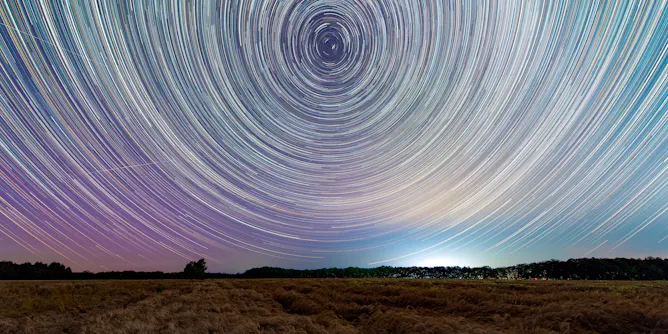
Would you guess that the Earth is spinning at 1,000 mph around its axis and at the same time hurtling through space on its orbit around the Sun at 67,000 mph? Here’s why you don’t feel all that motion.
Articles on Space
Displaying 141 - 160 of 1098 articles
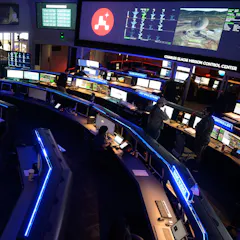
A planetary scientist walks through the sensors and systems that went into the recent detection of potential biosignatures.
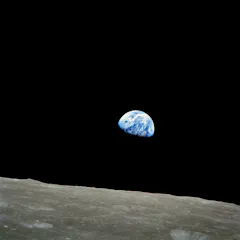
The Moon influences ocean tides – and ocean tides, in some ways, influence the Moon back.
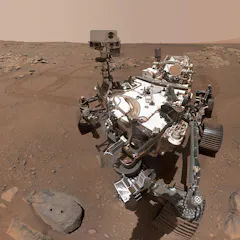
Unique, spotted rocks in Mars’ Jezero Crater could indicate that the planet once hosted life.

How we talk about outer space shapes the futures we imagine and build. Indigenous perspectives offer a better way forward.
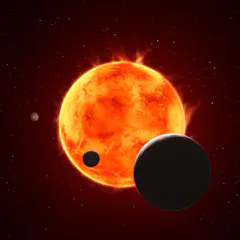
The largest telescope in space has been trained on a rocky exoplanet.
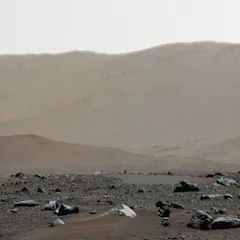
The Viking missions paved the way for future Mars missions and helped researchers understand the red planet’s climate and geology.

How researchers are working what out the incredible optical phenomena in Earth’s skies can tell us about other planets.
Could tiny stars a fraction the size of our solar system’s Sun have habitable planets orbiting them? A new study says it’s possible.
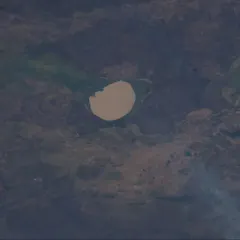
Lake Iro was recently photographed from space as it looked like a sunglint, but there is more to the lake that makes it unique.
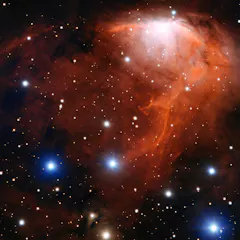
Two new studies challenge scientists’ previous theories on how the very first stars in the universe formed.
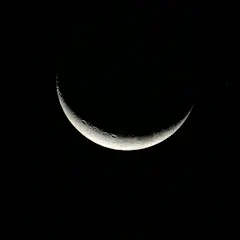
The Moon will indeed be black, kind of. But that’s not why you should look up this weekend.

The agency has been the subject of some criticism and some aspects of the new arrangement could be positive.

Everything bends space-time. Sometimes, we can even see this effect – and learn a lot from it.
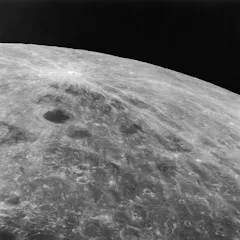
If you try to launch or land a spacecraft anywhere close to another object on the lunar surface, that object will get sandblasted with rocks, dust and sand.

Nuclear reactors in space may sound like something out of science fiction, but they are likely to prove important for powering long-term space missions.
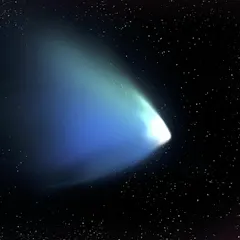
If you’re like most people, you’ve never heard of it. Meet the ringed asteroid-comet hybrid prowling the outer reaches of the Solar System.
August 5 was a whole millisecond shorter. Strap in for the full explanation.
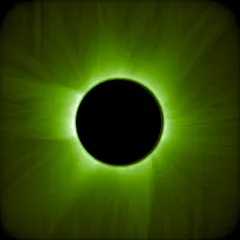
This solar eclipse was created by 2 satellites flying in formation, allowing astronomers to photograph the Sun’s corona.
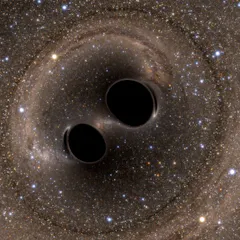
Too big to come from a dying star and too small to inhabit the center of a galaxy, these black holes are a puzzle that scientists are using LIGO to investigate.
Top contributors
-

University Distinguished Professor of Astronomy, University of Arizona
-
Professor of Strategy and Security Studies, Air University
-
Professor (Astrophysics), University of Southern Queensland
-
Professor of Planetary and Space Sciences, The Open University
-
Associate Professor in Archaeology and Space Studies, Flinders University
-
Associate Professor in Astronomy, Monash University
-
Reader in Astrophysics, Keele University
-
Emeritus Professor of International Law, Western Sydney University
-
Senior Lecturer in Physics, Nottingham Trent University
-
Associate Dean of Innovation and Engagement, Swinburne University of Technology
-
Professor of Air and Space Law, University of Mississippi
-
Associate Professor, Astronomy, University of Regina
-
Kevin Orrman-Rossiter is a Friend of The Conversation.
Sterrenkenner, History & Philosophy of Science, The University of Melbourne
-
Professor of Physics and Astronomy, USC Dornsife College of Letters, Arts and Sciences
-
Lecturer in Astronomy, Nottingham Trent University