
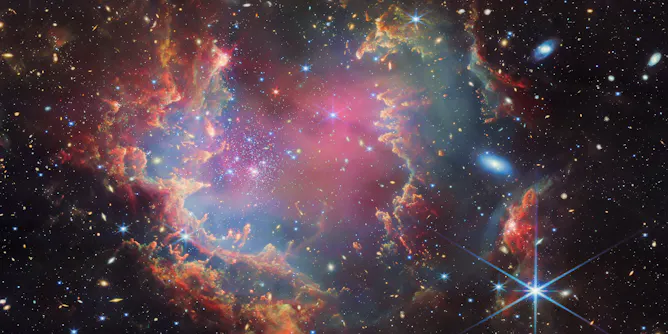
Aristotle believed the planets revolved around Earth and God could not have created other worlds. Today, scientists scour the surface of Mars for ‘biosignatures’ of microbial life.
Articles on Space
Displaying 61 - 80 of 1098 articles
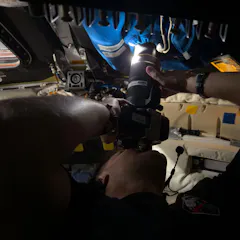
A photography expert explains how a photographer makes artistic decisions that an AI algorithm or robot can’t replicate.

A space historian explains how the Artemis II crew reimagined some Apollo-era photos and found spectacular new angles.
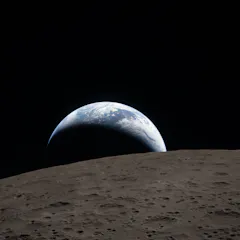
Going to the Moon isn’t just about science. Novelist Jules Verne predicted some of the societal ramifications modern lunar missions are creating today.

NASA’s Artemis II mission has revived lunar ambition – and a potential new race between nations. Very different visions now complicate the human future of space.
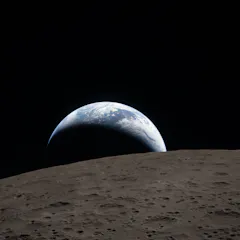
From geology training on Mushuau Innu First Nation territory in Labrador, to a new NASA Science Evaluation Room, Gordon Osinski takes us behind the scenes of Artemis II.
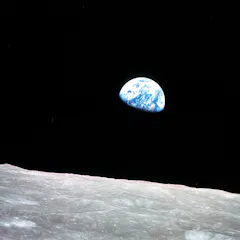
The global climate has changed drastically over the course of the 58 years that separate these two photographs of planet Earth.
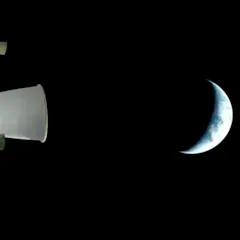
A planetary geologist and member of NASA’s First Artemis Lunar Surface Science Team witnesses the launch of the Artemis II moon rocket.
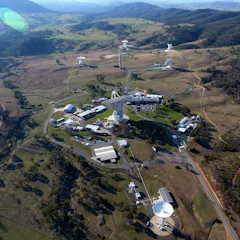
Ground stations in Australia are crucial for contacting the astronauts travelling to the Moon.

Victor Glover will become the first Black astronaut to orbit the Moon – but he is part of a long line of Black explorers, many forgotten through history. New research is giving York his due.

Curiosity and an openness to new ideas help Ryland Grace, the movie’s protagonist, navigate new discoveries about life in the universe.
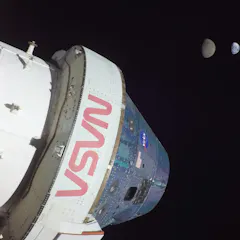
NASA’s Artemis II mission took decades of policymaking, engineering and financial support.
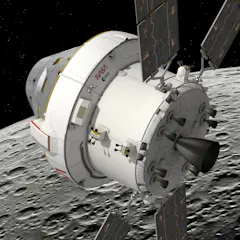
Sustained lunar exploration remains a challenge for modern democracies.
It’s about more than just beating China. As a space lawyer puts it, a Moon base would come with strategic, economic and scientific advantages.

A chemical signature in a lunar rock offers new insights into what early oxygen conditions were like on the Moon.
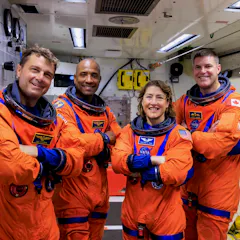
Space is extremely dangerous, but people can still do more than robotic explorers can – in terms of technical achievements and inspiring public interest.
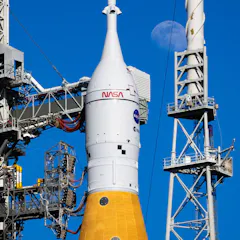
Scott Pace, the head of the National Space Council during the first Trump administration, talks to The Conversation Weekly podcast about the launch of Artemis II crewed mission round the Moon.
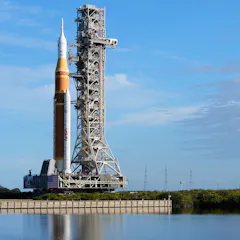
Artemis II will test the life control systems on the Orion spacecraft and, if all goes well, take a trip around the Moon.
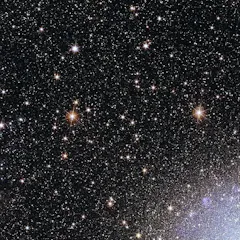
The fictional biologist in ‘Project Hail Mary’ claims that potential alien organisms might not be made of carbon or require water, unlike life on Earth.

AI could help astronomers crunch the vast amounts of data produced by a new observatory.
Top contributors
-

University Distinguished Professor of Astronomy, University of Arizona
-
Professor of Strategy and Security Studies, Air University
-
Professor (Astrophysics), University of Southern Queensland
-
Professor of Planetary and Space Sciences, The Open University
-
Associate Professor in Archaeology and Space Studies, Flinders University
-
Associate Professor in Astronomy, Monash University
-
Reader in Astrophysics, Keele University
-
Emeritus Professor of International Law, Western Sydney University
-
Senior Lecturer in Physics, Nottingham Trent University
-
Associate Dean of Innovation and Engagement, Swinburne University of Technology
-
Professor of Air and Space Law, University of Mississippi
-
Associate Professor, Astronomy, University of Regina
-
Kevin Orrman-Rossiter is a Friend of The Conversation.
Sterrenkenner, History & Philosophy of Science, The University of Melbourne
-
Professor of Physics and Astronomy, USC Dornsife College of Letters, Arts and Sciences
-
Lecturer in Astronomy, Nottingham Trent University