
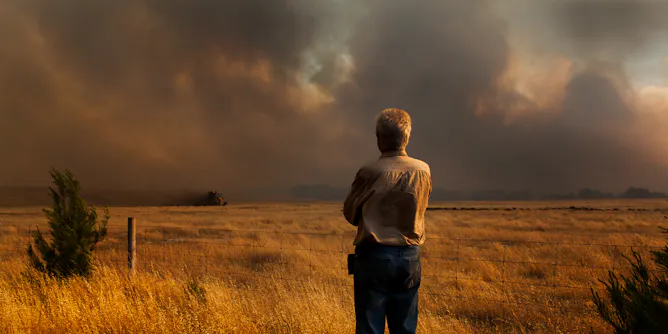
The tool can help communities better understand their local conditions and prepare for bushfires early.
Articles on Satellites
Displaying 1 - 20 of 301 articles

Sharks and rays have been swimming through the oceans for millions of years – but we still don’t really know where.
New satellite methods can track penguin colonies in winter – and can judge their health based on the colour of their guano.
Collecting data from sensors in remote woodlands has long required arduous treks. What if sensors could transmit data in real time?
This could mark the start of a major arms race in space, which would threaten all of us on Earth.
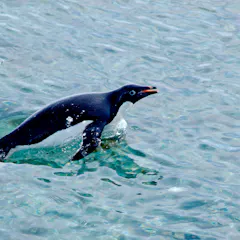
When penguin colonies are surrounded by sea ice, the penguins tend to eat more fish, rather than krill. And colonies that eat more fish are more successful at sustaining their numbers.
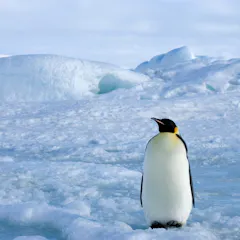
A breakthrough has helped researchers track down penguins living in the dark.

The abrupt disappearance of a lake is one clear sign that the ice below is melting, and a clue to wider permafrost changes.
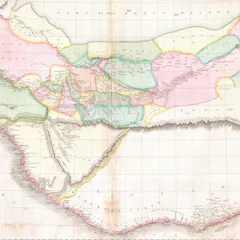
People have always put huge trust in the technology used to create maps, from the ancient Greek dioptra to modern satellites.
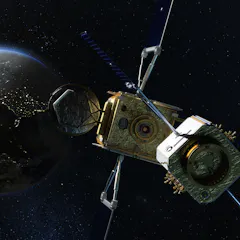
A new mission to save NASA’s Swift observatory shows why catching a satellite that was never designed for rescue is one of the hardest jobs in spaceflight.
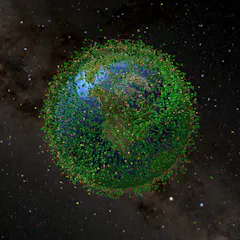
Unlike aircraft or cars, we can’t easily take satellites to a repair workshop.
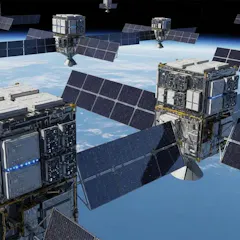
Proposals to put data centres in space have many hidden costs.

From space hotels and artificial meteor showers, to a new giant mirror that reflects sunlight to Earth — low-Earth orbit is getting weird.

The prospect of seamless wifi coverage, whichever way you travel, could soon be a reality.
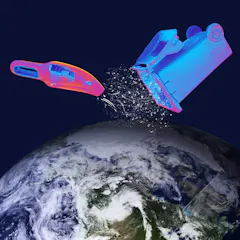
Properly addressing the problem of space requires work across three fronts: technology, policy and philosophy.
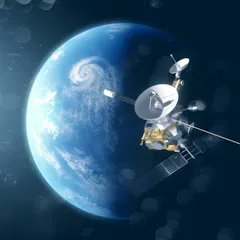
How prepared are we for a solar storm, bad software update or cybersecurity event that could trigger widespread loss of satellite control?
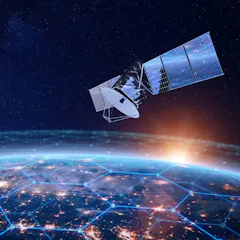
A data center could get more solar power and be kept much colder in space, but it would be extremely difficult to repair and update.

A new study shows it does rain more in cities, but the trend over time has been exaggerated by changes in satellites.
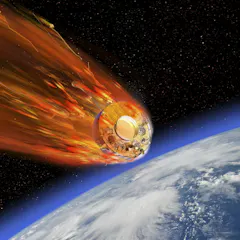
Human activity is causing large disruptions to the near-Earth space environment. We need an intergovernmental panel on space sustainability.
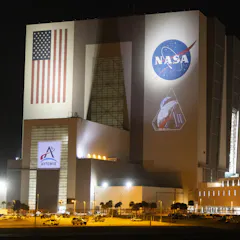
It’s about more than just beating China. As a space lawyer puts it, a Moon base would come with strategic, economic and scientific advantages.
Top contributors
-

Associate Professor, Astronomy, University of Regina
-
Professor, Physics and Astronomy, University of British Columbia
-
Andrew Dempster is a Friend of The Conversation.
Director, Australian Centre for Space Engineering Research; Professor, School of Electrical Engineering and Telecommunications, UNSW
-
Associate Professor in Archaeology and Space Studies, Flinders University
-
Associate Professor in Astronomy, Monash University
-
Associate Professor of International Affairs, Georgia Institute of Technology
-
Lecturer in space and military law and strategy, UNSW
-
Chief Executive Officer, Australasian Centre for Space Governance; Associate Expert, National Security College, Australian National University
-
Emeritus Professor of International Law, Western Sydney University
-
Adjunct Senior Research Fellow in Environmental Law, University College Dublin
-
Associate Professor, RMIT University
-
Space Plasma Physicist, Imperial College London
-
University Distinguished Professor of Astronomy, University of Arizona
-
Scientific Officer, Obafemi Awolowo University
-
Director, Bushfire Research Centre of Excellence, Australian National University