
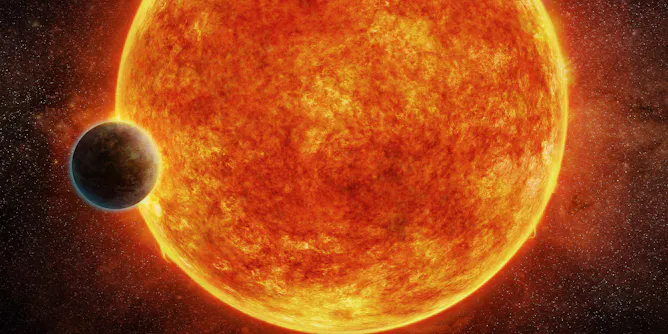
The exoplanet LHS 1140b may have a temperature that could allow for liquid water on its surface. Just possibly, it could support the existence of life.
Articles on Mars
Displaying 1 - 20 of 348 articles
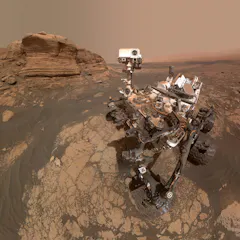
Each day in the control room of the Curiosity rover is jam-packed with important scientific decisions, as a NASA project scientist describes.

In Blue Giant, a reality TV trip-to-Mars novel, Jordan Prosser proves he’s a dazzlingly brilliant wordsmith – but is he too clever by half?
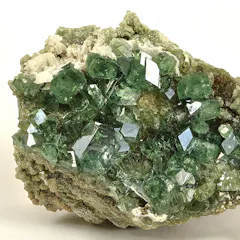
This is the first evidence that the mineral garnet may have been formed within the crust of Mars itself, heralding clues to the planet’s complex history.
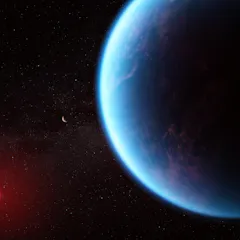
Only 6.6% of surveyed astrobiologists agreed that scientists had probably found extraterrestrial life on exoplanet K2-18b.
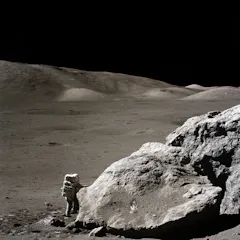
As lunar missions are back in vogue with engineering more sustainable human presence on the Moon in mind, there’s no getting away from the fact that you can’t breathe on a satellite that has no atmosphere.
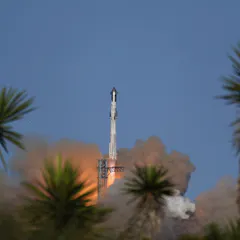
SpaceX is poised to test its latest, most powerful rocket and to become a publicly traded company, all while under pressure from environmentalists.
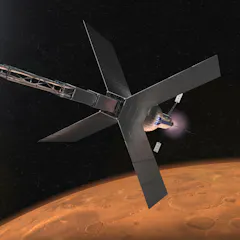
The technology could make it easier to send both humans and cargo to the red planet.
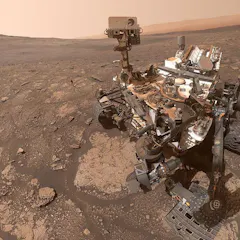
Study of extreme environments on Earth, along with exploration of the lifeless surface of the moon, can help us understand what life on Mars might look like.

The successful mission marks the beginning of a new chapter in lunar exploration.
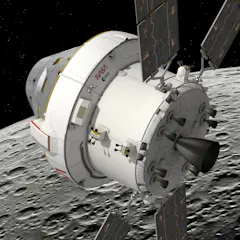
Sustained lunar exploration remains a challenge for modern democracies.
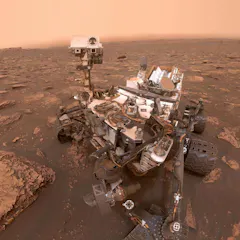
Analysis of a rock examined by the Curiosity rover reveals an abundance of organic matter.
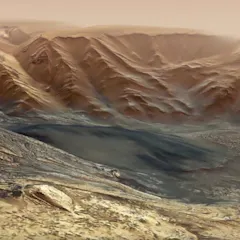
The results come from the Perseverance rover’s investigation of an ancient crater lake.
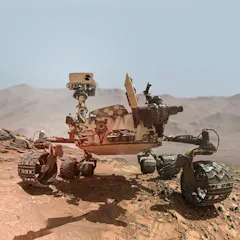
As plans for Moon bases gather pace across the globe, battery science may decide whether humans can live beyond Earth.
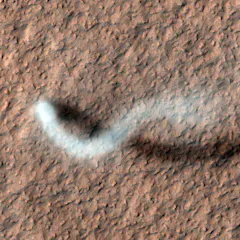
A rover recently captured sounds of lightning crackling on Mars, over a decade after scientists uncovered the first evidence for electric discharges on the planet.
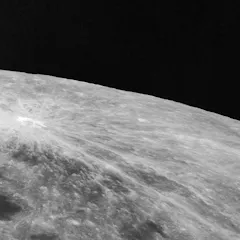
The US, China, India, Europe and Japan all have exciting missions on the horizon in 2026. Many of them are collaborative feats.
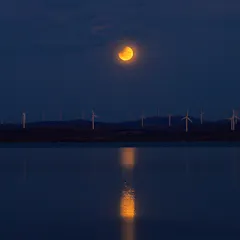
In 2026 we will see a total eclipse of the Moon, a blue Moon, a supermoon and the two brightest planets close together in the sky.
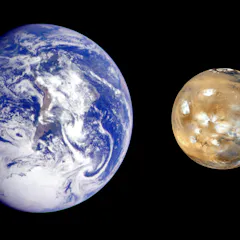
Mars may have been hospitable to life early in its history.
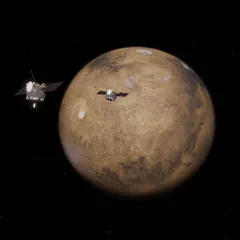
What’s better – many small space missions, or a few large, sweeping ones? Space scientists are asking this question as they face budget uncertainties.
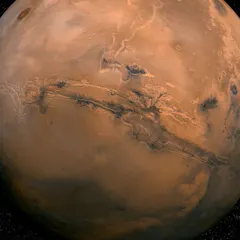
The phenomenon could have implications for future missions to the red planet.
Top contributors
-

Postdoctoral research associate, University of Oxford
-
Professor of Planetary and Space Sciences, The Open University
-
Professor of Planetary Geosciences, The Open University
-
Professor of Physics, Deputy Director (Solar System) at the Mullard Space Science Laboratory, UCL
-
Senior Lecturer in Physics, Nottingham Trent University
-
Senior Instrument Scientist, Australian Nuclear Science and Technology Organisation
-
Senior Curator (Astronomy), Museums Victoria Research Institute; The University of Melbourne
-
University Distinguished Professor of Astronomy, University of Arizona
-
Scientist, Max Planck Institute for Solar System Research
-
Professor of Strategy and Security Studies, Air University
-
Professor of Planetary Science, University of Leicester
-
Professor in Earth Sciences, Nanyang Technological University, Singapore, and Emeritus Professor of Mineral Physics, University of Cambridge
-
Kevin Orrman-Rossiter is a Friend of The Conversation.
Sterrenkenner, History & Philosophy of Science, The University of Melbourne
-
Earth Sciences Postdoctoral Scientist and Adjunct Associate, Dartmouth College
-
ARC Future Fellow, School of Earth and Planetary Sciences, Curtin University