
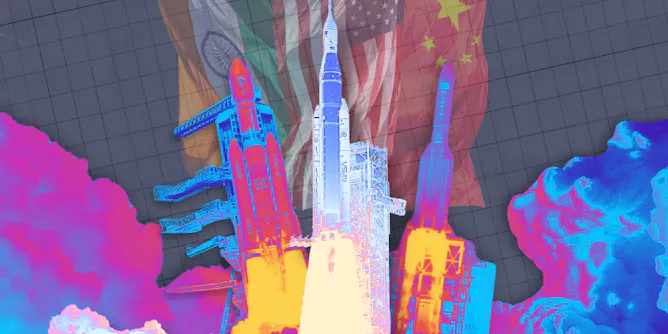
It can be easy to lose sight of the fact that the US isn’t the only major actor in space.
Articles on Space
Displaying 41 - 60 of 1098 articles
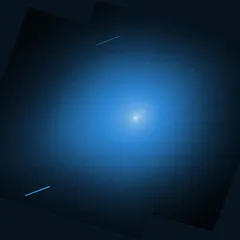
A process called ‘hot bottom burning’ helped scientists determine the age of 3I/ATLAS.

Only by fostering a deeper sense of ‘space citizenship’ will everyone benefit from our journeys to the Moon – and beyond.
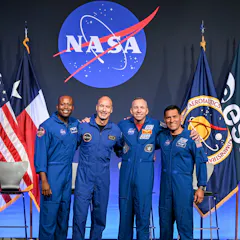
The Artemis program’s timeline and architecture has changed over the past year, so Artemis III will not land on the lunar surface.
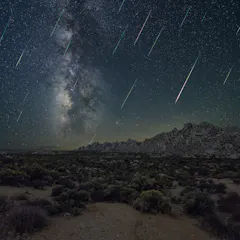
An observatory director describes the differences between the types of rocks that fly through space.
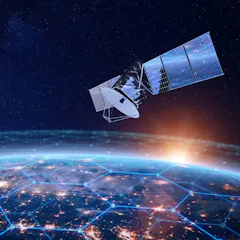
A data center could get more solar power and be kept much colder in space, but it would be extremely difficult to repair and update.
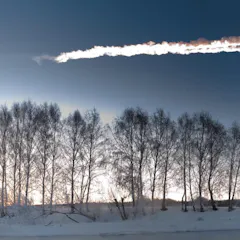
2026 has already been a banner year for meteor spottings and sonic booms across the world.

The nature of space, time and the evolution of life on Earth mean it’s unlikely extraterrestrial life has visited our home planet.
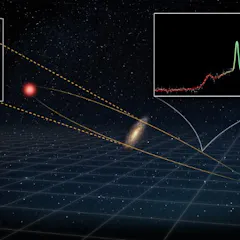
Scientists have discovered the most distant hydroxyl megamaser ever detected. This is a natural space laser.
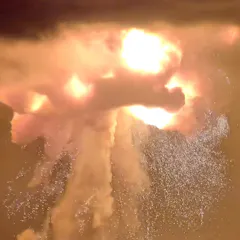
A physical chemist outlines the promises and risks associated with methane fuel and describes why SpaceX and Blue Origin use it in their superheavy rockets.
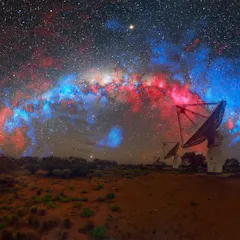
The best map yet of cosmic magnetic fields has been created with Australia’s most powerful radio telescope.

Seeing a signal in different kinds of light is like having a text written in several forms of writing – it makes it easier to decipher.

NASA has several contracts with Blue Origin as part of its Artemis program – this setback for the company could delay the program.
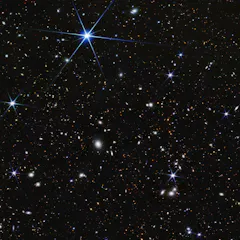
To travel between solar systems, a spacecraft would need extremely sophisticated – if not impossible – technology.

As humanity prepares for future lunar missions and landing on Mars, we need to develop sustainable and mobile medical systems for astronauts.
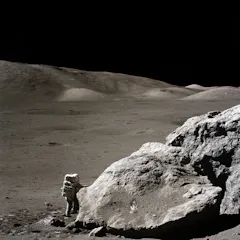
As lunar missions are back in vogue with engineering more sustainable human presence on the Moon in mind, there’s no getting away from the fact that you can’t breathe on a satellite that has no atmosphere.
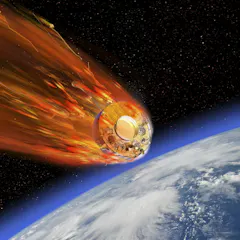
Human activity is causing large disruptions to the near-Earth space environment. We need an intergovernmental panel on space sustainability.
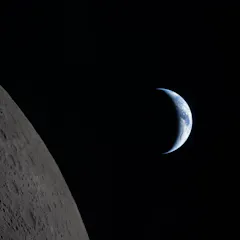
Landing on the Moon can disturb its environment – people are discussing how to balance those concerns with political and economic goals.
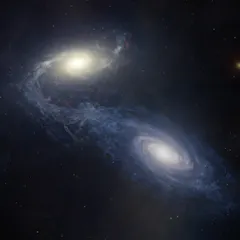
Astronomers want to understand how spiral galaxies form and get their massive spiral arms.
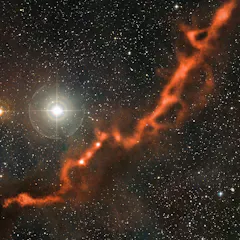
Discoveries of molecules in space that suggest extraterrestrial life are exciting, but they need to be taken with a grain of salt – an astrochemist explains why.
Top contributors
-

University Distinguished Professor of Astronomy, University of Arizona
-
Professor of Strategy and Security Studies, Air University
-
Professor (Astrophysics), University of Southern Queensland
-
Professor of Planetary and Space Sciences, The Open University
-
Associate Professor in Archaeology and Space Studies, Flinders University
-
Associate Professor in Astronomy, Monash University
-
Reader in Astrophysics, Keele University
-
Emeritus Professor of International Law, Western Sydney University
-
Senior Lecturer in Physics, Nottingham Trent University
-
Associate Dean of Innovation and Engagement, Swinburne University of Technology
-
Professor of Air and Space Law, University of Mississippi
-
Associate Professor, Astronomy, University of Regina
-
Kevin Orrman-Rossiter is a Friend of The Conversation.
Sterrenkenner, History & Philosophy of Science, The University of Melbourne
-
Professor of Physics and Astronomy, USC Dornsife College of Letters, Arts and Sciences
-
Lecturer in Astronomy, Nottingham Trent University