
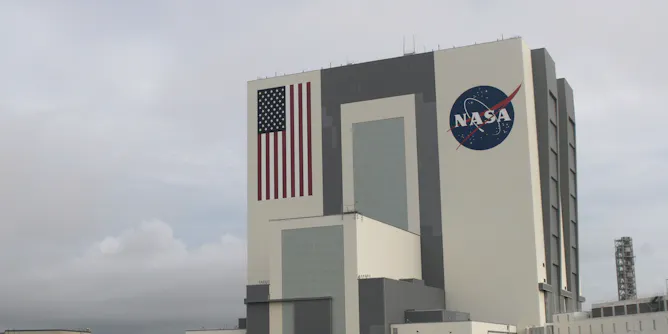
Under the proposed budget, several major projects, such as the Mars Sample Return and the Space Launch System, would face cancellation.
Articles on Space
Displaying 181 - 200 of 1098 articles
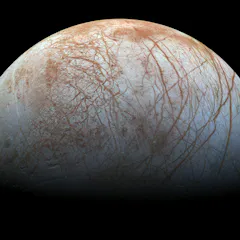
As NASA rolls out more powerful telescopes in the future, scientists will need a way to determine where to point them. A new approach could help.
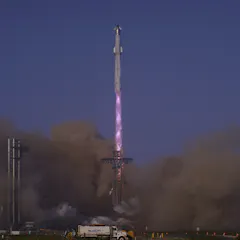
The Starship program has already experienced more failures than many other space missions in the past. Will it ever see success – and if so when?

The object doesn’t resemble any known type of star or system in the Milky Way.
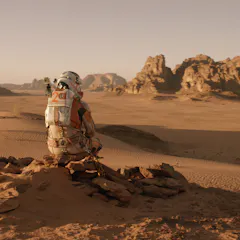
NASA hasn’t landed humans on Mars yet. But thanks to robotic missions, scientists now know more about the planet’s surface than they did when the movie was released.

The speed of light is the fastest anything can travel. What happens to a photon from a galaxy 25 million light years away on its journey toward Earth?

Space tourism is in an exploration phase – the decisions companies make around how to conduct these experiences now will set the tone moving forward.
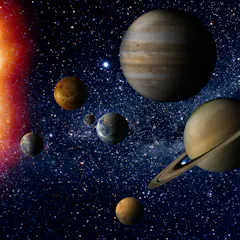
The biggest planets hogged a lot of the raw materials and were fully formed first.
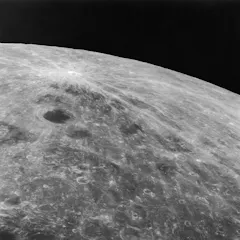
NASA’s learned a lot about the Moon since Apollo. But a perfect landing still requires incredible planning and scientific precision.
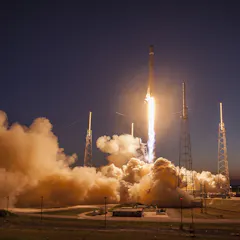
Getting into space is now a joint effort between states and companies, with plenty of opportunity for companies and countries willing to be flexible or neutral.

The recent detection of a gas in a distant plant has been linked to life forms has sparked debate among scientists.
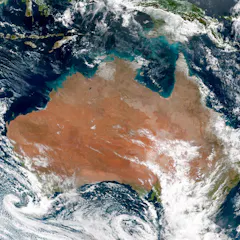
Australia relies on satellites it doesn’t own – which creates a risky situation.
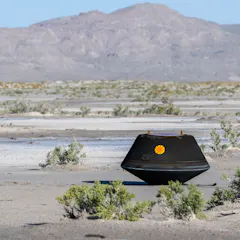
Missions that return asteroid samples bring home more than just very expensive dust. These samples can provide valuable insights for scientists and commercial interests.
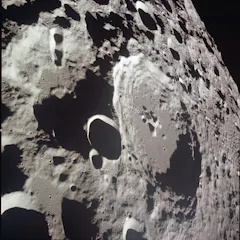
More people will be going to the Moon in coming years, and the way current legal frameworks are written could lead to conflict.
The extraordinary potential of quantum computers also threatens the security systems that keep our digital world safe.
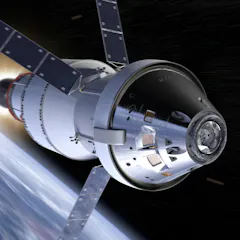
Major science missions could be cancelled, along with vehicles designed to return astronauts to the Moon.
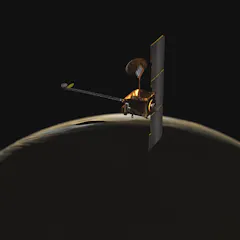
An aerospace engineer explains why NASA, Space Force and other agencies are using or testing aerobraking for more fuel-efficient spacecraft.
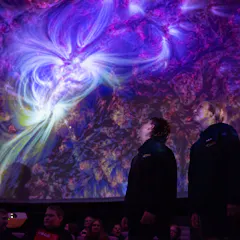
As the night sky became polluted with light from electrified cities, people built planetariums. Today, they’re more impressive than ever.
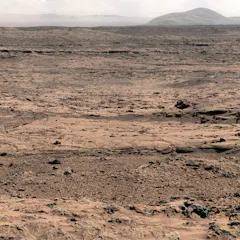
NASA’s Curiosity rover has spotted carbon-containing minerals that can tell scientists more about what ancient Mars’ atmosphere may have looked like.
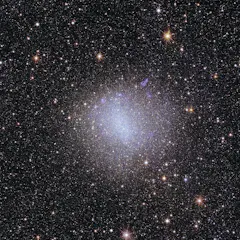
An astronomer breaks down 3 key components that allow researchers to make groundbreaking discoveries – and decide when results aren’t significant.
Top contributors
-

University Distinguished Professor of Astronomy, University of Arizona
-
Professor of Strategy and Security Studies, Air University
-
Professor (Astrophysics), University of Southern Queensland
-
Professor of Planetary and Space Sciences, The Open University
-
Associate Professor in Archaeology and Space Studies, Flinders University
-
Associate Professor in Astronomy, Monash University
-
Reader in Astrophysics, Keele University
-
Emeritus Professor of International Law, Western Sydney University
-
Senior Lecturer in Physics, Nottingham Trent University
-
Associate Dean of Innovation and Engagement, Swinburne University of Technology
-
Professor of Air and Space Law, University of Mississippi
-
Associate Professor, Astronomy, University of Regina
-
Kevin Orrman-Rossiter is a Friend of The Conversation.
Sterrenkenner, History & Philosophy of Science, The University of Melbourne
-
Professor of Physics and Astronomy, USC Dornsife College of Letters, Arts and Sciences
-
Lecturer in Astronomy, Nottingham Trent University