
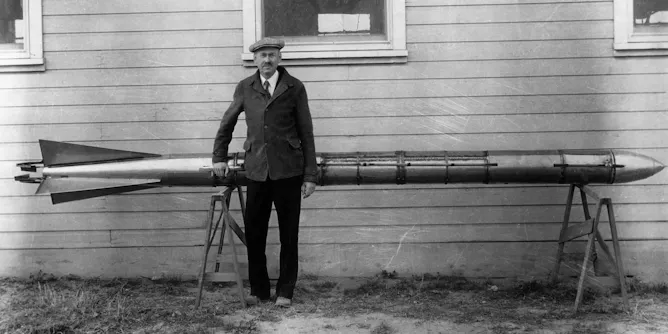
From World War II to the Apollo era, the space shuttle program and today’s privately developed commercial rockets, the landscape of spaceflight has changed dramatically.
Articles on Space
Displaying 81 - 100 of 1098 articles

Ghost particles from ancient stellar explosions could be detected for the first time this year.
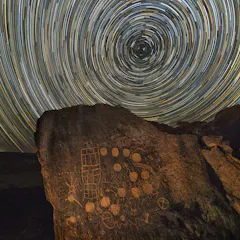
From Earth spinning on its axis and orbiting the Sun to it precessing like a top, lots of factors affect which stars you can see in the sky.
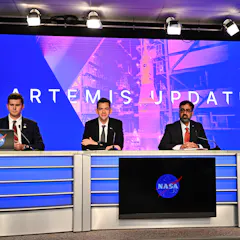
Artemis II has been plagued by similar issues to those faced by its predecessor, leading NASA to shake up its plan to return humans to the Moon.
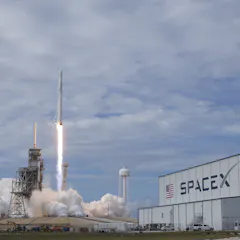
What does it mean for national security if access to Earth’s orbit depends largely on one company?
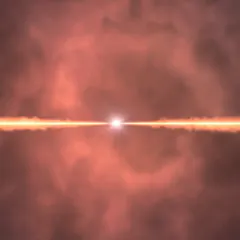
Astronomers captured the clearest example yet of one of these hidden explosions.
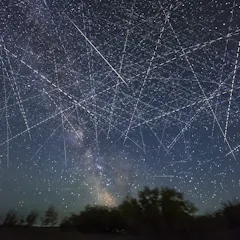
Planned ‘megaconstellations’ of satellites could cause unforeseen harm to the ozone layer and climate systems. Global regulation is needed before it’s too late.
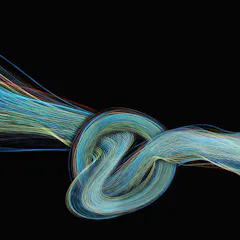
A mathematician explains hypercubes and the rules of life in higher dimensions.
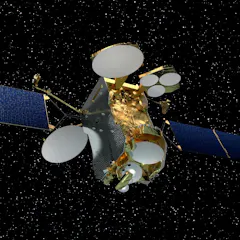
Two Russian satellites appear to have been shadowing European spacecraft in Earth orbit.

A new study provides the first evidence that re-entering space debris pollutes Earth’s upper atmosphere.
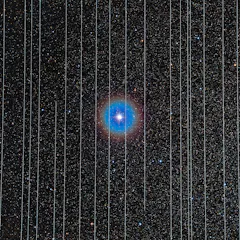
Cultural, spiritual, and most environmental impacts aren’t taken into account when launching thousands of satellites.
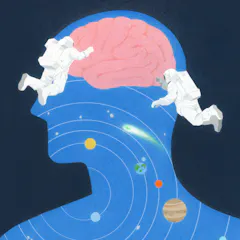
These changes aren’t permanent – the brain goes gradually back to normal after coming back to Earth. Understanding the physical effects of spaceflight helps plan space missions.
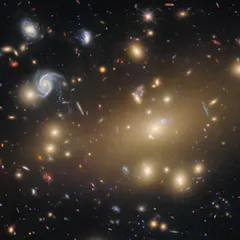
Two ways of measuring how fast the universe is expanding disagree, a puzzle known as the Hubble tension. Tiny magnetic fields from the Big Bang may offer a solution.

Dark matter doesn’t seem to interact with the matter we can see and touch, so scientists look for it in unusual places, like faraway galaxies and underground detectors.

Comet MAPS has the potential to be one of the ‘Great Comets’ of this century.
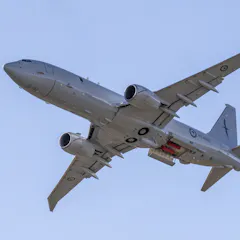
NZ appears to be widening its defence and surveillance capabilities across the region, raising questions about strategic alignment, transparency and independence.

Several robotic spacecraft orbiting the Moon can take detailed pictures of its surface, so why send people around the Moon? A planetary geologist explains the benefits.
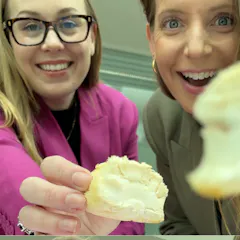
The mushrooms lived in space for over a month – and could be key to the health of astronauts in the future.
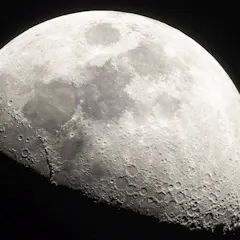
Today, there aren’t just two countries competing to get to the Moon. More countries have space programs, and private industry plays a larger role.
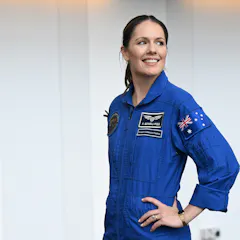
The 41-year-old from South Australia is the first Australian to qualify as an astronaut under the country’s national space program.
Top contributors
-

University Distinguished Professor of Astronomy, University of Arizona
-
Professor of Strategy and Security Studies, Air University
-
Professor (Astrophysics), University of Southern Queensland
-
Professor of Planetary and Space Sciences, The Open University
-
Associate Professor in Archaeology and Space Studies, Flinders University
-
Associate Professor in Astronomy, Monash University
-
Reader in Astrophysics, Keele University
-
Emeritus Professor of International Law, Western Sydney University
-
Senior Lecturer in Physics, Nottingham Trent University
-
Associate Dean of Innovation and Engagement, Swinburne University of Technology
-
Professor of Air and Space Law, University of Mississippi
-
Associate Professor, Astronomy, University of Regina
-
Kevin Orrman-Rossiter is a Friend of The Conversation.
Sterrenkenner, History & Philosophy of Science, The University of Melbourne
-
Professor of Physics and Astronomy, USC Dornsife College of Letters, Arts and Sciences
-
Lecturer in Astronomy, Nottingham Trent University