
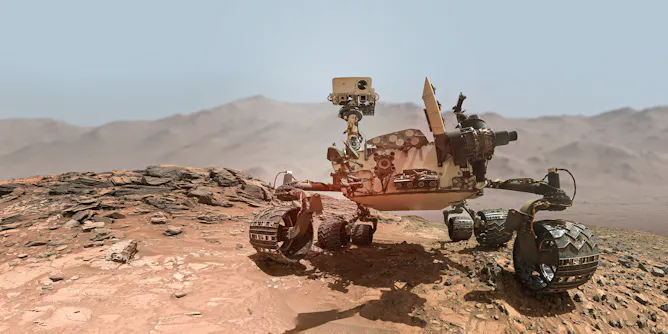
As plans for Moon bases gather pace across the globe, battery science may decide whether humans can live beyond Earth.
Articles on Space
Displaying 101 - 120 of 1098 articles
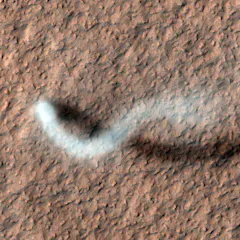
A rover recently captured sounds of lightning crackling on Mars, over a decade after scientists uncovered the first evidence for electric discharges on the planet.
The US, China, India, Europe and Japan all have exciting missions on the horizon in 2026. Many of them are collaborative feats.
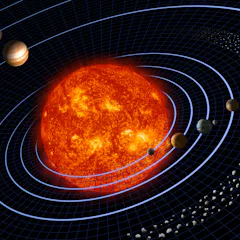
Which way is ‘down’ has a different answer depending on where you are on Earth, in the solar system, in our galaxy and beyond.

The findings from Pandora will complement data from the James Webb Space Telescope to give astronomers more insight into stars and planets outside our solar system.
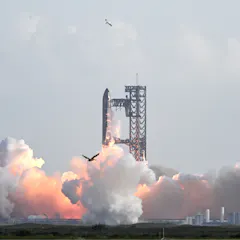
NASA, SpaceX and Blue Origin have all successfully launched superheavy-lift rockets. These massive vehicles are designed to carry a much heavier load.
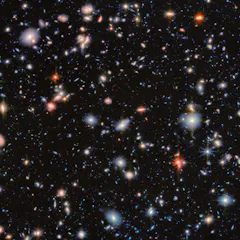
A mysterious anomaly challenges the most widely accepted vision of how the universe works.
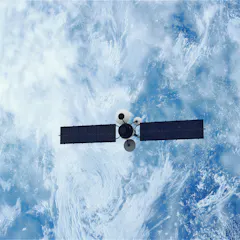
The closer to Earth a satellite flies, the clearer a picture it can take of the surface. But low-flying satellites also have to deal with atmospheric drag.
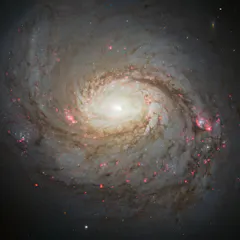
Normal matter – which makes up everything we see and touch – isn’t the only type of matter present in the universe.
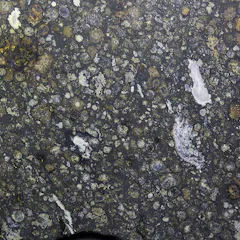
A new machine learning model explores the boundary between biological and nonbiological chemistry.

Unlike some other over-hyped meteor showers, this one is the real deal.
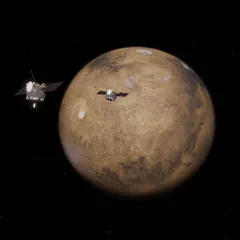
What’s better – many small space missions, or a few large, sweeping ones? Space scientists are asking this question as they face budget uncertainties.

Most of the universe is made up of dark matter and dark energy. The majority of everything else is dispersed throughout space as tiny particles.

Google’s Project Suncatcher would need sophisticated collision avoidance capabilities to navigate a junk-filled landscape.
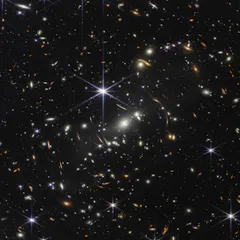
Some unique ‘stars’ might be fueled by dark matter annihilation.

Will the universe keep existing forever? An astrophysicist explains how scientists aren’t entirely sure, but they can make predictions.
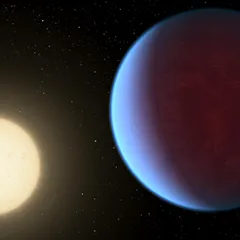
Searching for life on other planets requires more than just measuring their distances from their stars. A future NASA telescope may help search for potentially habitable worlds.
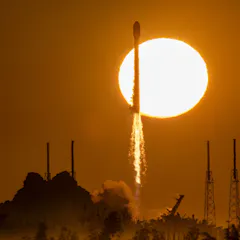
It’s not enough to point a rocket at the Sun and ignite the engines.
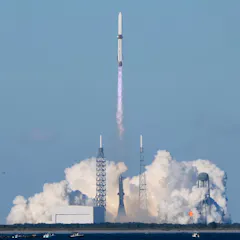
Jeff Bezos’s aerospace company Blue Origin is now the second, after SpaceX, to land a rocket booster for reuse.
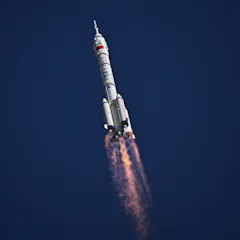
China has created more space debris than any other country. But as its space program grows, it has more to lose from a collision than ever before.
Top contributors
-

University Distinguished Professor of Astronomy, University of Arizona
-
Professor of Strategy and Security Studies, Air University
-
Professor (Astrophysics), University of Southern Queensland
-
Professor of Planetary and Space Sciences, The Open University
-
Associate Professor in Archaeology and Space Studies, Flinders University
-
Associate Professor in Astronomy, Monash University
-
Reader in Astrophysics, Keele University
-
Emeritus Professor of International Law, Western Sydney University
-
Senior Lecturer in Physics, Nottingham Trent University
-
Associate Dean of Innovation and Engagement, Swinburne University of Technology
-
Professor of Air and Space Law, University of Mississippi
-
Associate Professor, Astronomy, University of Regina
-
Kevin Orrman-Rossiter is a Friend of The Conversation.
Sterrenkenner, History & Philosophy of Science, The University of Melbourne
-
Professor of Physics and Astronomy, USC Dornsife College of Letters, Arts and Sciences
-
Lecturer in Astronomy, Nottingham Trent University