
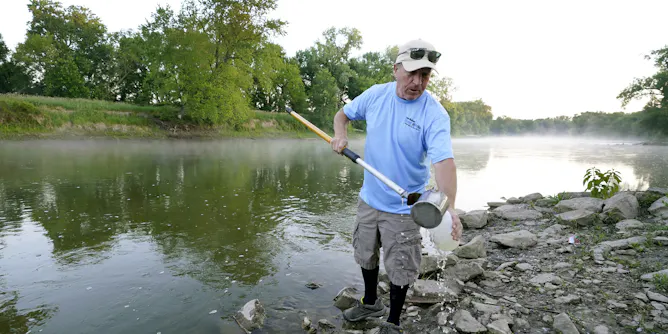
These aren’t abstract problems. They’re happening right now, in real communities, to real people.
Articles on Pollution
Displaying 121 - 140 of 650 articles
A CSIRO study has found 39% less plastic pollution in and around Australian coastal cities over ten years. It also found more places with no rubbish at all.
A new Water Research Commission study has found that Cape Town residents may be willing to shift to flushing their toilets with seawater.

Tribal governance takes a long view based in Native peoples’ deep history with these lands.
A harmful algal bloom of Karenia mikimotoi made dozens of surfers sick and killed seadragons, fish and octopuses on two South Australian beaches.
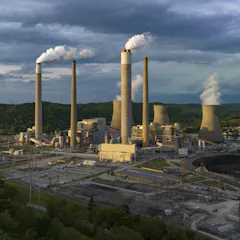
The Trump administration’s goal is to roll back rules limiting planet-warming greenhouse gas emissions from power plants, vehicles and oil and gas production, but it could backfire for industry.
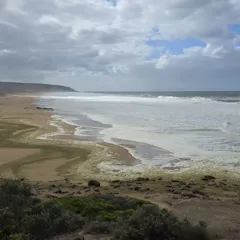
Sea foam is a health hazard. These bacterial smoothies can contain more harmful pathogens than a sewage treatment plant – and you wouldn’t go swimming in sewage.
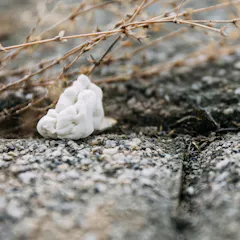
The reality is that chewing gum is just another form of plastic pollution, but it is not treated as such.

Bioplastics can be made out of natural fibres such as bamboo, hemp, plants or algae.

Clean air has become one of America’s best investments, returning $10 for every $1 spent on regulations, by one estimate.

To deal with microplastic pollution, it helps agencies to know what kind of plastic they’ve got on their hands.
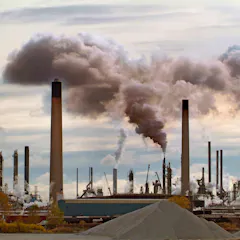
Between 2000 and 2020, only one-third of environmental enforcement actions were actually brought against the biggest corporate offenders.

An estimated 13 per cent of Albertans live within 1.5 kilometres of an active oil or gas well. This proximity can have adverse impacts on their health.
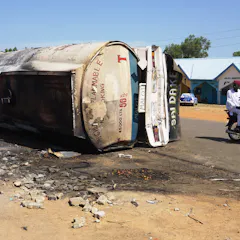
Fuel tanker accidents in Nigeria can be prevented by restructuring the built environment, providing parking spaces for the tankers, and constructing good roads.
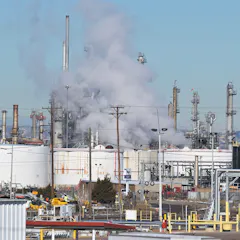
Limiting exposure to air pollution will have lasting impacts on Colorado communities with the highest exposure.

Burning plastic as fuel for cooking and heating releases toxic chemicals into the air and contaminates food. Yet this is common in many parts of the world.
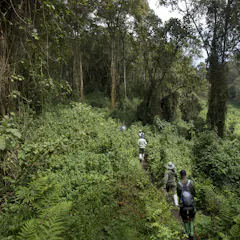
All countries must accelerate efforts to avert the biodiversity crisis, and preserve Earth’s precious natural places for future generations.

The organisms that cause greening are highly concentrated in Kenya’s shallow Winam Gulf.

The PFAS in lithium-ion batteries is a major obstacle to recycling or disposing of these batteries safely. But we have a way to fix this problem.
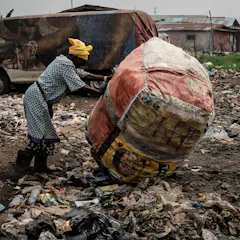
In Nigeria, informal collectors of plastic bottle waste are central to resolving the clash between its environmental costs and economic benefits.
Top contributors
-

Honorary Professor, School of Natural Sciences, Macquarie University
-
Associate Professor in Environmental Science, Western Sydney University
-
Professor, UNSW Law & Justice and UNSW Institute for Climate Risk & Response, UNSW
-
Professor of Environmental Science, University of South Africa
-
ARC Future Fellow and Associate Professor in Climate Science, ARC Centre of Excellence for 21st Century Weather, The University of Melbourne
-
Emeritus Professor of Medicine, Adelaide University
-
Senior Principal Research Scientist, Environment, CSIRO
-
Senior Research Fellow at the Stockholm Environment Institute, University of York
-
Professor, Obafemi Awolowo University
-
Professorial Fellow, ARC Centre of Excellence for Coral Reef Studies, James Cook University
-
Professor of Biology, University of Portsmouth
-
Postdoctoral research fellow, University of the Ryukyus, Okinawa Japan, Madonna University, Nigeria
-
Associate Professor, Australian National University
-
Professor, Australian National University
-
Associate Professor and Water Management Expert, University of South Africa