
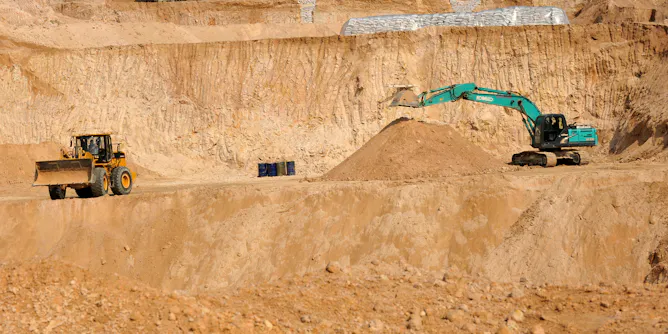
Australia’s rare earths deal with the US will expand production. Until now, much high-risk processing has been outsourced overseas. That will have to change.
Articles on Pollution
Displaying 61 - 80 of 650 articles
The Moss Landing battery fire became an unintended experiment – showing how burning lithium-ion cells scattered nickel, cobalt and manganese over a protected marsh.

Some African countries have consumer protection laws that they could use to hold fossil fuel companies accountable for pretending to be green.

To date, every family of marine mammal and seabird and all seven species of sea turtles have been documented to ingest plastics.

Between 2003 and 2022, clouds over the North Atlantic and Northeast Pacific became less reflective, allowing more sunlight to reach the ocean surface and causing sea surface temperatures to rise.
Lake Victoria’s aquaculture industry holds promise for improving food security and livelihoods in east Africa.

Schools should provide students with the know-how to challenge our throw-away culture and empower them to become conscious consumers.
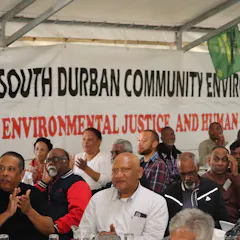
Steps need to be started urgently to clean up the petrol pollution left behind in South Durban by BP and Shell.

Breweries nationwide create waste at several stages of the beer-making process. Repurposing parts of this waste could improve antibacterial drugs.
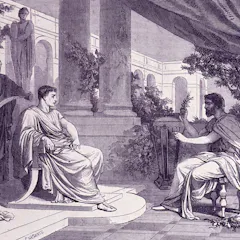
They worried deeply about the impact climate change would have on us as individuals, and on broader society.
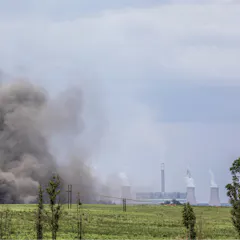
South Africa’s coal mines seem to be leaking far more methane than official records show.
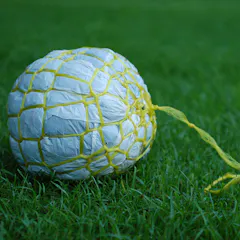
An EcoBall match is a live demonstration of the circular economy.
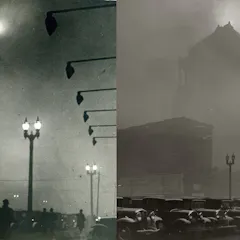
The situation had to get pretty bad before people really forced the government to act. But the effort was ultimately successful.
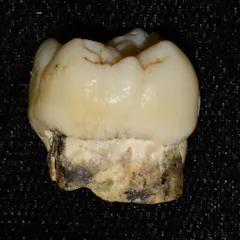
Long before industry, our ancestors faced toxic metals, including lead. This exposure may have shaped the evolution of human intelligence.
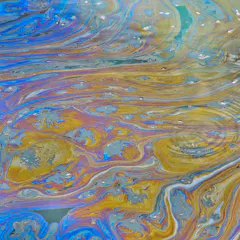
Companies with relatively many patents and more employees own facilities that tend to release lower proportions of their toxic waste into the environment.

Researchers developed a new method to remove microplastics from water.

Black mambas were found to be indicators of toxic poisons from heavy metals.

Careful research into public information and in-depth interviews has shown the scale of personnel cuts at the Environmental Protection Agency.
An environmental engineer explains how his research team is developing a system containing bacteria, biochar and gel to break down pollutants in waterways.

Using plastic waste in the Nigerian textile industry would reduce pollution, generate employment, and cut a niche in the world of sustainable fashion.
Top contributors
-

Honorary Professor, School of Natural Sciences, Macquarie University
-
Associate Professor in Environmental Science, Western Sydney University
-
Professor, UNSW Law & Justice and UNSW Institute for Climate Risk & Response, UNSW
-
Professor of Environmental Science, University of South Africa
-
ARC Future Fellow and Associate Professor in Climate Science, ARC Centre of Excellence for 21st Century Weather, The University of Melbourne
-
Emeritus Professor of Medicine, Adelaide University
-
Senior Principal Research Scientist, Environment, CSIRO
-
Senior Research Fellow at the Stockholm Environment Institute, University of York
-
Professor, Obafemi Awolowo University
-
Professorial Fellow, ARC Centre of Excellence for Coral Reef Studies, James Cook University
-
Professor of Biology, University of Portsmouth
-
Postdoctoral research fellow, University of the Ryukyus, Okinawa Japan, Madonna University, Nigeria
-
Associate Professor, Australian National University
-
Professor, Australian National University
-
Associate Professor and Water Management Expert, University of South Africa