
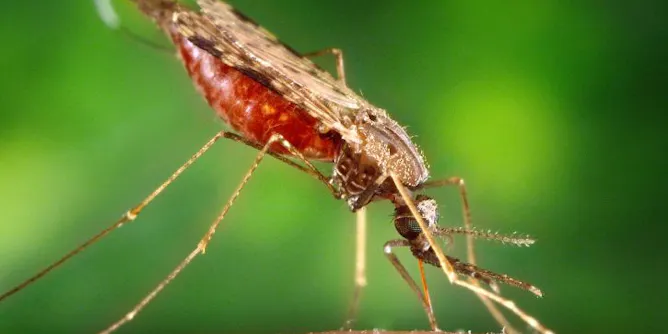
Avoiding malaria could be as simple as “ABCD” if the proper care is taken.
Articles on Malaria
Displaying 141 - 160 of 290 articles

Malaria is prevalent in developing countries. Epigenetics may be the key to finding its Achilles heel.
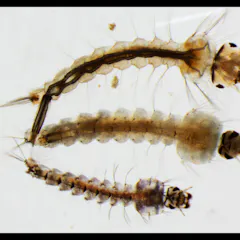
Researchers are only beginning to understand the impact of pollution and increased temperatures on the biology of mosquitoes.

New survey of insect-borne disease in Venezuela.

Blood tests used to diagnose malaria can’t detect low levels of the disease causing parasite and are hard to administer. A new portable spit test may provide a better alternative.
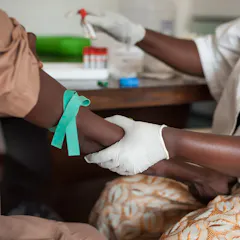
Gene sequences can be manipulated to prevent certain diseases and improve public health.

CC BY-ND5.68 MB (download)
Drones are being used to combat malaria in Zanzibar.
Significant new insights are emerging for the treatment of malaria, and eventually its eradication.
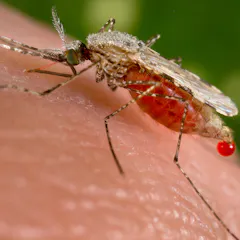
Researchers are exploring genetic forms of population control called gene drives that spread traits faster that happens naturally. The goal is to curb mosquito-borne diseases like malaria.

Genetically modified mosquitoes breed fear and suspicion, especially since the research happens behind closed doors, away from the public. Now scientists and architects are trying to change that model.

The fight against malaria needs scientific innovation. But community buy-in is just as important.
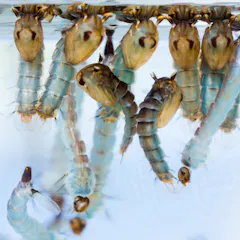
Researchers have tried unsuccessfully for decades to develop a malaria vaccine. Now a new approach, showing promise in mice, suggests it is possible to block mosquitoes from spreading the disease.

South Africa is piloting a new technique as it drives to eliminate malaria.

Progress in malaria control has stalled. Research towards an effective vaccine is underway.
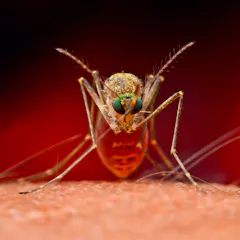
Today, human populations carry heavy genetic marks from the war with malaria. And it is the red blood cell (erythrocyte) that mostly bears the scars.

Malaria can be transmitted from humans to gorillas, with devastating effects.

Cystic fibrosis is the most common genetic disease among Caucasians. Now scientists believe they have discovered the origin of this often lethal genetic mutation and how it spread throughout Europe.
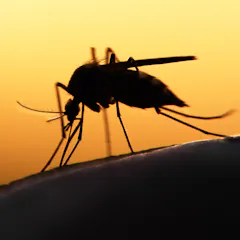
For several billion people mosquitoes are more than a nuisance – they transmit deadly diseases. Now genetic modification may prove the most effective defense against the mosquito, preventing disease.

Mosquitoes are picky about who they bite but it’s not actually “us” that they’re smelling when they choose their next meal…

New research could allow us greater control over what happens to genetically modified organisms once they’re in the wild.
Top contributors
-

Principal Medical Scientist and Head of Laboratory for Antimalarial Resistance Monitoring and Malaria Operational Research, National Institute for Communicable Diseases
-
Medical scientist, National Institute for Communicable Diseases
-
Medical Entomologist at the School of Biological Sciences, University of Nairobi
-
UP ISMC: Project Manager and Coordinator, University of Pretoria
-
Director: UP Institute for Sustainable Malaria Control, University of Pretoria
-
Chief Research Officer, Kenya Medical Research Institute
-
Director of the Jenner Institute, University of Oxford
-
Director of Science, Ifakara Health Institute
-
Project Manager, Cambridge Africa, Anglia Ruskin University
-
Professor of Molecular Parasitology and Medicine, St George's, University of London
-
Clinical Associate Professor, School of Medical Science & Sydney Infectious Diseases Institute; Principal Hospital Scientist, University of Sydney
-
Board Certified Internal Medicine Physician and Public Health Scientist, MidMichigan Health, University of Michigan
-
Director and CEO, Burnet Institute
-
Co-Director, Institute of Infection, Chair, Immunology & Vaccinology, Imperial College London
-
Scientist, International Centre of Insect Physiology and Ecology