
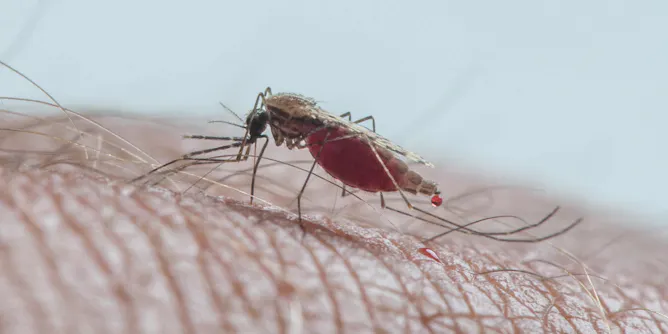
The countries share related populations, economies, ecologies and epidemiologies. This interconnectedness highlights challenges and opportunities for more effective malaria control across the region.
Articles on Malaria
Displaying 81 - 100 of 290 articles
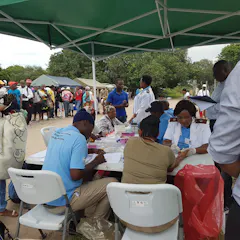
The South African Malaria Control Programme is one of the few on the continent that is entirely funded by government. The stable source of funding has allowed for steady malaria control interventions.

To achieve malaria elimination on the continent, Africans need to own the agenda.
The successful development of an effective vaccine against the deadliest form of malaria that is most common in sub-Saharan Africa is indeed a major achievement.
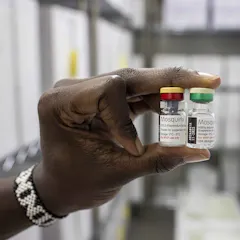
Malaria is one of the world’s oldest and deadliest diseases. So why has it taken so long to get a vaccine?
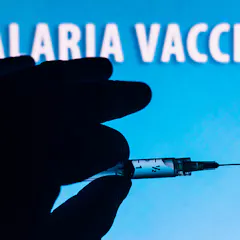
The WHO and the manufacturers of the vaccine will be rallying countries, particularly those with high malaria burdens, to adopt the vaccine.
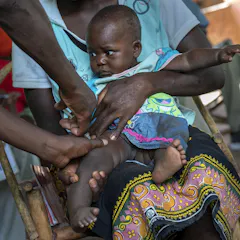
But the vaccine isn’t perfect. So we’ll still need mosquito nets and insecticides too.

The joint award recognizes the long road to deciphering the biology behind the brain’s ability to sense its surroundings – work that paves the way for a number of medical and biological breakthroughs.
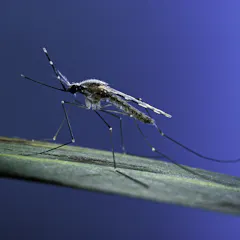
Malaria control must move away from relying too much on insecticides to more innovative and sustainable options. Genetic programming of mosquitoes is one.
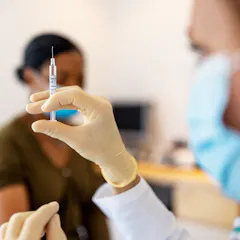
A 2015 paper on chicken virus evolution is being taken out of context and used to fuel fears about COVID-19 vaccines. Its lead author aims to clarify the science in hopes of saving lives.
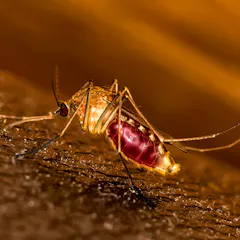
CC BY-NC-ND10.4 MB (download)
About 98% of mosquitoes aren't harmful to humans. We need to learn to deal with those that are.
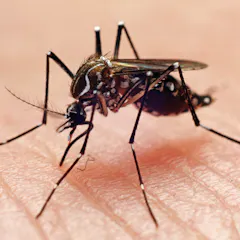
Mosquitoes are among the deadliest animals in the world. Half of the deaths attributed to them are associated with malaria. But they carry other parasites and viruses that threaten human health.

We’ve made advances towards delivering new devices to empower even people with basic medical knowledge to administer malaria tests in the field.
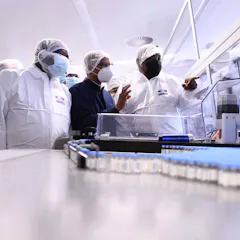
Vaccine manufacturing doesn’t come cheap. It depends heavily on support from developed countries. It also requires much more than relaxing intellectual property rights and a desire for vaccine equity.

Evolutionary medicine uses our ancestral history to explain disease prevalence and inform care for conditions like Type 2 diabetes. It also challenges the bio-ethnocentrism of western medicine.
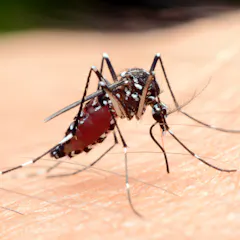
There is a chemical skin surface difference between individuals who perceived themselves as being attractive for mosquitoes and those that weren’t.
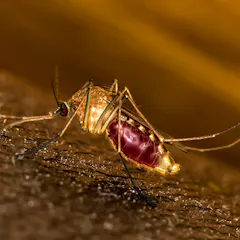
This project may help to eradicate malaria by developing new technologies to prevent mosquitoes from biting people when they are outdoors.
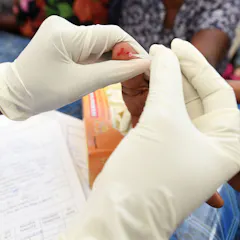
Nigeria must invest more in research and incorporate World Health Organisation-recommended interventions to eliminate malaria.

The R21 vaccine protected three-quarters of children against malaria in trials.

We have two mRNA COVID-19 vaccines so far. But what else can this technology do?
Top contributors
-

Principal Medical Scientist and Head of Laboratory for Antimalarial Resistance Monitoring and Malaria Operational Research, National Institute for Communicable Diseases
-
Medical scientist, National Institute for Communicable Diseases
-
Medical Entomologist at the School of Biological Sciences, University of Nairobi
-
UP ISMC: Project Manager and Coordinator, University of Pretoria
-
Director: UP Institute for Sustainable Malaria Control, University of Pretoria
-
Chief Research Officer, Kenya Medical Research Institute
-
Director of the Jenner Institute, University of Oxford
-
Director of Science, Ifakara Health Institute
-
Project Manager, Cambridge Africa, Anglia Ruskin University
-
Professor of Molecular Parasitology and Medicine, St George's, University of London
-
Clinical Associate Professor, School of Medical Science & Sydney Infectious Diseases Institute; Principal Hospital Scientist, University of Sydney
-
Board Certified Internal Medicine Physician and Public Health Scientist, MidMichigan Health, University of Michigan
-
Director and CEO, Burnet Institute
-
Co-Director, Institute of Infection, Chair, Immunology & Vaccinology, Imperial College London
-
Scientist, International Centre of Insect Physiology and Ecology