Jaishree Raman, National Institute for Communicable Diseases and Shüné Oliver, National Institute for Communicable Diseases
Southern African Development Community countries are very connected. Highly mobile and migrant populations frequently cross borders, posing significant challenges to reaching a malaria-free region.
Jeremy Herren, International Centre of Insect Physiology and Ecology and Clifford Mutero, International Centre of Insect Physiology and Ecology
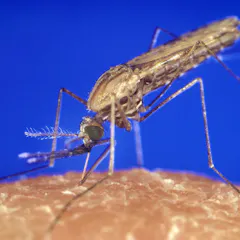
This invasive mosquito thrives in the type of habitat commonly found in urban areas. This means that malaria could become more prevalent in African cities.
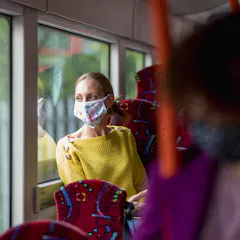
The COVID-19 new normal might be here for quite some time.
SolStock/E+ via Getty Images
As ready as you are to be done with COVID-19, it’s not going anywhere soon. A historian of disease describes how once a pathogen emerges, it’s usually here to stay.
Malaria, tuberculosis and HIV/AIDS are regarded as the ‘big three’ infectious diseases. This is where scientists are at in their efforts to find a vaccine for each one.
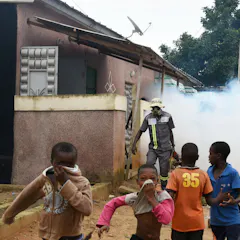
Children run as an agent of the National Institute of Public Hygiene carries out fumigation in the Anyama district of Abidjan,Ivory Coast.
SIA KAMBOU/AFP via Getty Images
A warming climate may change the types of viruses that thrive. A new report suggests that the threat of malaria may be replaced by dengue, for which there is no treatment and no cure.
With all the attention focussed on combating the spread of COVID-19 it’s easy to forget the other health challenges that could affect us all.
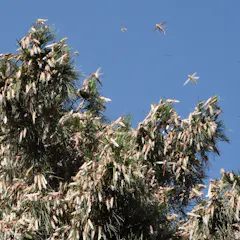
Swarms of locusts are seen on a tree in a residential area in the southwestern Pakistan city of Quetta on June 12, 2020.
BANARAS KHAN/AFP via Getty Images
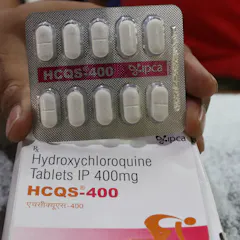
Currently, there is no evidence that this highly effective antimalarial can treat COVID-19 – and the threat of drug resistance should deter us from using it indiscriminately.
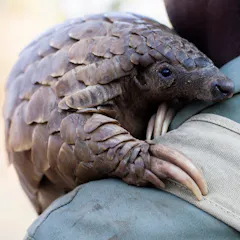
Pangolins have been found with covonaviruses that are genetically similar to the one afflicting humans today.
Jekesai Njikizana/AFP/Getty Images
The pandemic coincides with the long rainy season in Kenya. Rain increases mosquito breeding sites, vector density and thus transmission of mosquito-borne diseases.
The US president has reignited controversy over the use of malaria drugs to guard against COVID-19. But there is little reliable evidence so far that this tactic is safe or effective.
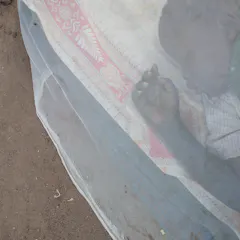
Children are a high-risk population prone to severe complications from malaria.
Shutterstock
With recent calls for their use in combating COVID-19, there are concerns that chloroquine and hydroxychloroquine might become unavailable to people who need them.
Somali women on a coronavirus awareness campaign.
Abdirazak Hussein/GettyImages
Principal Medical Scientist and Head of Laboratory for Antimalarial Resistance Monitoring and Malaria Operational Research, National Institute for Communicable Diseases