

US-funded research into the health of people abroad has large health and economic benefits for Americans.
Articles on Malaria
Displaying 1 - 20 of 290 articles

Three economists explore the viability of a UN-backed one-stop licensing ‘hub’ for making essential, often life-saving biotherapeutics and vaccines both affordable and more widely available.
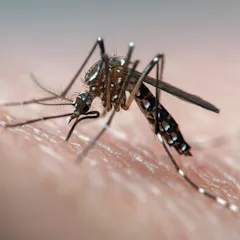
The results were striking: mosquito populations in towns where our mosquitoes were released declined.

Understanding genetics can help explain differences in disease susceptibility across populations, informing medical research and public health strategies.

An increase of just 0.03% in illegal gold mining is associated with a 20 to 46% increase in the local incidence of malaria in Yanomami lands in the Brazilian Amazon.
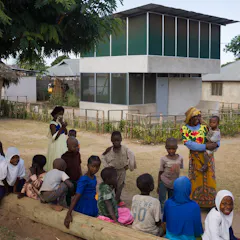
A three year study of Tanzanian children found that changing the way homes are designed can prevent diarrhoea, pneumonia and malaria, and help children grow taller.

These little predators are on tiny missions to seek and destroy mosquitoes, especially ones full of blood.
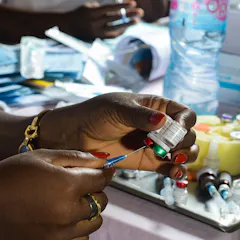
Malaria is still endemic in Africa.

Once-lethal insecticides now require concerningly high concentrations to effectively kill mosquitoes. Some mosquitoes are already immune to all classes of insecticides used to control malaria.
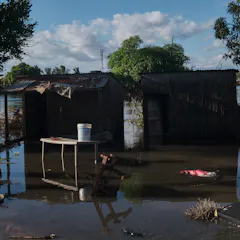
Flooding alters the environment in ways that favour malaria transmission.

After decades of stalled progress, new vaccines, treatments and genetic tools are helping scientists protect children and save lives worldwide.
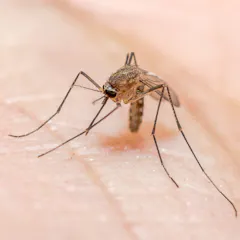
Improving oral and visual communication can accelerate malaria elimination in Papua. Here’s how.
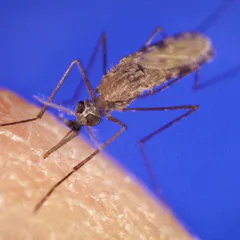
Quercetin, a plant-based flavonoid that give plants their bright colours, was found to disrupt malaria parasites.
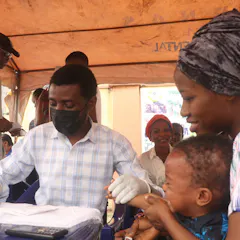
A recently approved drug for malaria treatment offers hope to millions of children who suffer from the disease in Africa.

Don’t ignore these symptoms after your trip abroad.
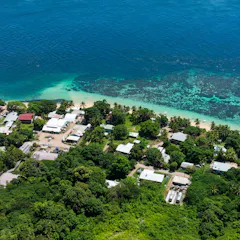
Two cases of locally acquired malaria have been reported in the Torres Strait. Here’s what you need to know.

As climate change and disrupted weather patterns impact countries around the world, leaders must act to mitigate the negative effects on public health.
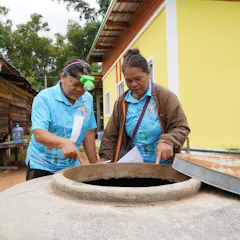
The fight against neglected tropical diseases is a fight for equity, productivity and long-term security. South-east Asia can lead the way.

Anopheles mosquitoes transmit malaria.

The fight against malaria faces many obstacles, including funding cuts. But it remains far cheaper to prevent the disease than to treat it.
Top contributors
-

Principal Medical Scientist and Head of Laboratory for Antimalarial Resistance Monitoring and Malaria Operational Research, National Institute for Communicable Diseases
-
Medical scientist, National Institute for Communicable Diseases
-
Medical Entomologist at the School of Biological Sciences, University of Nairobi
-
UP ISMC: Project Manager and Coordinator, University of Pretoria
-
Director: UP Institute for Sustainable Malaria Control, University of Pretoria
-
Chief Research Officer, Kenya Medical Research Institute
-
Director of the Jenner Institute, University of Oxford
-
Director of Science, Ifakara Health Institute
-
Project Manager, Cambridge Africa, Anglia Ruskin University
-
Professor of Molecular Parasitology and Medicine, St George's, University of London
-
Clinical Associate Professor, School of Medical Science & Sydney Infectious Diseases Institute; Principal Hospital Scientist, University of Sydney
-
Board Certified Internal Medicine Physician and Public Health Scientist, MidMichigan Health, University of Michigan
-
Director and CEO, Burnet Institute
-
Co-Director, Institute of Infection, Chair, Immunology & Vaccinology, Imperial College London
-
Scientist, International Centre of Insect Physiology and Ecology