
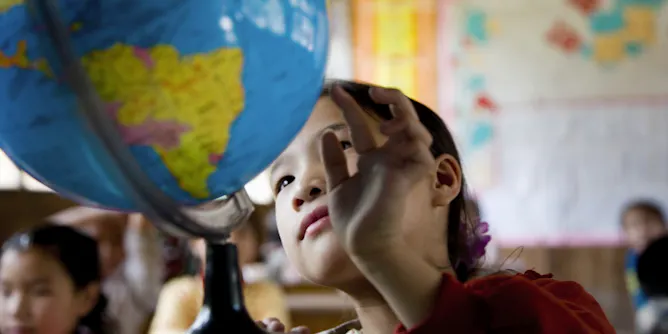
The Earth is constantly changing in natural ways, but most of those changes are very slow. Humans are speeding up other changes with global warming.
Articles on Earth
Displaying 141 - 160 of 242 articles
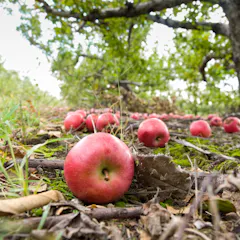
Gravity is something every person on Earth intuitively understands: It is what keeps you on the ground. But how come gravity pulls down, rather than pushes up? Einstein came up with the answer.
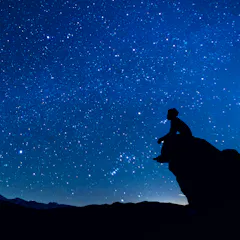
Astronomers know a lot about what’s in outer space – and think it’s possible it never ends.
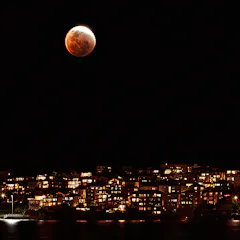
This Wednesday night, everywhere in Australia will have a box seat for a spectacular total eclipse of the Moon.
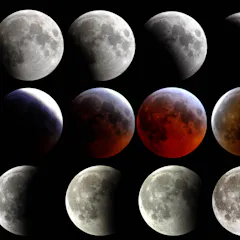
In the early morning of May 26, 2021, there will be a super blood-red lunar eclipse. The show will be spectacular and can all be explained by the orbits of the Earth and Moon.
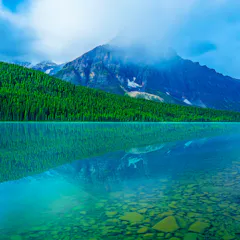
The snail’s pace of action in this year’s federal budget on climate is out of step with the urgency of the climate and income inequality crises.

To combat the biodiversity crisis, we need to fundamentally shift our economy and society and make nature conservation the norm.
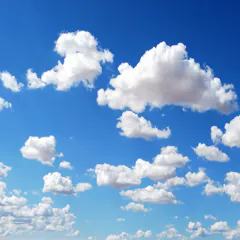
A young reader asks: What is the sky?
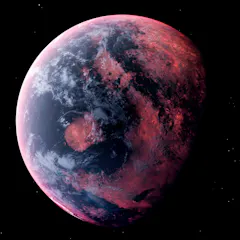
The rocks provide rare evidence of a time when Earth’s surface was a deep sea of incandescent magma.

A minuscule particle of asteroid dust has helped reveal how celestial rocks like Earth might have sprouted life.
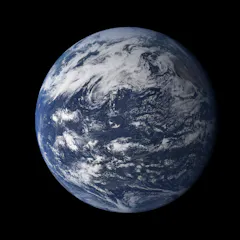
A recent study shows that the Earth’s water could come directly from the oxygen and hydrogen present in the rocks that formed it, and not from a late supply by asteroids.
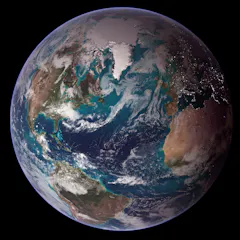
The presence of water on the Earth’s surface is the result of a subtle balance between different mechanisms in the atmosphere and below the surface.
If all of humanity was wiped out tomorrow, it’s estimated that the natural world would take at least five million years to recover from the damage humans have done to the world.
Research shows that when people feel insecure and anxious they become more concerned with identity values such as nationalism, status and success.
It’s all to do with the light from the Sun and a blanket of air wrapped around Earth called the ‘atmosphere’.
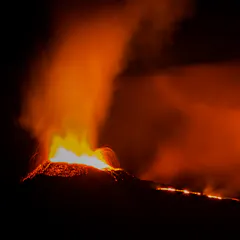
The study of neutrinos produced within the Earth’s interior provides a better understanding of the radioactivity of our planet.
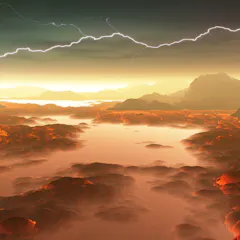
A severe climate change event on Venus may have transformed an Earth-like climate to the current uninhabitable-to-humans state.
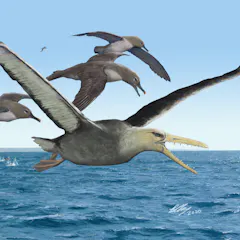
Paleontologists have discovered fossil remains belonging to an enormous ‘toothed’ bird that lived for a period of about 60 million years after dinosaurs.
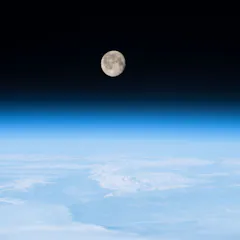
The Earth’s magnetic field was most likely weaker when life evolved on our planet than it is today.
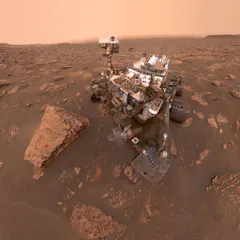
The clouds of Venus may harbour alien life. But where else?
Top contributors
-

Postdoctoral research associate, University of Oxford
-
Professor (Astrophysics), University of Southern Queensland
-
Senior Lecturer in Physics, Nottingham Trent University
-
Teaching Professor of Astronomy & Astrophysics, Penn State
-
Professor of History, University of Lancashire
-
Associate Dean of Innovation and Engagement, Swinburne University of Technology
-
Associate Professor of Earth and Planetary Sciences, University of Tennessee
-
Associate Professor in Archaeology and Space Studies, Flinders University
-
Cosmochimiste, chargée de recherche CNRS au Centre de Recherches Pétrographiques et Géochimiques (CRPG) de Nancy, CNRS, Université de Lorraine
-
PhD Candidate, University of Southern Queensland
-
Associate Professor, School of Physics, The University of Melbourne
-
Professor of Geophysics, University of Rochester
-
Professor of Astronomy, Vanderbilt University
-
Imperial College Research Fellow, Imperial College London
-
Postdoctoral Research Associate, Department of Geoscience, University of Wisconsin-Madison