
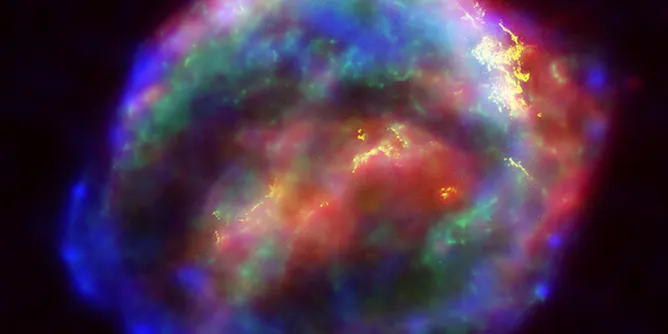
By studying old and dead stars, we can discover what will happen to our sun in the far, far future. And it won’t end with a big explosion.
Articles on Earth
Displaying 181 - 200 of 242 articles
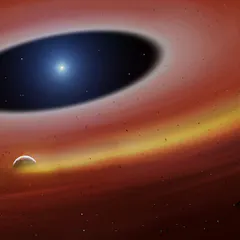
Exoplanet discovery can help us work out how the Earth will end its days.
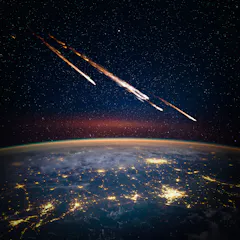
Meteorites might look like boring bits of rock – but each one has a fascinating story.
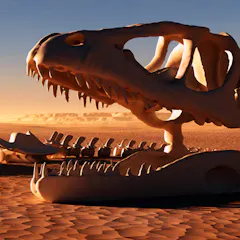
Growing evidence suggests that the extinction of the dinosaurs involved profound, complex and interconnected changes to the global systems that support life. Much like we are facing today.

A psychologist explains why we should accept that we will never live in the Anthropocene.
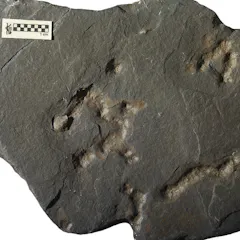
Newly found fossils point to a link between a rise in atmospheric oxygen and the first emergence of complex life on Earth.

The reason we have seasons is because, during its journey around the Sun, the Earth is tilted.
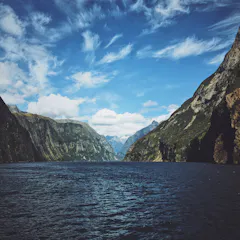
When I was little, geologists worked out Earth’s surface was made of pieces, like a giant puzzle. Those pieces, called “tectonic plates”, move and bump into each other and mountains form.

The United Nations Declaration on sustainable development stresses “leaving no-one behind,” but what about the factors that cause many to be behind in the first place?
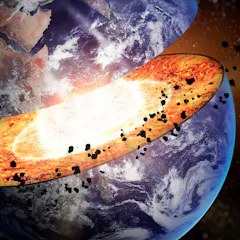
The Earth’s core is cooling down, and one day it will be completely solid – when that happens, Earth might look a lot like Mars.

Rapid environmental decline is a major threat, yet education is not mobilised to empower children. Fortunately, many initiatives explore how to make students actors of the ecological transition.
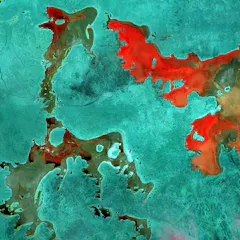
The Open Air project features satellite data interpreted and coloured to produce beautiful, surreal images of Australian landforms.
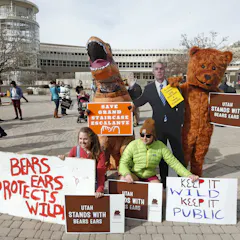
Despite the American Indian Religious Freedom Act, passed by the US Congress 40 years ago, Native Americans still struggle to protect public lands where they practice their religions.
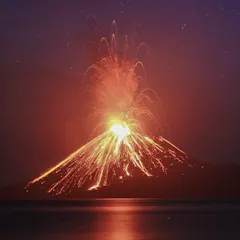
Compared to Earth, more “oomph” is required to bring magma to the surface of Mars, and this is probably why we haven’t seen any recent eruptions on the red planet.
Nearly 50 years since the first man walked on the moon, our morals are still stranded on Earth.
To answer this tricky question, we have to look back in time to when the Earth was born, 4.5 billion years ago.
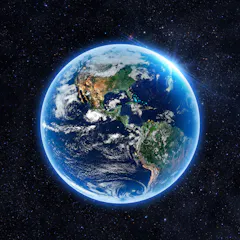
Children will be responsible for the future protection of our fragile planet. Their knowledge and engagement are critical.
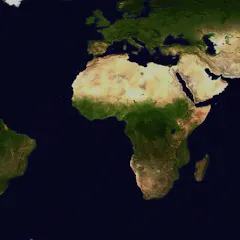
A public meeting of flat earthers is a product and sign of our times.

Indigenous communities lived in the Amazon for thousands of years without chopping down their forests.
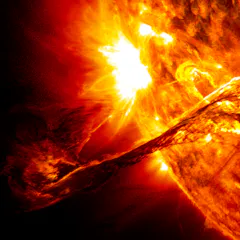
The wired Earth of the 21st century is at the mercy of the volatile nature of the sun.
Top contributors
-

Postdoctoral research associate, University of Oxford
-
Professor (Astrophysics), University of Southern Queensland
-
Senior Lecturer in Physics, Nottingham Trent University
-
Teaching Professor of Astronomy & Astrophysics, Penn State
-
Professor of History, University of Lancashire
-
Associate Dean of Innovation and Engagement, Swinburne University of Technology
-
Associate Professor of Earth and Planetary Sciences, University of Tennessee
-
Associate Professor in Archaeology and Space Studies, Flinders University
-
Cosmochimiste, chargée de recherche CNRS au Centre de Recherches Pétrographiques et Géochimiques (CRPG) de Nancy, CNRS, Université de Lorraine
-
PhD Candidate, University of Southern Queensland
-
Associate Professor, School of Physics, The University of Melbourne
-
Professor of Geophysics, University of Rochester
-
Professor of Astronomy, Vanderbilt University
-
Imperial College Research Fellow, Imperial College London
-
Postdoctoral Research Associate, Department of Geoscience, University of Wisconsin-Madison