
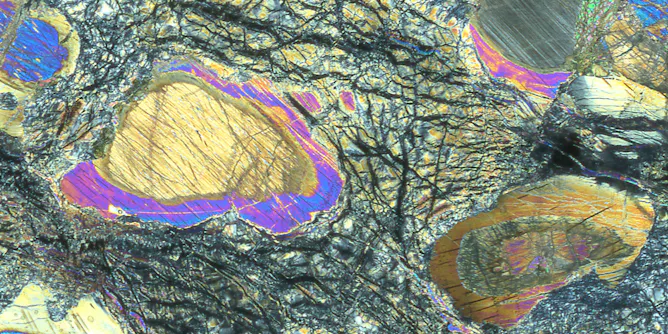
New research that offers valuable insights into the Earth’s mantle.
Articles on Earth
Displaying 61 - 80 of 242 articles
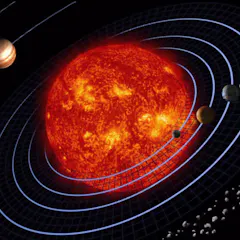
Magnetism and gravity both shape the boundaries of our cosmic neighbourhood.
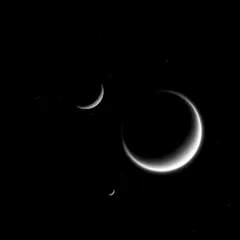
It’s not a competition, but if it were, Saturn would be winning.
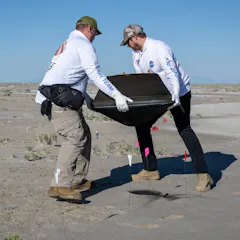
Scientists don’t often have the time to get all their equipment set up to study incoming meteors from space. Instead, they can study capsules from space missions as ‘artificial meteors.’
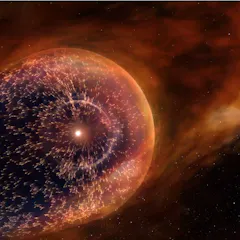
An interstellar probe could help scientists answer fundamental questions about how the Sun influences Earth, space and other planets in the solar system.
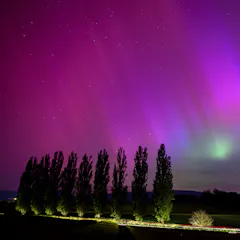
Here’s what’s going on to cause more widespread northern and southern lights.
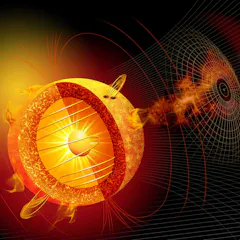
Solar storms can play havoc with electrical grids, satellites and railway lines.
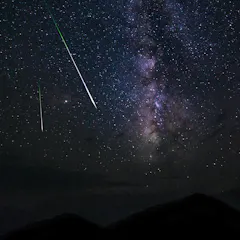
When rocks from space fall towards Earth, they usually don’t do any damage – here’s why.
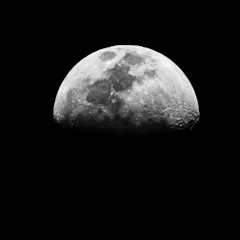
China’s Change'6 is going to explore the Moon’s far side and bring back precious lunar soil for scientists to study.
The amount of space junk will increase as we continue to launch objects into space, but there are ways to curb damage on the ground.
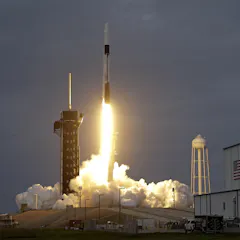
Space exploration is not a waste of resources, but a source of technological and medical advances, a tool for climate monitoring and a source of educational inspiration for youth.
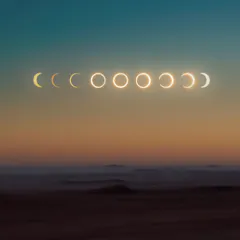
Eclipses have long fascinated and intrigued people, and anticipation of the total solar eclipse on April 8 is no exception. The beauty, history, mythology and science of eclipses justify the hype.

AI needs careful monitoring and the right policies to ensure it can benefit the fight against climate change.
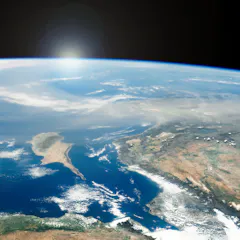
New research reveals our understanding of dust’s role in the environment is far from settled.
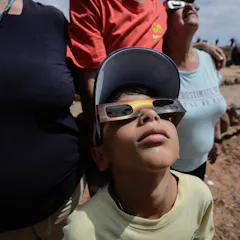
If you have young kids, the solar eclipse on April 8, 2024, represents a rare opportunity to teach them about science.

Eclipses are rare, fantastic celestial events. Here’s how educators can help visually impaired students enjoy eclipses alongside their sighted peers.

Deep-sea sediments show how the changing orbits of Earth and Mars are linked to past global warming and the speeding up of deep-ocean eddies.
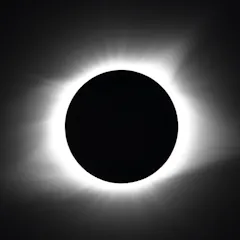
Many people will see a dazzling eclipse this April, but these events are possible only because of the sizes and precise distances between Earth, the Moon and the Sun.
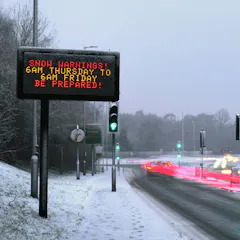
Cold snaps can affect everyday services and infrastructure, putting lives at risk.
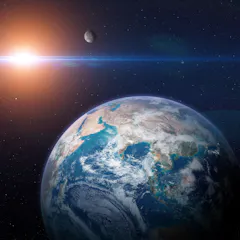
2024 is a leap year, when the shortest month mops up a bit of leftover time. But the extra day also tells us about space – and our place in it.
Top contributors
-

Postdoctoral research associate, University of Oxford
-
Professor (Astrophysics), University of Southern Queensland
-
Senior Lecturer in Physics, Nottingham Trent University
-
Teaching Professor of Astronomy & Astrophysics, Penn State
-
Professor of History, University of Lancashire
-
Associate Dean of Innovation and Engagement, Swinburne University of Technology
-
Associate Professor of Earth and Planetary Sciences, University of Tennessee
-
Associate Professor in Archaeology and Space Studies, Flinders University
-
Cosmochimiste, chargée de recherche CNRS au Centre de Recherches Pétrographiques et Géochimiques (CRPG) de Nancy, CNRS, Université de Lorraine
-
PhD Candidate, University of Southern Queensland
-
Associate Professor, School of Physics, The University of Melbourne
-
Professor of Geophysics, University of Rochester
-
Professor of Astronomy, Vanderbilt University
-
Imperial College Research Fellow, Imperial College London
-
Postdoctoral Research Associate, Department of Geoscience, University of Wisconsin-Madison