
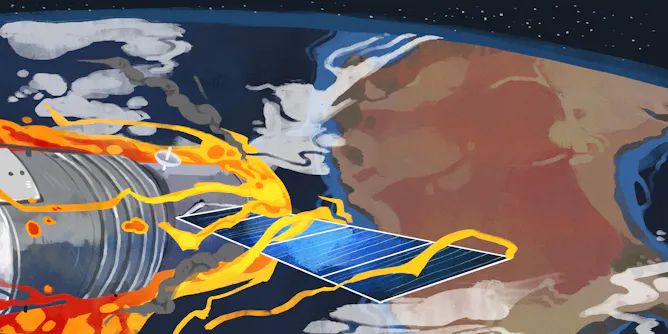
China’s Tiangong-1 space station is hurtling around Earth out of control and about to come crashing down. It’s just one of thousands of pieces of space junk left orbiting our planet.
Articles on Earth
Displaying 201 - 220 of 242 articles
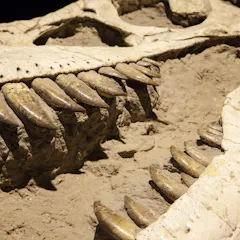
Scientists believe since 2010 we have entered the sixth period of mass extinction. CO2 emissions will change the lives of plants and animals in the next three to four decades.
When and where you see the Moon in the daytime depends on what phase it is in.
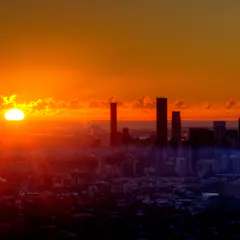
A solar day is a measure of how long it takes the Earth to rotate from one noon to the next, and today’s summer solstice also happens to be the longest solar day of the year.
Imagine the Earth pulling everything it is made up of, all of its mass, towards its centre. This happens evenly all over the Earth, causing it to take on a round shape.
How exactly do the stars twinkle in the night sky? As it turns out, the answer is full of hot air… and cold air.
More than 2,000 years ago, the Babylonians understood the cycle of eclipses. They also regarded them as signs that could foretell the death of a king.
A new detector could work out what’s causing a heat flow from the Earth’s interior. It may even solve the mystery of what powers the Earth’s magnetic field.
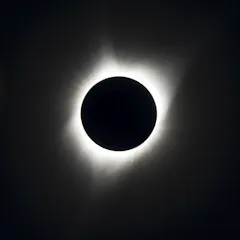
An astronomer explains how. why and when eclipses happen, what scientists can learn from them, and what they would look like if you were standing on the Moon.
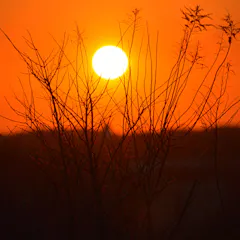
In five or seven billion years time, the Sun’s life will come to an end. And it will be really spectacular - if you’re watching from far enough away.
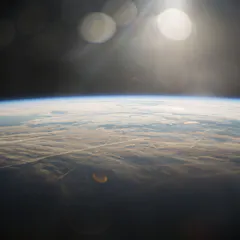
Some people think the sky is blue because of sunlight reflected off the ocean and back into the sky. But that’s not the real reason.
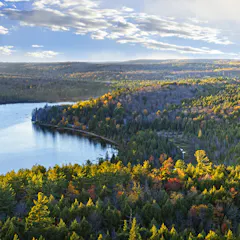
Canadians love to paddle on them and camp beside them, but our boreal lakes offer more than just peace and beauty. They could provide clues to how life on Earth began.
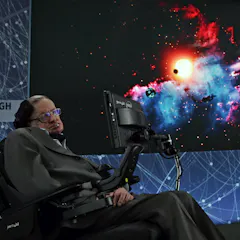
We need a positive vision for humanity, not tech-driven life on Mars.

You would not recognise Earth if you saw it 500 million years ago - the lands, oceans, climate and life were all very different. Scientists now have a new map of the deep history of Earth.
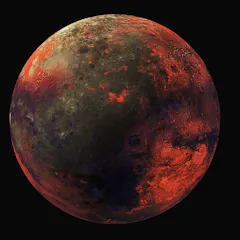
The planet is more similar to Earth than any other – except when it comes to supporting life.
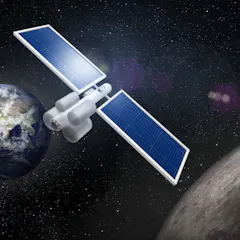
To get us to Mars and beyond, a team of students from around the world has a plan involving lunar rovers mining ice and a space station between the Earth and the moon.
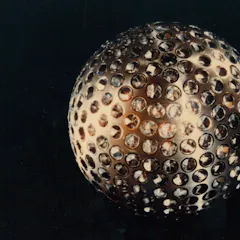
We know much about the true shape of our planet is thanks to two satellites that act as targets for lasers fired from Earth.

In countries that identify predominantly as Christian, scripture and its interpretations carry serious sociopolitical weight.
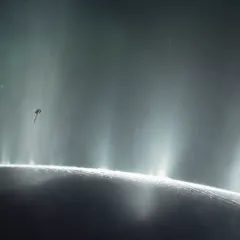
Earth is a relatively dry planet compared to some of the other ocean worlds in our Solar system. Life needs water so what about life on these other places?

Over the last 20 years, advances in the field of exoplanet discovery have excited the imaginations of scientists and enthusiasts alike. But we’re in position to know yet whether a planet is habitable.
Top contributors
-

Postdoctoral research associate, University of Oxford
-
Professor (Astrophysics), University of Southern Queensland
-
Senior Lecturer in Physics, Nottingham Trent University
-
Teaching Professor of Astronomy & Astrophysics, Penn State
-
Professor of History, University of Lancashire
-
Associate Dean of Innovation and Engagement, Swinburne University of Technology
-
Associate Professor of Earth and Planetary Sciences, University of Tennessee
-
Associate Professor in Archaeology and Space Studies, Flinders University
-
Cosmochimiste, chargée de recherche CNRS au Centre de Recherches Pétrographiques et Géochimiques (CRPG) de Nancy, CNRS, Université de Lorraine
-
PhD Candidate, University of Southern Queensland
-
Associate Professor, School of Physics, The University of Melbourne
-
Professor of Geophysics, University of Rochester
-
Professor of Astronomy, Vanderbilt University
-
Imperial College Research Fellow, Imperial College London
-
Postdoctoral Research Associate, Department of Geoscience, University of Wisconsin-Madison