
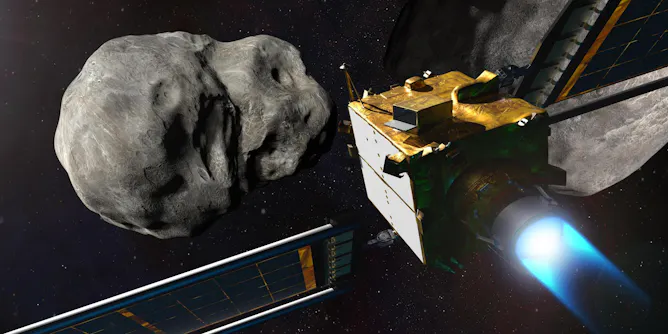
The mission provided details about how to deflect an asteroid should one threaten Earth in future.
Articles on Earth
Displaying 81 - 100 of 242 articles
As space travel and lunar exploration becomes a near-future reality, we should consider the impact of human activities on the lunar environment.

Over two billion years from now, Earth will no longer be able to sustain life. A new study looks at how much life has ever existed and what this means for the discovery of new life-supporting planets.
You might hate winter, but at least you know what to expect every year. Other planets have wobbly axes that lead to wild, unpredictable seasons.

The sun is expected to reach its solar maximum in 2025. Recent auroras suggest that the maximum may be bigger than predicted.

The film asks how individuals and communities can tackle disaster while embracing an ethos of mutual aid that sidesteps yearning for nationalist policies that lead to even more harm.
Scientists analyzing isotope ratios have found that many of the elements that make up life could be left over from Earth’s formation.
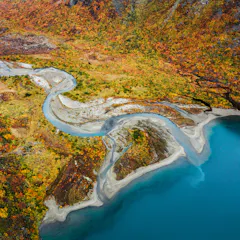
For decades, scientists have tried to uncover the cause of long-term changes in Earth’s biodiversity. New simulations point at geography playing a critical role.
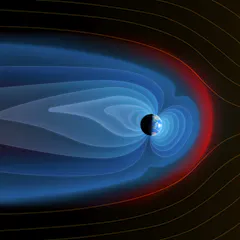
Ever seen the northern lights? You have a magnetic layer in Earth’s atmosphere to thank for those beautiful displays. But the magnetosphere does a lot more than create auroras.
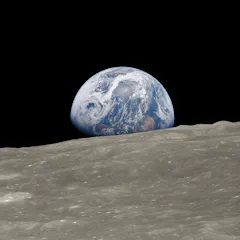
Borman’s professionalism helped the risky Apollo 8 mission become a success.
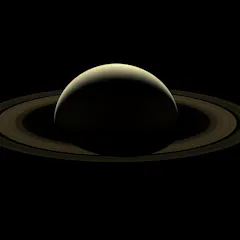
Viral headlines would have you think Saturn’s rings will vanish in just 18 months. Here’s what that really means and why you don’t need to worry.
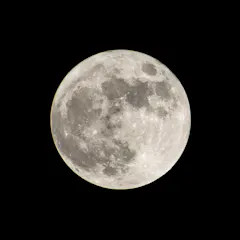
Despite the distances involved, people as far apart as the UK and Australia can see the Moon at the same time.
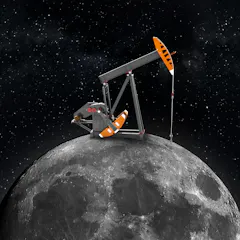
Upcoming NASA missions will help scientists understand the composition of asteroids – which could inform companies one day hoping to commercially mine asteroids.
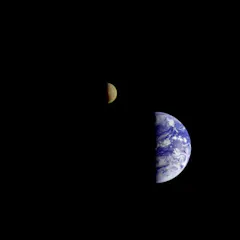
Control experiments are critical in informing the search for alien life.
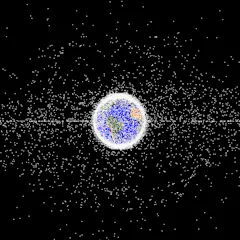
Earth’s orbits are getting more and more crowded. To keep track of everything and avoid collisions and catastrophes, we need a new field: space domain awareness.
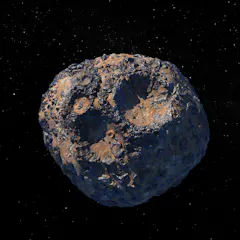
A distant lump of space rock may have a surprising amount in common with the core of our own planet.
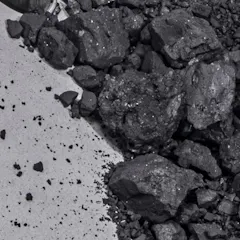
Studying the sample could help answer how water arrived on Earth and how life started.

A deadly earthquake in Afghanistan, following one in Morocco, highlights the risks in the region.

The earthquake was caused by the collision of two tectonic plates.
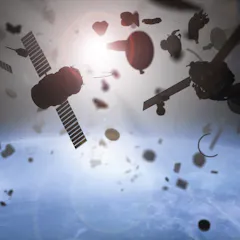
Treaties meant to ensure sustainability in space don’t currently regulate private companies, and not every country has signed on to an agreement for sustainable space exploration.
Top contributors
-

Postdoctoral research associate, University of Oxford
-
Professor (Astrophysics), University of Southern Queensland
-
Senior Lecturer in Physics, Nottingham Trent University
-
Teaching Professor of Astronomy & Astrophysics, Penn State
-
Professor of History, University of Lancashire
-
Associate Dean of Innovation and Engagement, Swinburne University of Technology
-
Associate Professor of Earth and Planetary Sciences, University of Tennessee
-
Associate Professor in Archaeology and Space Studies, Flinders University
-
Cosmochimiste, chargée de recherche CNRS au Centre de Recherches Pétrographiques et Géochimiques (CRPG) de Nancy, CNRS, Université de Lorraine
-
PhD Candidate, University of Southern Queensland
-
Associate Professor, School of Physics, The University of Melbourne
-
Professor of Geophysics, University of Rochester
-
Professor of Astronomy, Vanderbilt University
-
Imperial College Research Fellow, Imperial College London
-
Postdoctoral Research Associate, Department of Geoscience, University of Wisconsin-Madison