

For coastal communities, understanding how tides are changing is increasingly important.
Articles on Sun
Displaying 1 - 20 of 200 articles
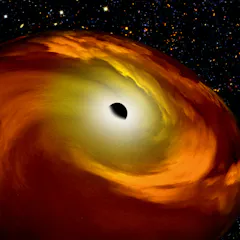
Some stars turn into black holes at the end of their lifespans, once they stop burning the fuel in their cores.
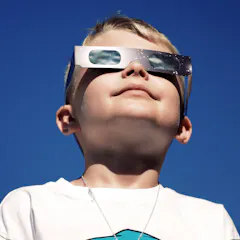
Eclipse glasses, a colander or two pieces of card can all help you watch the 12 August eclipse safely. Ordinary sunglasses cannot.
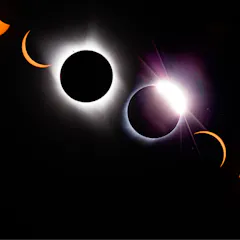
A solar eclipse’s appearance is wrapped up in the geometry of the bodies involved.
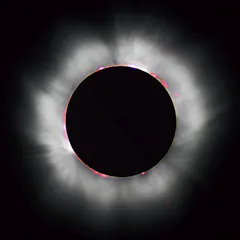
What’s the most impressive natural phenomenon known to humankind? Probably a solar eclipse! Here’s a brief overview ahead of this summer’s big celestial event.

Venus and Earth share some atmospheric quirks – but how did Venus get so unbearably hot, while Earth is mild and temperate?

Sun safety is not just for beach holidays. Checking the UV index and building small habits into your day can help protect your skin.
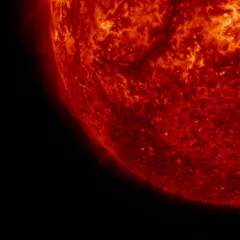
The Sun is a complex physical body. It generates incredible amounts of heat and a strong, often tangled, magnetic field.
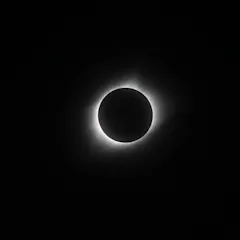
Astronauts report feeling profoundly awestruck when they go to space, an anthropologist reports. This experience shapes their perspectives even back on Earth.
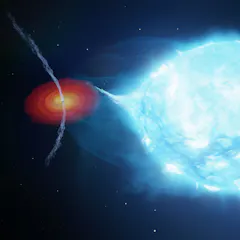
Astronomers have discovered stellar winds can cause black hole jets to change direction – just like wind on Earth can blow around the water in a fountain.

The answer has to do with the air we breathe and that bright white snowpack, as an atmospheric scientist in Colorado explains.
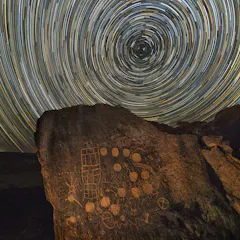
From Earth spinning on its axis and orbiting the Sun to it precessing like a top, lots of factors affect which stars you can see in the sky.
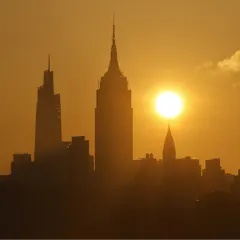
Solar cycles, sea ice and rising electricity use all play a role. So does an unhealthy surprise that has been quietly hiding a large amount of global warming – until now.

Australian health authorities have been encouraging ‘no hat no play’ for 100 years.
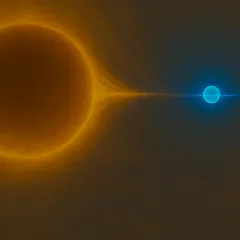
The WOH G64 star looked to be accelerating to its end of life. But now astronomers are not sure that’s the case.
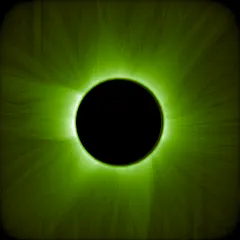
There’s a pressing need to understand and respond to what’s known as “space weather”.

The findings from Pandora will complement data from the James Webb Space Telescope to give astronomers more insight into stars and planets outside our solar system.

Fire obviously isn’t a liquid or a solid. In fact, it’s not matter at all – it’s a process.
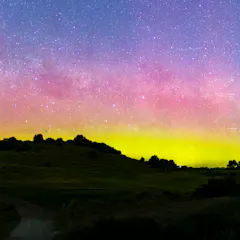
Four big outbursts from the Sun mean skies may light up much further from the poles than usual.
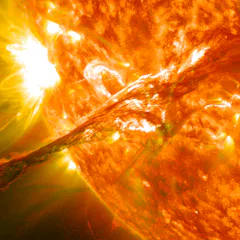
From communications outages to a brush with nuclear war, solar events like flares and coronal mass ejections have shaped human history.
Top contributors
-

Senior Curator (Astronomy), Museums Victoria Research Institute; The University of Melbourne
-
Senior Lecturer in Physics, Nottingham Trent University
-
Associate Professor, RMIT University
-
Director of the Abrams Planetarium, Michigan State University
-
Teaching Professor of Astronomy & Astrophysics, Penn State
-
Reader in Physical Sciences, Aberystwyth University
-
Postdoctoral research associate, University of Oxford
-
Professor of Astronomy, Mathematics, and Physics, Athabasca University
-
Researcher in Astrophysics, Smithsonian Institution
-
Professor (Astrophysics), University of Southern Queensland
-
Professor of Physics and Astronomy, USC Dornsife College of Letters, Arts and Sciences
-
Professor (Physics), University of Southern Queensland
-
University Distinguished Professor of Astronomy, University of Arizona
-
Professor of Physics, UCL
-
Chief Specialist Scientist (Public Health), South African Medical Research Council