
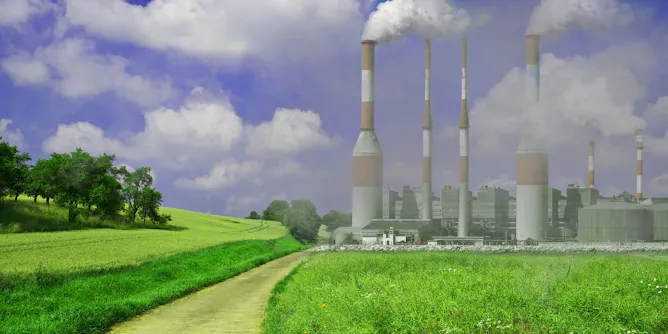
Despite clear air as a result of the pandemic reducing human activities, our emissions still soar.
Articles on Earth
Displaying 161 - 180 of 242 articles

Martian meteorites allow scientists here on Earth to decode that planet’s geology, more than a decade before the first missions are scheduled to bring rocks back home from Mars.
From the Moon’s size to the first calculator, the ancients made some jawdropping discoveries without modern technology.
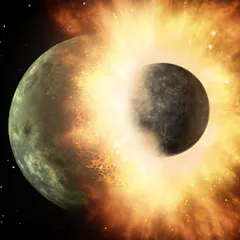
The Earth and the Moon were long thought to be virtually identical in composition. Now we know they are not.
These scientists identified the five most severe crises the planet faces in a new report, Our Future on Earth 2020.

Many people are still upset that Pluto was demoted from being a planet. But definitions of various celestial objects are fairly fluid. So whether it is an asteroid or moon or planet is up for debate.
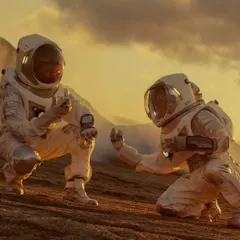
The first Martian might just be a human being.
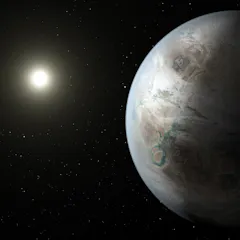
Kepler-452b is sometimes called ‘Earth 2.0’, but there’s a lot we still don’t know about it.
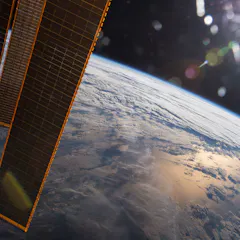
Of all the planets in the solar system, there’s a reason we call Earth home. It’s made of just the right stuff. It’s not too small, or too big, or too hot or too cold. It’s just right.
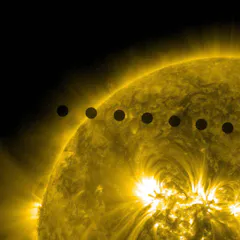
This hot, acidic neighbor with its surface veiled in thick clouds hasn’t benefited from the attention showered on Mars and the Moon. But Venus may offer insights into the fate of the Earth.
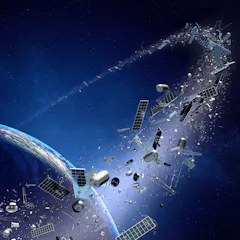
Satellites monitor climate change, guide people with GPS and keep us connected through texts and social media, but they’re under threat.

While the world gathers to see an eclipse, what’s the rest of nature doing?

An expert explains all the wonderful ways the atmosphere protects life on Earth.
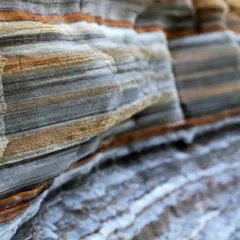
Layers of rock provide a historical record of variations in the Earth’s orbit, revealing information about the planet’s climate billions of years ago.
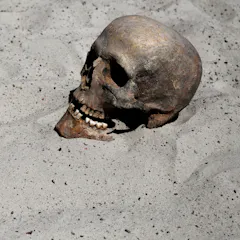
An expert responds to a teenager who wants to know – is there any hope for humanity’s future?
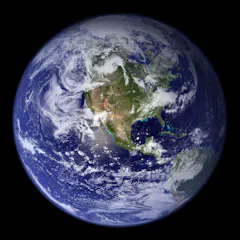
All the buildings and the cars and the restaurants, and the phones and even everything that’s inside of you… it all started with an exploding star, billions of years ago.
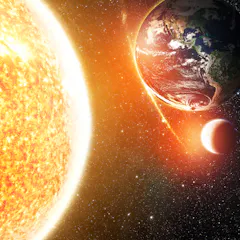
Even if we can prevent a global warming apocalypse, our planet won’t be safe forever – the sun will one day expand. So should we try to move the Earth to a wider orbit?

It’s hard to believe, but big storms and hurricanes are caused by tiny particles moving around in the atmosphere.
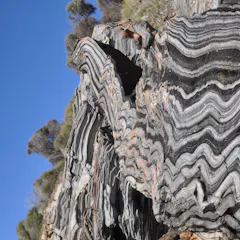
Giant forces slowly move continents across a viscous layer of the Earth, like biscuits gliding over a warm toffee ocean. This stresses the continents, and twists and contorts the crust.
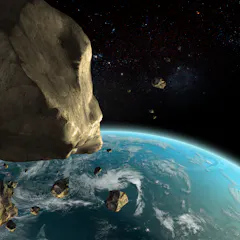
The source of water on Earth, the Moon and planets in our solar system is hotly debated. Some in the planetary science community argued that it came from asteroids and comets. Now they have proof.
Top contributors
-

Postdoctoral research associate, University of Oxford
-
Professor (Astrophysics), University of Southern Queensland
-
Senior Lecturer in Physics, Nottingham Trent University
-
Teaching Professor of Astronomy & Astrophysics, Penn State
-
Professor of History, University of Lancashire
-
Associate Dean of Innovation and Engagement, Swinburne University of Technology
-
Associate Professor of Earth and Planetary Sciences, University of Tennessee
-
Associate Professor in Archaeology and Space Studies, Flinders University
-
Cosmochimiste, chargée de recherche CNRS au Centre de Recherches Pétrographiques et Géochimiques (CRPG) de Nancy, CNRS, Université de Lorraine
-
PhD Candidate, University of Southern Queensland
-
Associate Professor, School of Physics, The University of Melbourne
-
Professor of Geophysics, University of Rochester
-
Professor of Astronomy, Vanderbilt University
-
Imperial College Research Fellow, Imperial College London
-
Postdoctoral Research Associate, Department of Geoscience, University of Wisconsin-Madison