
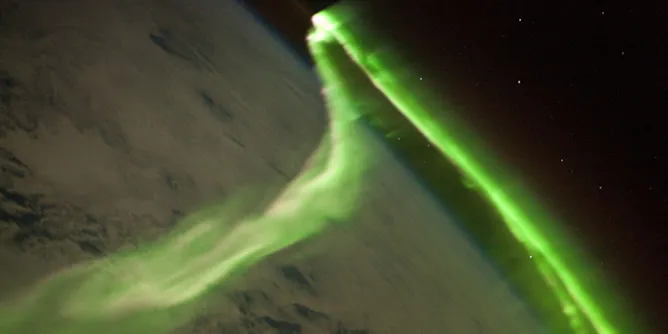
Are we headed to a magnetic reversal and all the global disruption that would bring? Enter archaeomagnetism. A look at the archaeological record in southern Africa provides some clues.
Articles on Earth
Displaying 221 - 240 of 242 articles
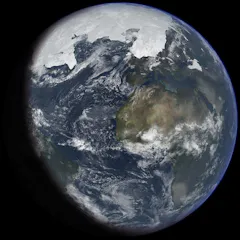
The Earth’s orbit has driven ice ages in the past but those days could be over.
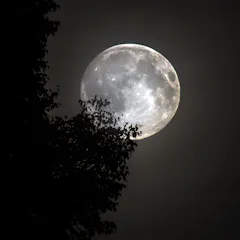
Full moons are good reason to look up – and the one on Nov. 14 is no exception. But here’s why you likely won’t see something shockingly different from other full moons you’ve observed over the years.
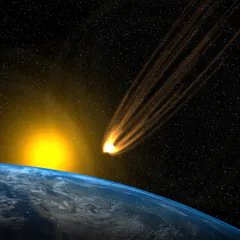
Large asteroid hits on Earth have the potential to wipe out humanity so knowing how to detect and deflect them is vital. But we know very little about the interior make up of many asteroids.
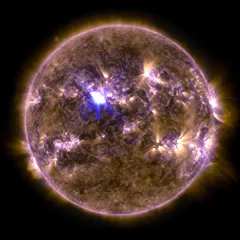
Our growing dependency on satellites for all forms of communication has made the problem of space weather even more acute.
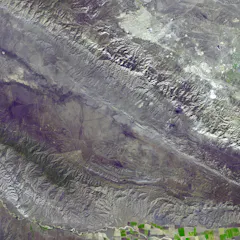
Fifty years on from a groundbreaking paper, geophysicists have progressed from believing continents never moved to thinking that every movement may leave a lasting memory on our planet.
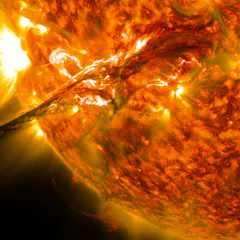
Life on Earth may have started with a bit of sunshine and showers, followed with a light breeze of laughing gas and a sprinkle of hydrogen cyanide.
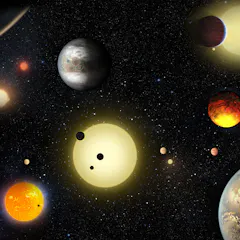
The number of known exoplanets doubled this week to more than 3,200. But why have only a handful of these those new planets caught people’s imagination?
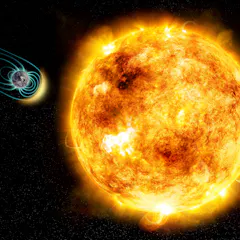
In the search for life on other planets in the universe we need to find the right kind of star, and it needs to have the right kind of space weather.
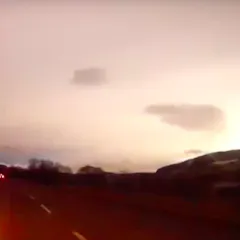
Was it a UFO? Was it a high-tech plane? Here’s what lucky people really saw over Scotland on February 29.
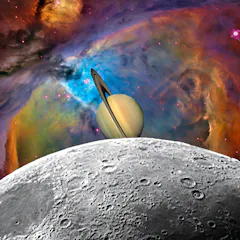
As the list of known planets beyond our solar system grows, the search for their moons is intensifying. One reason: they might hold the key to finding life elsewhere in the universe.

Some atomic ratio detective work on our solar system neighbors tells us a lot about their watery pasts. That Venus and Mars are mostly dry now could be a cautionary tale for us on the Blue Planet.
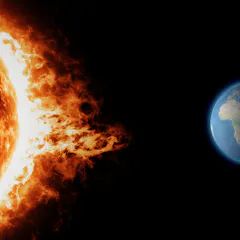
Astrophysicists found out after the January 2014 solar flare that their predictions of solar weather were not very accurate. Here’s the fix (kind of).
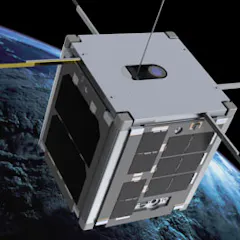
Nano-satellites are small and cool enough to inspire youth to consider careers in science, technology, engineering and mathematics.
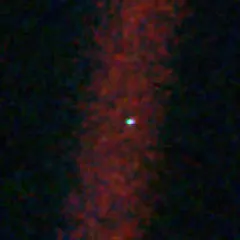
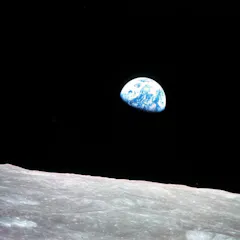
From a big blue marble to a tiny dot in space – reflections on our images of Earth.
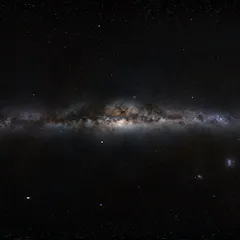
Every 30 mil years, Earth has to deal with more comet crashes from space and more intense geological activity from within. Dark matter may be the culprit in these episodes that can cause mass extinction.
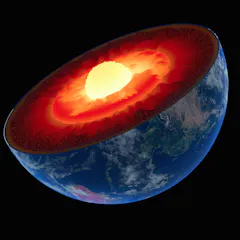
The discovery of a thickly viscous layer which traps sinking plates below Earth’s surface has wide implications, not least as a cause of earthquakes.
Rather than impose regulations to limit carbon emissions, policies should focus on innovation and systems change through social sciences.
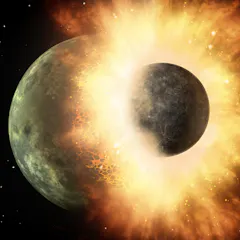
New experiments show that the asteroids that slammed into Earth and the moon more than 4 billion years ago were vaporised into a mist of iron. The findings, published in Nature Geoscience, suggest that…

It’s the satellite you probably didn’t know that Earth has. If we could land on it, it could be pretty useful
Top contributors
-

Postdoctoral research associate, University of Oxford
-
Professor (Astrophysics), University of Southern Queensland
-
Senior Lecturer in Physics, Nottingham Trent University
-
Teaching Professor of Astronomy & Astrophysics, Penn State
-
Professor of History, University of Lancashire
-
Associate Dean of Innovation and Engagement, Swinburne University of Technology
-
Associate Professor of Earth and Planetary Sciences, University of Tennessee
-
Associate Professor in Archaeology and Space Studies, Flinders University
-
Cosmochimiste, chargée de recherche CNRS au Centre de Recherches Pétrographiques et Géochimiques (CRPG) de Nancy, CNRS, Université de Lorraine
-
PhD Candidate, University of Southern Queensland
-
Associate Professor, School of Physics, The University of Melbourne
-
Professor of Geophysics, University of Rochester
-
Professor of Astronomy, Vanderbilt University
-
Imperial College Research Fellow, Imperial College London
-
Postdoctoral Research Associate, Department of Geoscience, University of Wisconsin-Madison