
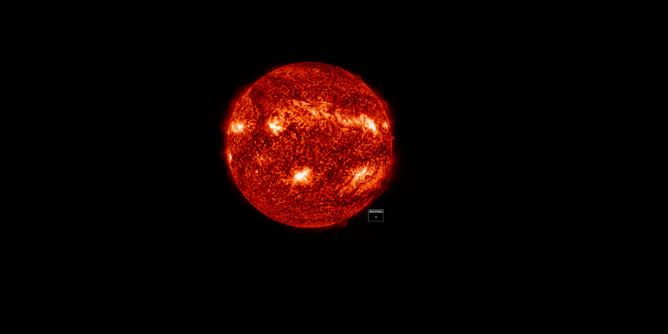
NASA, NOAA and SpaceWeather say a coronal mass ejection will reach Earth this week. It has the potential to knock out communications in some parts of the world.
Articles on Earth
Displaying 121 - 140 of 242 articles
A biologist explains how researchers nail down the age of ancient fossils thanks to a physical process called radioactive decay.

By tracking a meteorite found in Morocco back to its origin in an asteroid crater on Mars millions of years ago, scientists can learn more about how the planets formed.
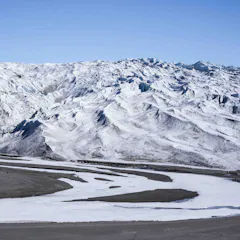
The Earth has had at least five major ice ages, and humans showed up in time for the most recent one. In fact, we’re still in it.
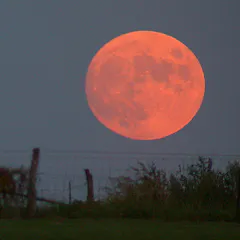
The Moon illusion is what makes the Moon look giant when you see it rising over a distant horizon. An astronomer explains what causes this awe-inspiring trick of the mind.
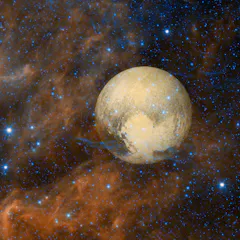
A curious kid asks: Why does it matter if Pluto is a planet or a dwarf planet?
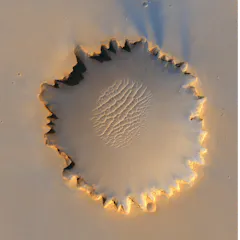
There are many bodies in the solar system we can’t easily access. But observations of their winds and sediments reveal a surprising amount.

Current trends suggest that powerful nations are defining the rules of resource use in space and satellite access in ways that will make it hard for developing nations to ever catch up.
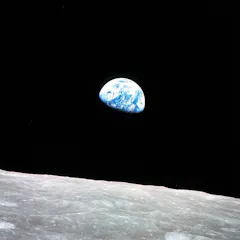
The Earth is a resilient planet, but people are altering it in ways that may take centuries to reverse.
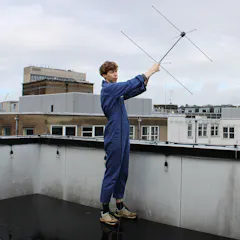
With an antenna, a laptop and some software, you can take a picture of Earth from space.

It’s often said that the aurora, or the northern lights, is caused by ‘particles from the Sun’. But in reality things are more complicated.
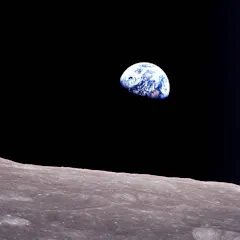
The mission is set to launch in March 2022. Here’s what you need to know.
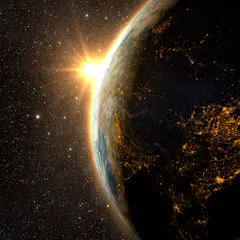
Only a planet crashing into it might stop the Earth’s spin.

We may be on the brink of discovering whether water and organic material, which enabled life on Earth, came from asteroids.
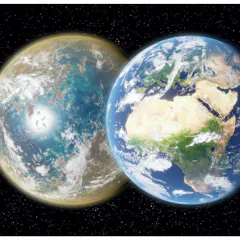
Life doesn’t just need water and oxygen to thrive, it also needs iron.
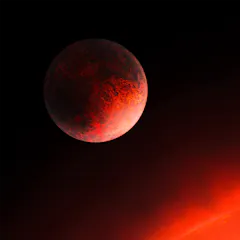
Most of what we know about planets outside our Solar System relates to gas-giant planets. A new study has identified and characterised a smaller exoplanet.

Welcome to an entirely new understanding of the world.
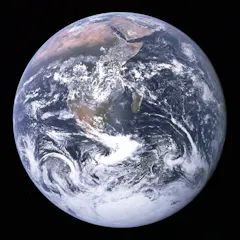
Photographing the full Earth from space could provide a profound and timely reminder of its vulnerability in the face of climate change.
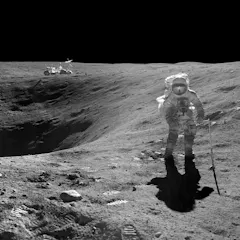
Without a magnetic field, the Moon’s surface is exposed to solar wind. These could have been depositing resources like water and potential rocket fuel on the Moon’s surface for billions of years.
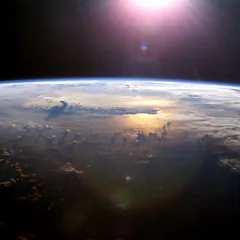
When heat in doesn’t equal heat out, Earth sees changes.
Top contributors
-

Postdoctoral research associate, University of Oxford
-
Professor (Astrophysics), University of Southern Queensland
-
Senior Lecturer in Physics, Nottingham Trent University
-
Teaching Professor of Astronomy & Astrophysics, Penn State
-
Professor of History, University of Lancashire
-
Associate Dean of Innovation and Engagement, Swinburne University of Technology
-
Associate Professor of Earth and Planetary Sciences, University of Tennessee
-
Associate Professor in Archaeology and Space Studies, Flinders University
-
Cosmochimiste, chargée de recherche CNRS au Centre de Recherches Pétrographiques et Géochimiques (CRPG) de Nancy, CNRS, Université de Lorraine
-
PhD Candidate, University of Southern Queensland
-
Associate Professor, School of Physics, The University of Melbourne
-
Professor of Geophysics, University of Rochester
-
Professor of Astronomy, Vanderbilt University
-
Imperial College Research Fellow, Imperial College London
-
Postdoctoral Research Associate, Department of Geoscience, University of Wisconsin-Madison