
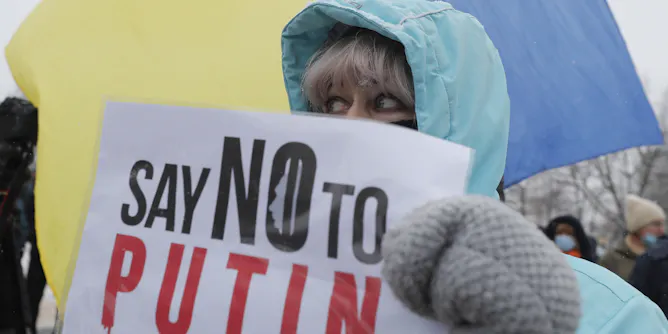
Ukraine has been subjected to Russian interference and hybrid warfare since its independence in 1991. The current troop build-up on its borders is just the latest example.
Articles on Disinformation
Displaying 241 - 260 of 348 articles
Russia probably has the means to attack US electrical grids and otherwise create havoc but probably won’t go that far. Instead, watch for disinformation aimed at undermining the US and NATO.
With the failure of talks, a Russian incursion into Ukraine has become more likely. But any invasion would face fierce resistance.

Fact-checking risks oversimplifying and distorting Americans’ political conflicts, while not actually helping people find ways to work together productively.
Misinformation will continue to strain society in 2022 as the lines between misinformation and political speech blur, cynicism grows and the lack of regulation allows misinformation to flourish.
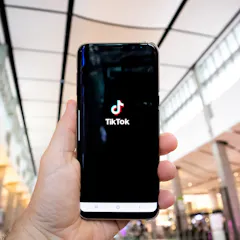
Tracking misinformation and disinformation on TikTok is a difficult feat, a study finds

Pediatricians and other health care providers can take some concrete steps toward building trust and counteracting anti-vaccination misinformation.
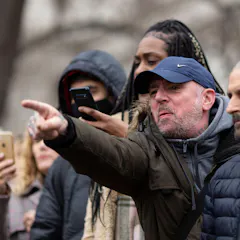
Living with someone who believes in anti-vaccination misinformation can tear families apart, say experts.
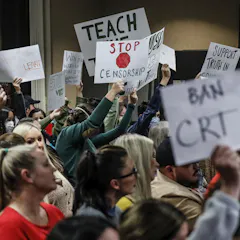
Critical race theory is often distorted by GOP politicians and pundits to stir up its Trump base. But CRT is needed more, not less, argues one legal scholar, to explain American racial disparities.
Artificial intelligence is becoming increasingly sophisticated. But we’re still a long way off from AI being able to discern what’s fake news.
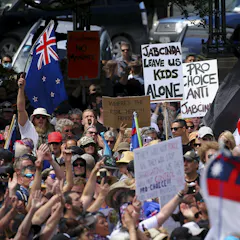
Nearly a year ago, New Zealand’s intelligence services warned of the ‘realistic possibility’ of future COVID-related violent extremism. How concerned should people be now?
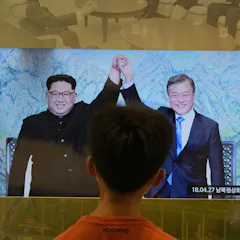
Disinformation is being privatized around the world. This new industry is built on a dangerous combination of cheap labor, high-tech algorithms and emotional national narratives.
Misinformation about climate change has been spreading in other ways, and social media companies have been reluctant to stop it.
Not knowing how many posts people see on social media overall or where specific types of content get concentrated is keeping researchers in the dark about misinformation.
You have evolved to tap into the wisdom of the crowds. But on social media, your cognitive biases can lead you astray, something organized disinformation campaigns count on.
You have evolved to tap into the wisdom of the crowds. But on social media your cognitive biases can lead you astray, something organized disinformation campaigns count on.
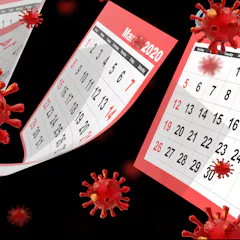
A lot has happened since the WHO declared the coronavirus outbreak a pandemic. A portrait in data highlights trends in everything from case counts, to research publications, to variant spread.
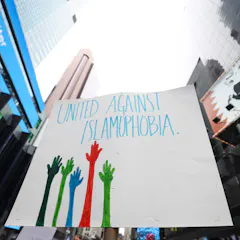
Concern about Islamophobia has been near-constant for years. But how it plays out is changing – especially online.

The 2,000-line poem by Scottish physician John Armstrong was written during a time of pandemic, war and increasing public disinformation. What can readers learn from it today?
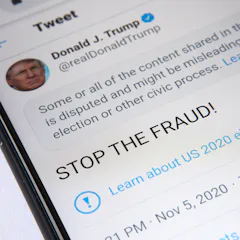
We all have biases that impact what information we choose to accept and reject. But there are some ways we can train ourselves to become more discerning.
Top contributors
-

Professor and Chair, Department of Journalism, Stellenbosch University
-
Associate Research Professor of Social Psychology, Louisiana State University
-
Chair of Cognitive Psychology, University of Bristol
-
Lecturer in Journalism and Global Communication, University of Sheffield; Independent Social Research Foundation
-
Professor of Informatics and Computer Science, Indiana University
-
Professor of Human Centered Design & Engineering, University of Washington
-
Professor of AI and Behavioral Data Science, University of Technology Sydney
-
Associate Professor in Digital Media, Queensland University of Technology
-
Emeritus Professor of Education, Stanford University
-
Professor of Business Law and Ethics, Indiana University
-
Director, News & Media Research Centre, University of Canberra
-
Professor of Information Systems, Michigan State University
-
Professor of Social Psychology in Society, University of Cambridge
-
Visiting Fellow, ISEAS-Yusof Ishak Institute; Oklahoma State University
-
Professor of Political Communication; Director CAJ, The University of Melbourne