
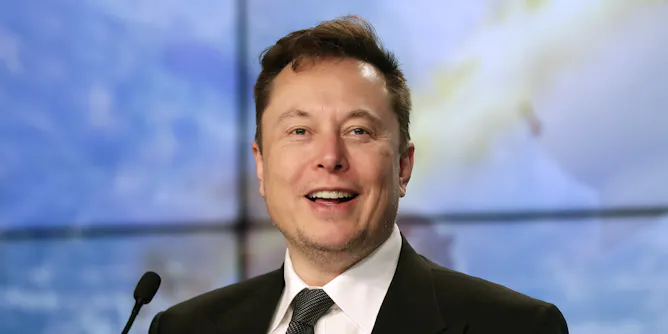
Twitter, more than other social media platforms, fosters real-time discussion about events as they unfold. That could change now that Musk has gained control of the company.
Articles on Disinformation
Displaying 221 - 240 of 348 articles

The Russian Embassy in Canada is active in spreading disinformation and promoting the Russian perspective on the events taking place in Ukraine.
By linking different issues together, organisations show the importance of approaching information disorder as a complex problem requiring various responses.
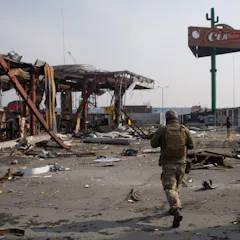
Putin’s rationale for invading Ukraine wasn’t built over just a few months in 2021. Putin and high-level Russia government staff have been trash-talking Ukraine for more than a decade.

Cyberattacks can be devastating, just not on the battlefield, according to researchers who looked at 10 years of armed conflicts around the world.
Efforts to fight online disinformation often give oxygen to the very things they’re trying to fight.

In China, social media is being censored to reflect pro-Russian sentiment, making it impossible to gauge public opinion of Chinese people on the Russian invasion.
The system behind apps like Facebook, Twitter, YouTube and WhatsApp isn’t neutral. It encodes political communication, influencing what users see.

For Ukrainian President Volodymyr Zelenskyy, the app has been a key point-of-contact for communication with his own people and the rest of the world.

Increased media literacy education and government regulations are necessary to combat fake information on social media platforms.
Government Twitter accounts are dodging restrictions on state-backed media to churn out disinformation.

The Russian government used disinformation to fabricate a justification for invading Ukraine. A new campaign focused on biowarfare claims threatens to escalate the conflict.
The vacuum created by a drop in public trust in mainstream platforms has given rise to new media players who don’t always play by the rules.
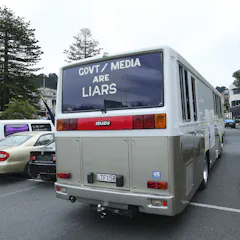
Not everyone voicing suspicion of mainstream media is a conspiracy theorist – we need to guard against the far right monopolising the terms of media criticism.

From jamming satellite signals to spreading disinformation, Russia’s military has sophisticated technologies it’s bringing to the battlefield in Ukraine.
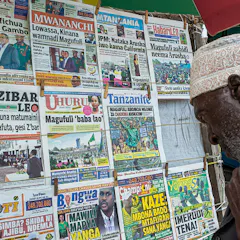
Today’s journalism students are less likely to find full-time jobs as professional journalists. The craft has become ‘post-industrial’, entrepreneurial and atypical.

The Canadian Constitution compels a proportionate weighing of all Charter rights against the threat of COVID-19, meaning that individual freedom is not absolute.
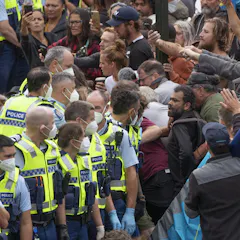
With the occupation of parliament grounds entering its second week, police walk a thin blue line between enforcing the law and not inflaming the situation.
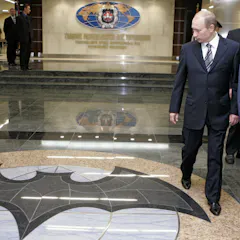
Troop buildups and diplomatic negotiations highlight the threat of a major land war in Europe. In cyberspace, Russia has been attacking Ukrainian infrastructure and government operations for years.

When news outlets also publish so-called ‘native advertising,’ their journalistic reputations suffer – and their news coverage shies away from the companies that paid for the ads.
Top contributors
-

Professor and Chair, Department of Journalism, Stellenbosch University
-
Associate Research Professor of Social Psychology, Louisiana State University
-
Chair of Cognitive Psychology, University of Bristol
-
Lecturer in Journalism and Global Communication, University of Sheffield; Independent Social Research Foundation
-
Professor of Informatics and Computer Science, Indiana University
-
Professor of Human Centered Design & Engineering, University of Washington
-
Professor of AI and Behavioral Data Science, University of Technology Sydney
-
Associate Professor in Digital Media, Queensland University of Technology
-
Emeritus Professor of Education, Stanford University
-
Professor of Business Law and Ethics, Indiana University
-
Director, News & Media Research Centre, University of Canberra
-
Professor of Information Systems, Michigan State University
-
Professor of Social Psychology in Society, University of Cambridge
-
Visiting Fellow, ISEAS-Yusof Ishak Institute; Oklahoma State University
-
Professor of Political Communication; Director CAJ, The University of Melbourne