

Many people who participate in disinformation campaigns are unwitting accomplices and much of the information they spread is accurate, which makes it all the harder to identify the campaigns.
Articles on Disinformation
Displaying 301 - 320 of 348 articles
Twitter’s ‘blue tick’ club of influential users was locked out after financial scammers hacked celebrities’ accounts. But with ever more trust placed in social media, we stand to lose more than money.
The Covid-19 epidemic has given rise to an avalanche of fake news, and accounts managed by Russian interests lead the way. How does this misinformation work, and what are its aims?
In Africa, people who report higher levels of exposure to disinformation also report lower levels of media trust.
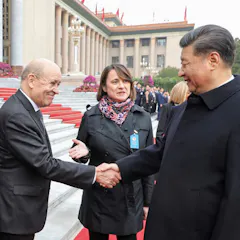
China’s attempts to promote its actions and model of governance while discrediting the EU are not a short-term response to the pandemic, but part of a long-term strategy to build its international power.

A social media researcher explains how bots and sock puppet accounts manipulate and polarize public debate.
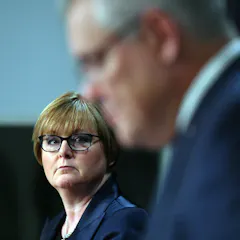
Unlike the US, Australia hasn’t yet been hit by a large-scale disinformation campaign focussed on meddling with elections. But this is a ‘realistic prospect’ moving forward.
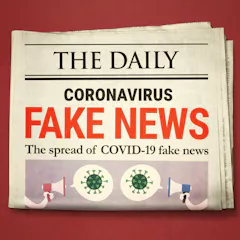
False information about the new coronavirus is a big threat to containing the pandemic but governments must not use ‘fake news’ as an excuse to limit freedom of expression.
The recognition that COVID-19 is accompanied by an equally alarming “infodemic” has added a level of complexity to the situation. What are the consequences of this avalanche of information?

Attempting to defeat these folk theories with science achieved little; the myth busters of the AIDS epidemic were talking past those they were trying to convince.
Twitter’s efforts to label misinformation during the US primaries haven’t met with success. So how do we sift useful coronavirus information from wrong or downright dangerous untruths?
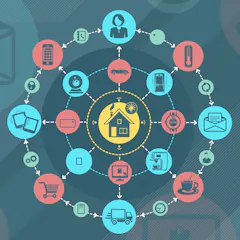
The coronavirus pandemic lays bare the many vulnerabilities created by society’s dependence on the internet. Watch the video to learn more about these issues.
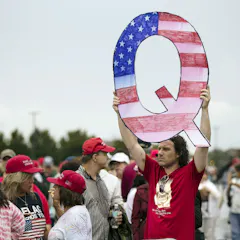
QAnon refers to the online community that believes in conspiracy theories about Donald Trump and the so-called deep state, and is spreading harmful misinformation about COVID-19.
Facebook, Google and Twitter are stepping up to block misinformation and promote accurate information about the coronavirus. Their track records on self-policing are poor. The results so far are mixed.

Here’s what to watch out for, so you can protect yourself – and your social circles – from lies, half-truths and misleading spins on current events.
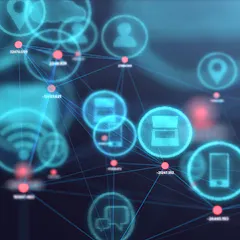
Much of the world is moving online in response to the coronavirus pandemic. Society’s newly increased dependence on the internet is bringing the need for good cyber policy into sharp relief.

Why have conspiracy theories so easily circulated during the COVID-19 pandemic? What do these theories tell us about societies and what challenges do they present?

A scholar who has reviewed the efforts of nations around the world to protect their citizens from foreign interference says there is no magic solution, but there’s plenty to learn and do.
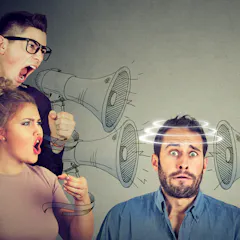
As the 2020 elections near and disinformation campaigns ramp up, an expert on media literacy offers advice you can use to develop habits to exert more conscious control over your news intake.
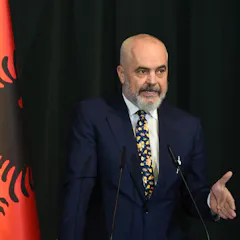
New laws in Albania show one approach to dealing with disinformation – and highlight some pitfalls of selective regulation.
Top contributors
-

Professor and Chair, Department of Journalism, Stellenbosch University
-
Associate Research Professor of Social Psychology, Louisiana State University
-
Chair of Cognitive Psychology, University of Bristol
-
Lecturer in Journalism and Global Communication, University of Sheffield; Independent Social Research Foundation
-
Professor of Informatics and Computer Science, Indiana University
-
Professor of Human Centered Design & Engineering, University of Washington
-
Professor of AI and Behavioral Data Science, University of Technology Sydney
-
Associate Professor in Digital Media, Queensland University of Technology
-
Emeritus Professor of Education, Stanford University
-
Professor of Business Law and Ethics, Indiana University
-
Director, News & Media Research Centre, University of Canberra
-
Professor of Information Systems, Michigan State University
-
Professor of Social Psychology in Society, University of Cambridge
-
Visiting Fellow, ISEAS-Yusof Ishak Institute; Oklahoma State University
-
Professor of Political Communication; Director CAJ, The University of Melbourne