
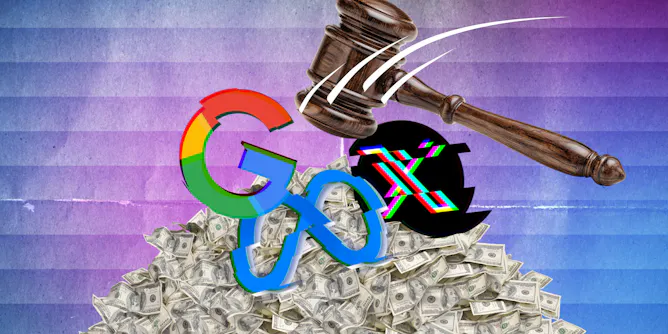
For some companies, ‘illegal with a fine’ is interpreted as ‘legal for a price’.
Articles on X (formerly Twitter)
Displaying 1 - 20 of 760 articles

Governments around the world are clamping down on Grok’s production of nonconsensual sexual images. Why does Canada seem to be missing in action?

If companies can build systems capable of generating such imagery, they can also stop it being generated – in theory, at least.

Julie Inman Grant has been asked to testify to Congress. It’s a sign of an increasing US preoccupation with online censorship.

Being selective about the platforms that we spend our time on, and learning how to handle social media conflict will help the digital ecosystem for all of us.

Tanzania favours information control over transparency and accountability.

In early July, Grok’s update went awry and Elon Musk’s chatbot generated anti-Semitic comments. Is Grok an AI tool of techno-fascism?

AI developers have many levers they can use to steer chatbots into certain behaviours.

The standard aims to prevent the spread of child exploitation and pro-terror content. But there are problems with it.

This scholar has found that 86 per cent of replies to tweets sent to women MPs contained some form of harassment. This is a clear threat to women’s participation in politics.

Nearly every major American social media platform is ruled by a single founder with near-total control, thanks to a relatively new corporate share structure.

Even if the new safety codes are approved, kids could still access online porn and deepfake apps because of flawed age assurance technology.

Like their predecessors in the 19th century, digital Luddites are fighting oppressive technology. Will they succeed?

The platform barred access to more recent data, researchers say.

Granting tech leaders direct control over government functions fundamentally alters the relationship between private power and public governance.

The world’s richest man is now also one of the most politically powerful. Musk’s journey to mega MAGA funder sheds some light on what his motivations might be.

Trump wants the US to build ever more faster, more powerful AI systems – without considering crucial safety concerns.

Major social media platforms have decided to leave the job of fact checking to their platforms’ users. Research suggests they may not be up to the challenge.

Artificial intelligence is so hungry for information, soon there will be no real data left. If done right, synthetic data can fill the gap and improve AI models.

There is still public hunger for reliable and trustworthy information. This should give news media outlets hope – and inspire them to invest in new ways to reach audiences.
Top contributors
-

Professor, Digital Media Research Centre, Queensland University of Technology
-
Professor of Information Systems, Michigan State University
-
Associate Professor in Digital Media, Queensland University of Technology
-
Director of UWA Centre for Software Practice, The University of Western Australia
-
Postdoctoral Research Fellow, Queensland University of Technology
-
Associate Dean International, University of Chester
-
Professor of Digital Communication, Director of QUT Digital Media Research Centre, Queensland University of Technology
-
Assistant Data Analyst, Queensland University of Technology
-
Associate Vice President for Entrepreneurship and Innovation, Clemson University
-
Senior Lecturer in Marketing, University of Hull
-
Professor of Informatics and Computer Science, Indiana University
-
Associate Professor of Communication and Media Studies, Pace University
-
Adjunct Senior Lecturer, Applied Ethics and CyberSecurity, Griffith University
-
Professor of Strategic Management, Warwick Business School, University of Warwick
-
Professor of Media Industries, University of Nottingham