
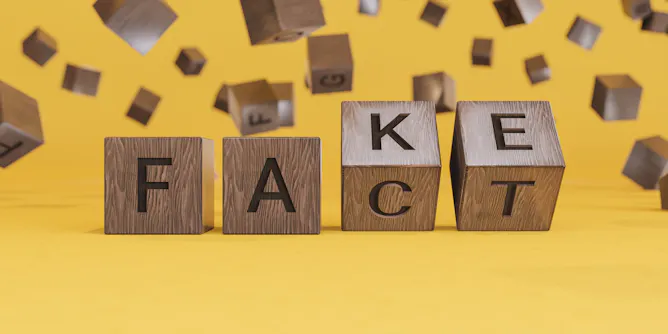
Disinformation is a plague infecting all forms of media, but efforts abound to control it both here in Australia and around the world.
Articles on Disinformation
Displaying 201 - 220 of 348 articles
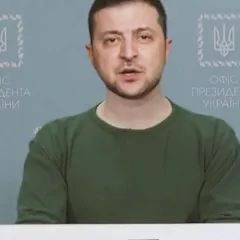
Earlier this year, a deepfake impersonating Ukrainian President Volodymyr Zelenskyy spread on social media – with Zelenskyy supposedly asking Ukrainians to surrender to Russia.

New research shows that at least half of Canadians have encountered pro-Kremlin propaganda online and that those who hold left-leaning views are less susceptible to the Kremlin’s disinformation.
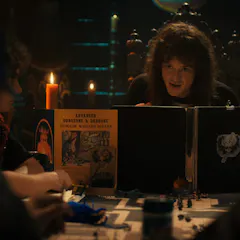
Season Four of ‘Stranger Things’ shows how easily people are influenced when they’re clamouring for answers during times of uncertainty.
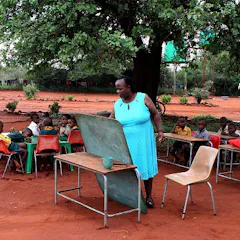
South Africa has no comprehensive national media literacy programme. Often it comes down to individual teachers and schools to make learners more media literate.

Why do people believe conspiracies like flat-Earth theory? An expert explains.

“Always reliable, readable and short. Perfect.” Our readers offer their thoughts on the fifth anniversary of The Conversation Canada.
It’s one thing to get ‘likes’ on a video of a cute dog or a photo of your weekend adventures – but another to create content that fosters understanding of complex topics.

Recently, concerns have been raised over the harm caused by misinformation in relation to the COVID-19 pandemic and federal elections.

Contrary to the popular belief that social media creates rumours about COVID vaccine harms, new research suggests social media generally only aids the spread of these rumours.
Elon Musk’s focus on the number of bots on Twitter, whether genuine or a distraction, does little to address the problems of misinformation and spam. A pair of social media experts explain why.
There’s a tension between facilitating free and fair debate on social media, and businesses’ bottom line. And it must be resolved with the public interest in mind.

The reasons for the prominence of the Ukraine war in the West are many – and include the Ukrainian government’s strategic efforts to tailor presentations of the conflict for Western sensibilities.

A team analyzed more than 21 million tweets about COVID-19 vaccines and found that negative sentiments on social media were tied to lower-than-expected vaccination rates in many nations.
Elon Musk said he wants to make Twitter a platform for free speech. Here is what research shows about claims of political bias and excessive moderation.
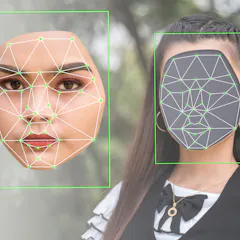
Deepfakes — manipulated images of people — can be difficult to distinguish from the real thing, and this has terrifying consequences for democracy.
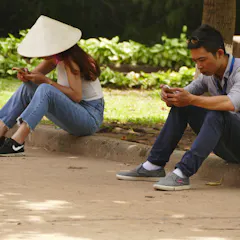
Online campaigns in Vietnam are falsely maligning Ukrainians and discrediting the legitimacy of international organizations. It’s all at odds with the aims of the Vietnamese government.
From voting info to risqué quips, this election, online political ads are more pervasive than ever before.
We’re already seeing signs of disinformation on social media ahead of the federal election.
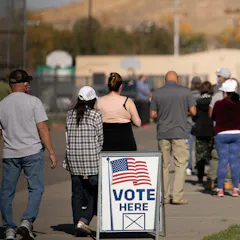
Public trust in elections is being targeted by disinformation campaigns around the world.
Top contributors
-

Professor and Chair, Department of Journalism, Stellenbosch University
-
Associate Research Professor of Social Psychology, Louisiana State University
-
Chair of Cognitive Psychology, University of Bristol
-
Lecturer in Journalism and Global Communication, University of Sheffield; Independent Social Research Foundation
-
Professor of Informatics and Computer Science, Indiana University
-
Professor of Human Centered Design & Engineering, University of Washington
-
Professor of AI and Behavioral Data Science, University of Technology Sydney
-
Associate Professor in Digital Media, Queensland University of Technology
-
Emeritus Professor of Education, Stanford University
-
Professor of Business Law and Ethics, Indiana University
-
Director, News & Media Research Centre, University of Canberra
-
Professor of Information Systems, Michigan State University
-
Professor of Social Psychology in Society, University of Cambridge
-
Visiting Fellow, ISEAS-Yusof Ishak Institute; Oklahoma State University
-
Professor of Political Communication; Director CAJ, The University of Melbourne