
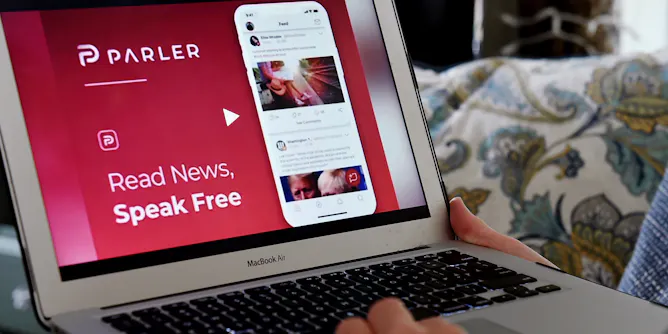
Millions of supporters of Donald Trump flocked to the far-right social media platform, where hate speech and calls for violence thrive. The US Capitol insurrection could be the platform’s undoing.
Articles on Disinformation
Displaying 281 - 300 of 348 articles

Calling out false information on social media may do more harm than good.
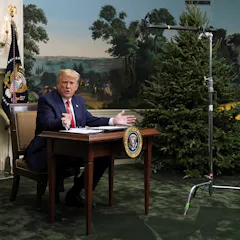
If citizens disbelieve the institutions that count ballots and the organizations that accurately report on those results, it will be impossible to agree on what a legitimate election looks like.
Millions of supporters of Donald Trump have flocked to the far-right social media platform Parler, where hate speech thrives.
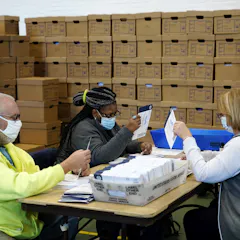
Election misinformation typically involves false narratives of fraud that include out-of-context or otherwise misleading images and faulty statistics as purported evidence.

In an age of democracy via social media, platforms are struggling to combat visual mis/disinformation such as ‘spliced’ images and deepfakes. Digital media literacy has never been so important.
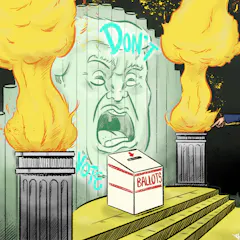
Disenfranchisement and disinformation have been rife in the 2020 election - and may continue to play significant roles in its aftermath.
The major social media firms have taken a largely piecemeal and fractured approach to managing the problem.

That “friend of a friend” post you’re thinking about sharing on social media could make you an unwitting accomplice in a disinformation campaign.

As Election Day approaches, Americans would do well to remember they are targets of disinformation campaigns. Here’s what they could look like, and what’s being done about them.
With a limited number of fact-checkers in Southeast Asia, fact-checking content becomes a challenging task to complete.
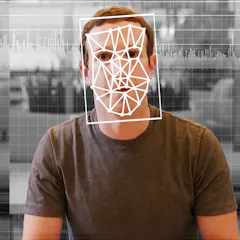
Fake videos generated with sophisticated AI tools are a looming threat. Researchers are racing to build tools that can detect them, tools that are crucial for journalists to counter disinformation.

A Facebook ban on QAnon may not be the best way to address the fast-growing far-right conspiracy movement.
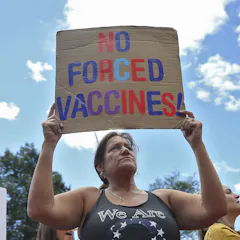
From 2017 to 2019, Twitter users in the United States saw many tweets related to vaccination but only rarely encountered anti-vaccine content and almost never saw content from bots.
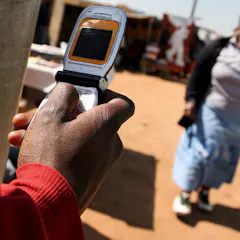
The full benefits of digital democracy are being thwarted by digital exclusion that is driven by the high cost of data.
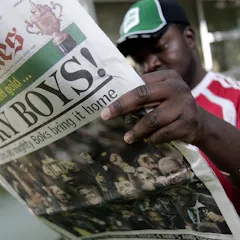
Media self-criticism is not just important to improve journalism, it is a political, professional and moral imperative.
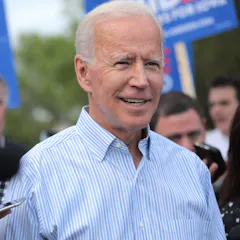
It’s easy to edit video of public figures to make them appear asleep, confused, drunk or cognitively impaired when they are not. The technique is being used to undermine Joe Biden’s campaign.
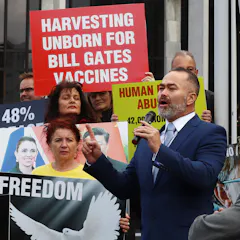
Using the law - or changing it - to stop the spread of dangerous disinformation should be a last resort.
Banning the Chinese-owned social media platforms raises free speech concerns and could worsen the US-China trade war.

Small groups of fringe activists pushing online disinformation are a growing threat to Australian democracy.
Top contributors
-

Professor and Chair, Department of Journalism, Stellenbosch University
-
Associate Research Professor of Social Psychology, Louisiana State University
-
Chair of Cognitive Psychology, University of Bristol
-
Lecturer in Journalism and Global Communication, University of Sheffield; Independent Social Research Foundation
-
Professor of Informatics and Computer Science, Indiana University
-
Professor of Human Centered Design & Engineering, University of Washington
-
Professor of AI and Behavioral Data Science, University of Technology Sydney
-
Associate Professor in Digital Media, Queensland University of Technology
-
Emeritus Professor of Education, Stanford University
-
Professor of Business Law and Ethics, Indiana University
-
Director, News & Media Research Centre, University of Canberra
-
Professor of Information Systems, Michigan State University
-
Professor of Social Psychology in Society, University of Cambridge
-
Visiting Fellow, ISEAS-Yusof Ishak Institute; Oklahoma State University
-
Professor of Political Communication; Director CAJ, The University of Melbourne