

States used to be on their own when a disaster hit. Then the Great Mississippi River Flood of 1927 and the Dust Bowl showed why federal coordination was essential.
Articles on Disaster
Displaying 21 - 40 of 198 articles
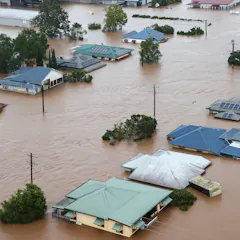
Now is the time for government to act – before the next disaster strikes.
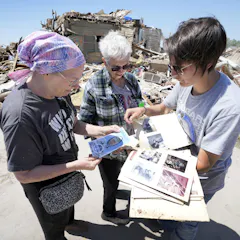
Rural hospitals have been closing, putting emergency care further out of reach, but that’s only one of the heightened challenges aging rural communities face after a disaster.
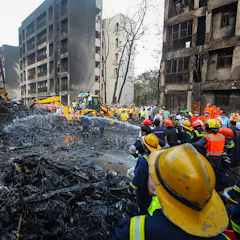
Being a sole survivor of a mass casualty may have its own complex psychological challenges.

When volcanoes like Alaska’s Mount Spurr erupt, the ash can damage people’s lungs, smother crops and kill animals, and the harm can continue to spread long afterward.

The LA wildfires may have faded from the headlines, but for thousands of children, recovery is only just beginning.

Lemurs show traits associated with resilience to living in a disaster-prone environment.
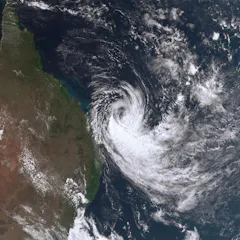
Talk to your neighbours. Do they have a generator or a camping fridge you can use? This is an opportunity to get to know your community and pool your resources.
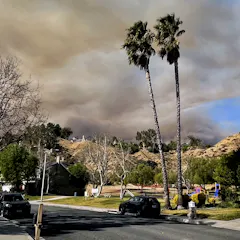
The LA wildfires stand as a reminder that evacuating fast in the face of a disaster isn’t easy, even when you think you’re prepared.

In interviews with residents and builders after disasters from Hawaii to Colorado to Puerto Rico, an engineer and policy specialist found people often overestimating the cost of building back better.
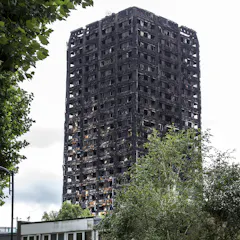
Blame, when it comes, is often aimed at companies rather than individuals.

The vast majority of damage to residential buildings during flooding occurs in basements. Rather than rebuilding identically after a disaster, we need to build better.
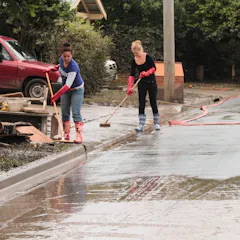
The recommendations of the senate inquiry into Australia’s disaster resilience mainly focus on volunteers involved in the immediate disaster response. This will not make Australians more resilient.
‘Twisters’ selectively depicts aspects of reality by showcasing the raw, destructive power of tornadoes – but don’t look to it for safety advice.
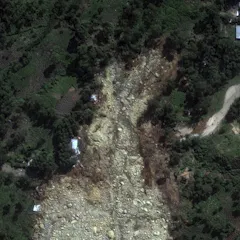
Landslides are usually sudden and cause devastation in their wake. Here’s why they are seemingly impossible to predict.
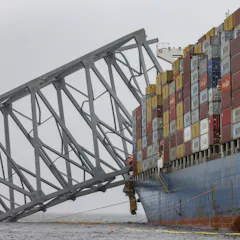
A civil engineer lays out the physics behind Dali’s crash into the Francis Scott Key Bridge pier.
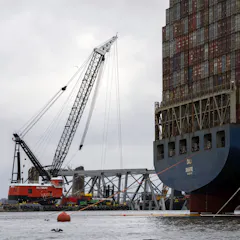
Human error may have contributed to the tragic accident in Baltimore harbour on March 26. Designing systems that reduce the potential for human error may help prevent future incidents.

The collapse of the Francis Scott Key bridge is already affecting global supply chains.

A cargo ship leaving the Port of Baltimore collided with a bridge in a technological disaster that may have claimed the lives of up to six maintenance workers on the bridge at the time.

We’ll need to learn the lessons from this disaster.
Top contributors
-

Associate Professor of Disaster and Emergency Management, York University, Canada
-
Senior Scientist in Disaster and Climate Risk at Earth Sciences NZ & Senior Research Fellow (adjunct), Humanitarian Emergency and Disaster Management, Charles Darwin University
-
Professor of Geology and Environmental Geosciences, University of Dayton
-
Professor of Disasters and Health, UCL
-
Assistant Professor and Co-Director, Center for Emergency Management and Homeland Security, Watts College, Arizona State University
-
PhD Candidate in Political Science and International Relations, Queen's University, Ontario
-
Professor of Public and International Affairs, former Director of the Center for Disaster Management, University of Pittsburgh
-
Professor of Computer Science and Engineering, Texas A&M University
-
Professor of Oceanography, University of Miami
-
Associate Professor, Macquarie University
-
Professor and Inaugural Judith Neilson Chair in Architecture, UNSW
-
Senior Research Associate, Institute for Environment and Human Security (UNU-EHS), United Nations University
-
Associate Professor, Florida Institute for Built Environment Resilience, University of Florida
-
Professor of Climate Science, UMass Lowell
-
Associate Professor of Civil Engineering, Boise State University; United Nations University