

Food allergies or health-related diet restrictions make navigating a holiday treat tray or buffet line risky. But there are steps guests — and party hosts — can take to make everyone safer.
Articles on Diet
Displaying 61 - 80 of 844 articles
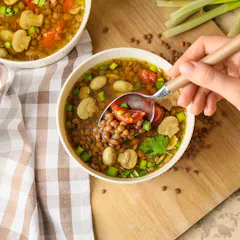
Two-thirds of the UK’s population eat less than one portion of beans each week.

Without policy action and a coordinated global response, ultra-processed foods will continue to rise in human diets, harming health, economies. It’s time to act.
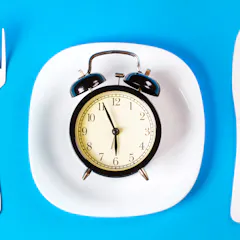
Aligning mealtimes with your body’s natural rhythms can help steady energy, mood and sleep through the darker months.
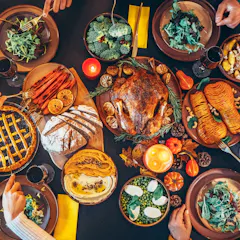
Guilt and discomfort around food can be especially challenging during the holidays. But trusting your body and remembering the social value of sharing meals can help you enjoy yourself.

Hara hachi bu is an eating practice followed by some of the world’s oldest people.

By studying antelope fossils, researchers can revisit long-standing questions about how the Cradle of Humankind’s environment evolved through time.
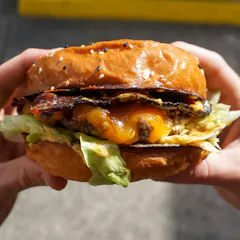
How tasty is it? How healthy is it? Our brains work this out faster than conscious thought.

If you promise dessert after a few more bites of broccoli or carrot, kids can start to see sweets as the ‘prize’ and veggies as the ‘chore’.

A consensus is emerging among scientists that certain foods are addictive for some people. But questions remain about which foods, which people and why.

One in four can achieve prediabetes remission without losing weight.
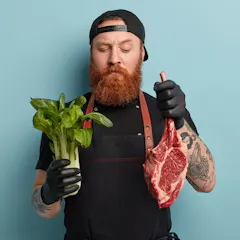
The link between gender and diet.

Influencers claim you’ll lose weight, banish bloating and transform your health. Here’s what the science says.

The vast majority of children will already get more than enough protein as part of their usual diet.

The SHIELD (Sleep, Head Injury prevention, Exercise, Learning, and Diet) mnemonic offers a clear and effective strategy for lowering dementia risk.
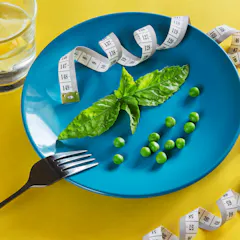
As nutrition misinformation spreads, reflecting on the popularity of diet trends offers insight into how individuals form deep attachments to their food choices.

Almost three in four Australian children drank sugar drinks every day in 1995. Now, it’s just one in four.

Recent headlines suggested that pregnancy-like food cravings or aversions are a telltale sign of cancer. An oncologist explains.

For most of us, there is no benefit in consuming protein above the recommended level.

Beyond calories and vitamins, our food hides thousands of compounds. Scientists are only beginning to explore this ‘dark matter’.
Top contributors
-

Laureate Professor in Nutrition and Dietetics, University of Newcastle
-
Program Director of Nutrition and Food Sciences, Accredited Practising Dietitian, Adelaide University
-
Professor of Community Health and Wellbeing, The University of Queensland
-
Honorary Associate Professor, University of Leicester
-
Professor of Genetic Epidemiology, King's College London
-
Accredited Practising Dietitian and Lecturer, Southern Cross University
-
Associate Professor, Deakin University
-
Senior Lecturer, Nutrition and Food Science, Australian Catholic University
-
Clinical Trials Director, Department of Endocrinology, RPA Hospital, University of Sydney
-
Professor of Public Health Policy, Deakin University
-
Associate Professor of Gastroenterology, School of Medicine, University of Washington
-
Programme Lead Nutrition and Health, Edge Hill University
-
Associate Professor of Medical Education, University of Nottingham; University of Lincoln
-
Former Lecturer in Nutrition and Dietetics, King's College London
-
Professor, School of Medical, Indigenous and Health Sciences. Advanced Accredited Practising Dietitian, University of Wollongong