
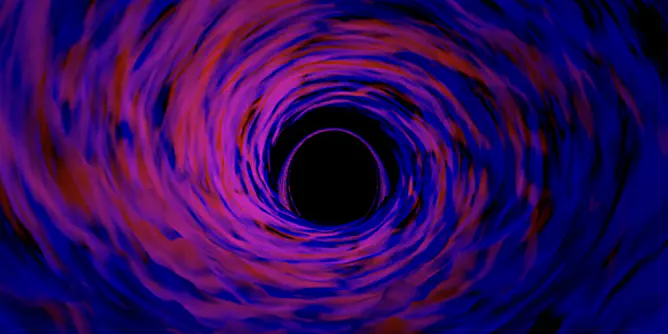
Astronomers have found that mysterious dark energy may originate in black holes.
Articles on Dark matter
Displaying 41 - 60 of 120 articles

By spotting and counting tiny galaxies, we can work out how much dark matter is hiding in the cosmos.
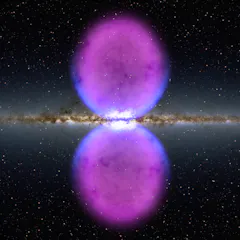
A glowing blob in the sky known as “the cocoon” may be caused by pulsars in the Sagittarius dwarf galaxy.
A comparison of star-forming galaxies suggests, surprisingly, that dark matter and visible matter do interact – taking us closer to understanding what keeps the galaxies together.
Regular matter makes up just one-sixth of all the matter in the universe. What would it mean to finally understand what makes up the rest?
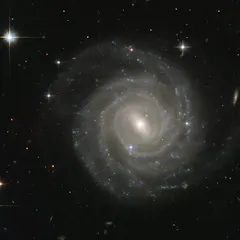
Recent results cast doubt on dark matter.
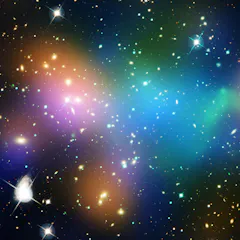
There’s a perfectly good alternative to dark matter, but most scientists aren’t keen on the idea.

Time ends when the universe does.
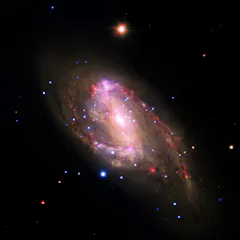
Advanced technologies and the information they collect have revealed how black holes form and behave.
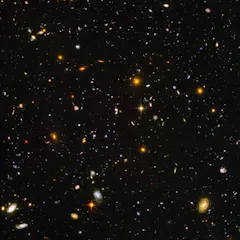
The James Webb Space Telescope is set to launch into orbit in December 2021. Its mission is to search for the first light to ever shine in the universe.

Astronomers know a lot about what’s in outer space – and think it’s possible it never ends.

Plus new research finds a way to speed up the search for dark matter. Listen to episode 4 of The Conversation Weekly.
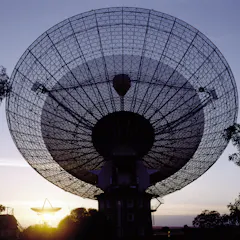
Australian astronomers are part of a prize-winning team that was the first to pinpoint the location of a fast radio burst. But there is much we still don’t know about these mysterious bursts.
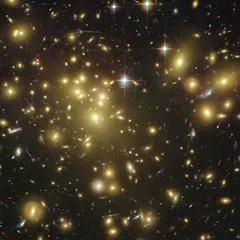
Researchers have found a way to speed up the search for dark matter using technology from quantum computing. By squeezing quantum noise, detectors can now look for axions twice as fast.
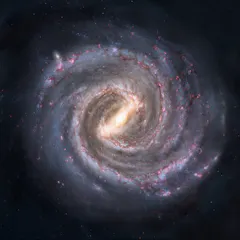
A new method suggests we should aim to detect dark matter haloes by tracing galactic gas.

Neuroscientist Karl Friston claims generative modelling techniques produce more valid predictions than conventional models, but the evidence so far is limited.
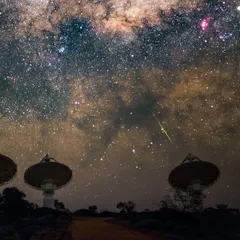
Cosmologists had only been able to find half the matter that should exist in the universe. With the discovery of a new astronomical phenomenon and new telescopes, researchers just found the rest.
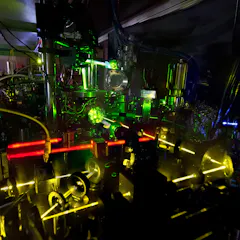
Researchers have made some of the most accurate clocks imaginable in recent years, but the trick is harnessing those clocks to electronics. Using lasers to tune microwaves bridges the gap.
More than 70% of the Universe is made of ‘dark energy’, the mysterious stuff even stranger than dark matter
The Conversation17.1 MB (download)
Today on the podcast, we explore what we know about dark energy, believed to be responsible for the acceleration of the expansion of the Universe.
A recent experiment with atomic nuclei is hard to square with our current understanding of physics.
Top contributors
-

Professor of Astronomy, Liverpool John Moores University
-
Pro Vice-Chancellor and Executive Dean, University of Surrey
-
Professor of Astrophysics, University of Sydney
-
Senior Lecturer, School of Mathematics and Physics, University of Surrey
-
Associate Professor in Astronomy, Monash University
-
Postdoctoral Fellow in Quantum Physics, University of Colorado Boulder
-
Astronomer, CSIRO
-
Professor of astrophysics (dark matter and cosmology), Durham University
-
Pro Vice-Chancellor Flagship Initiatives, Swinburne University of Technology
-
Professor of Astrophysics, Swinburne University of Technology
-
Royal Society University Research Fellow and Lecturer in Particle Physics, UCL
-
Professor of Astrophysics and Royal Society University Research Fellow, University of Hertfordshire
-
Postdoctoral Research Fellow in Astrophysics, University of Portsmouth
-
Professor, Physics & Astronomy, Bishop's University
-
University Distinguished Professor of Astronomy, University of Arizona