

The early universe was kind of like a big game of musical chairs – scientists are figuring out how many particles were able to find ‘seats’ to understand the cosmos.
Articles on Dark matter
Displaying 1 - 20 of 120 articles
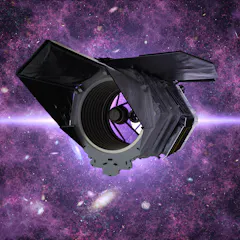
The Nancy Grace Roman Space Telescope will take a broad survey of space and use it to create a map of the universe.
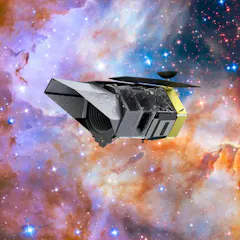
The Nancy Grace Roman telescope will probe dark energy and discover exoplanets.

New telescopes are challenging the idea that the cosmic web fades into a uniform, directionless distribution. It may be closer to a tangled yarn than a misty fog.
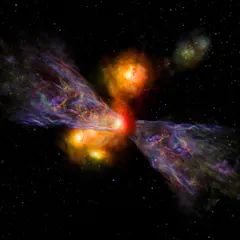
All things die, even galaxies.
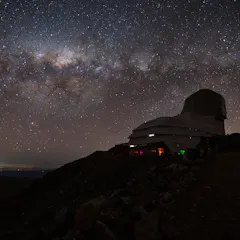
Scientists study small galaxies to look for hints of dark matter in the universe.

The black holes could be relics from a time before the Big Bang.

The Rubin Observatory in Chile has the largest camera ever built – and is set to find objects never before seen by human eyes.

Dark matter doesn’t seem to interact with the matter we can see and touch, so scientists look for it in unusual places, like faraway galaxies and underground detectors.
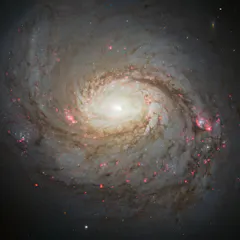
Normal matter – which makes up everything we see and touch – isn’t the only type of matter present in the universe.

Most of the universe is made up of dark matter and dark energy. The majority of everything else is dispersed throughout space as tiny particles.
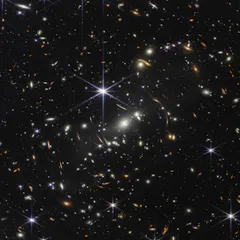
Some unique ‘stars’ might be fueled by dark matter annihilation.
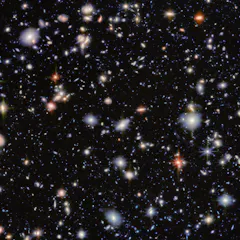
The true “informational age” of the cosmos may be 62 billion years, not just the 13.8 billion years of our current expansion.

Everything bends space-time. Sometimes, we can even see this effect – and learn a lot from it.

The Vera C. Rubin Observatory will capture enough detail to see a golf ball from 25km away.
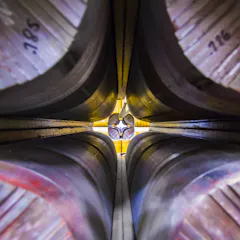
New results resolve the long-standing anomaly of the muon’s magnetic moment – and may offer hints about the nature of dark matter.
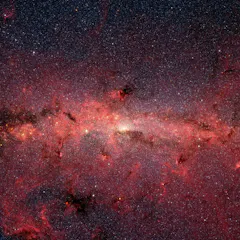
Sometimes, looking inward, to the dynamic, glowing centre of our own galaxy, reveals the most unexpected hints of what lies beyond.
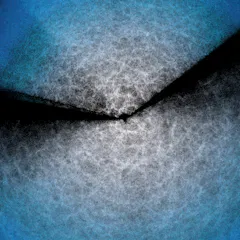
The universe’s expansion is accelerating, not decelerating. Our understanding of how the universe works may need an update.
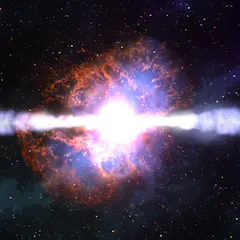
A new study on exploding stars has provided the first evidence for an alternative model of the universe, known as Timescape.
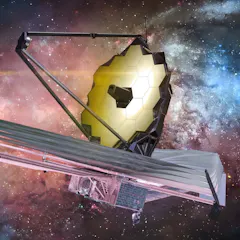
Some of the earliest galaxies found with JWST are also the brightest. That’s a problem for our ideas about the universe.
Top contributors
-

Professor of Astronomy, Liverpool John Moores University
-
Pro Vice-Chancellor and Executive Dean, University of Surrey
-
Professor of Astrophysics, University of Sydney
-
Senior Lecturer, School of Mathematics and Physics, University of Surrey
-
Associate Professor in Astronomy, Monash University
-
Postdoctoral Fellow in Quantum Physics, University of Colorado Boulder
-
Astronomer, CSIRO
-
Professor of astrophysics (dark matter and cosmology), Durham University
-
Pro Vice-Chancellor Flagship Initiatives, Swinburne University of Technology
-
Professor of Astrophysics, Swinburne University of Technology
-
Royal Society University Research Fellow and Lecturer in Particle Physics, UCL
-
Professor of Astrophysics and Royal Society University Research Fellow, University of Hertfordshire
-
Postdoctoral Research Fellow in Astrophysics, University of Portsmouth
-
Professor, Physics & Astronomy, Bishop's University
-
University Distinguished Professor of Astronomy, University of Arizona