
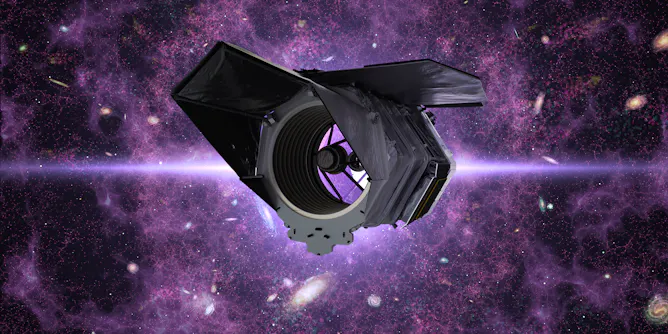
The Nancy Grace Roman Space Telescope will take a broad survey of space and use it to create a map of the universe.
Articles on Dark energy
Displaying 1 - 20 of 64 articles
A recent paper claimed that dark energy might not exist. But new research suggests this conclusion was premature.
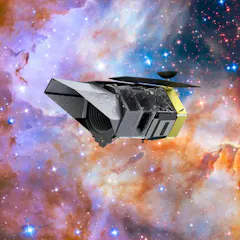
The Nancy Grace Roman telescope will probe dark energy and discover exoplanets.
The expansion of the universe may not in fact be accelerating, calling dark energy into question.

New telescopes are challenging the idea that the cosmic web fades into a uniform, directionless distribution. It may be closer to a tangled yarn than a misty fog.
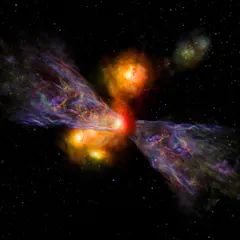
All things die, even galaxies.

The Rubin Observatory in Chile has the largest camera ever built – and is set to find objects never before seen by human eyes.

Most of the universe is made up of dark matter and dark energy. The majority of everything else is dispersed throughout space as tiny particles.
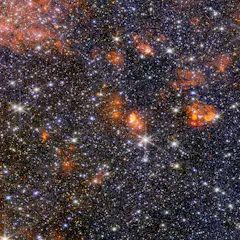
The universe appears to expand in a way that is consistent with string theory.
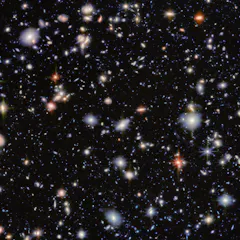
The true “informational age” of the cosmos may be 62 billion years, not just the 13.8 billion years of our current expansion.

Everything bends space-time. Sometimes, we can even see this effect – and learn a lot from it.
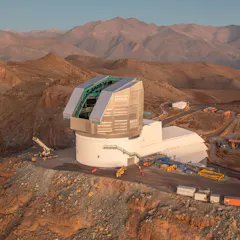
The Vera C. Rubin Observatory will capture enough detail to see a golf ball from 25km away.
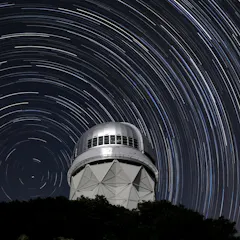
Scientists have conflicting theories on why the universe is expanding at an accelerating rate. New measurements from a massive collaboration complicate these ideas.
The universe’s expansion is accelerating, not decelerating. Our understanding of how the universe works may need an update.

A project to map galaxies across the universe may have spied cracks in the foundation of our understanding of the cosmos.
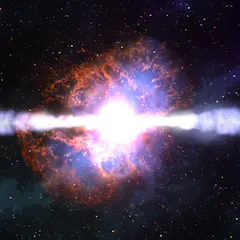
A new study on exploding stars has provided the first evidence for an alternative model of the universe, known as Timescape.
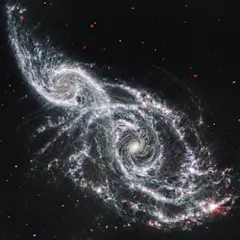
Humans may still appear even if the universe were very different. In fact, we may not live in the most likely of possible universes.
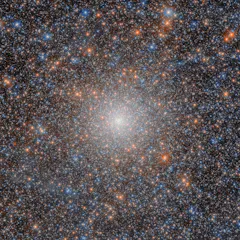
If dark energy isn’t constant, we may need to rewrite the standard model of cosmology.
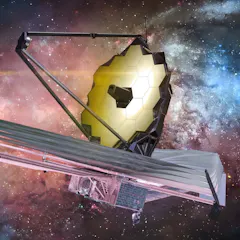
Some of the earliest galaxies found with JWST are also the brightest. That’s a problem for our ideas about the universe.
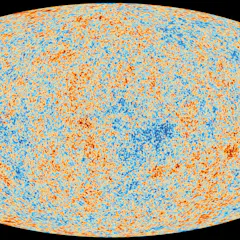
We may be on the cusp of finally breaking the standard model of cosmology.
Top contributors
-

Pro Vice-Chancellor and Executive Dean, University of Surrey
-
Reader in Astrophysics, UCL
-
Professor of Astrophysics, University of Sydney
-
Lecturer and ARC DECRA Fellow, Queensland University of Technology
-
Dean of Science, University of California, Santa Cruz
-
Astronomer, CSIRO
-
Senior Lecturer, School of Mathematics and Physics, University of Surrey
-
Professor, The University of Queensland
-
Professor of Physics, Heriot-Watt University
-
Adjunct professor, Physics, L’Université d’Ottawa/University of Ottawa
-
Professor and Director of the Centre of Excellence for Data Science, AI and Modelling, University of Hull
-
Professor of Astrophysics, University of Cambridge
-
Professor of astrophysics (dark matter and cosmology), Durham University
-
Dalhousie University
-
Professor, University of KwaZulu-Natal