
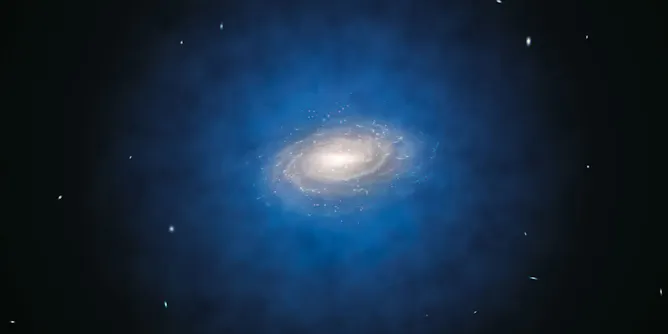
While invisible, dark matter completely dominates our Milky Way, recent measurements of just how much dark matter there is have revealed a bit of a mystery. In a paper published today in the Astrophysical…
Articles on Dark matter
Displaying 101 - 120 of 120 articles
Katherine Mack, astrophysicist at the University of Melbourne, answered questions posed by the public on Reddit. The Conversation has curated the highlights. Dark Matter How do you explain dark matter…
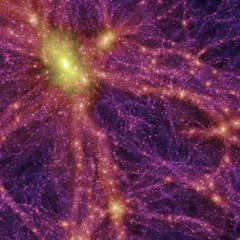
According to cosmologists, galaxies are joined together by filaments, quite literally. These filaments form the cosmic web and are made of mostly dark matter, many stars and some gas. Observing these filaments…
A US team with a highly sensitive dark matter detector has just finished its first run. It has found nothing, and that is still big news. Physicists can explain accurately the behaviour of what makes matter…
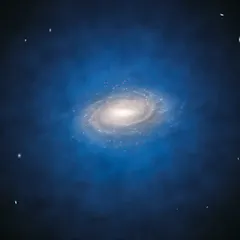
Astronomers have been searching for a mysterious substance called “dark matter” since the 1930s. Most scientists still believe it exists, despite many fruitless decades. Now we propose a new theory of…
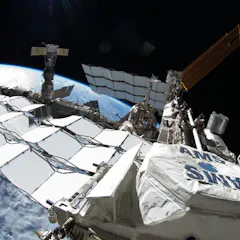
Nobel prizewinner Samuel Ting, early this morning (AEDT), announced the first results from the Alpha Magnetic Spectrometer (AMS) search for dark matter. The findings, published in Physical Review Letters…
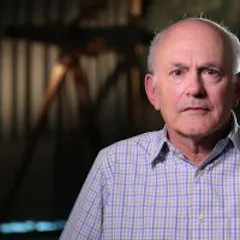
Australian astronomer Ken Freeman has won the 2012 Prime Minister’s Prize for Science, more than 40 years after he revolutionised his field with his research on dark matter. Professor Freeman, the Duffield…
Part of the invisible dark matter skeleton of the universe has been directly detected where more than half of all matter…
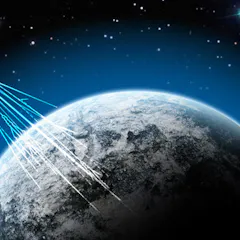
It’s been the defining question of high-energy astrophysics for the past century: where do cosmic rays come from? New findings from the IceCube Neutrino Observatory at the South Pole have brought us closer…
In a result which has baffled astronomers at NASA’s Chandra X-ray Observatory, dark matter has been observed separating from…
The collision of several, massive galaxy clusters has left behind a clump of dark matter, potentially challenging existing…
Two additional dwarf galaxies that appear to be satellites of Andromeda, the closest spiral galaxy to Earth, have been discovered…

A radical discovery by my colleagues and I – reported this week in Physical Review Letters – could help explain why it was possible for life (at least as we know it) to develop on Earth, but not in other…
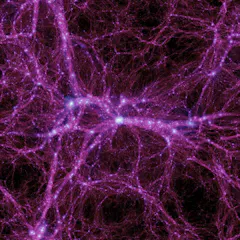
Australian astronomers have shed new light on the cosmic filament that binds the Milky Way together, providing new clues on how the galaxy is formed and how it grows. The Milky Way, home to our solar system…
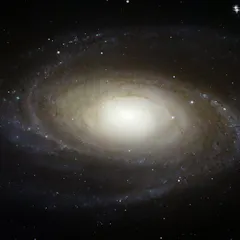
Some astronomical questions can only be answered by looking at the whole sky all at once but the technology to do that doesn’t exist yet. Enter the new ARC Centre of Excellence for All-sky Astrophysics…
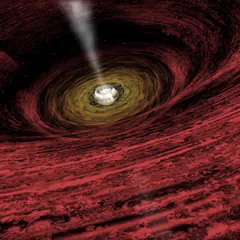
Astrophysicists have discovered black holes that formed up to 12.5 billion years ago – among the oldest examples of the phenomena ever seen. Black holes are objects in the Universe where a large amount…

Predicting the future is a mug’s game. When I reflect back on what we thought we knew at the start of my research career in the mid-1990s, I sound like a wizened octogenarian, recalling a simpler time…

In questioning the fundamental nature of the universe, cosmology regularly grabs the public’s attention. But in an era in which we are observing deeper and more widely than ever before, our knowledge of…
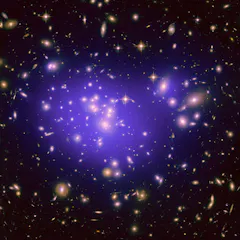
Dark matter has worked its way back into the news in the last few days with the completion of a detection experiment in a tunnel deep under the Italian Alps. Researchers from Columbia University used a…
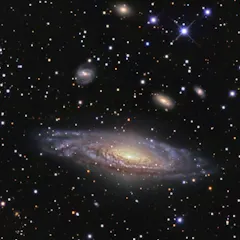
Where are we within our galaxy? How did our galaxy form? How did it evolve over the aeons? Astronomers have been asking these questions for the past century, and have recently begun discerning the answers…
Top contributors
-

Professor of Astronomy, Liverpool John Moores University
-
Pro Vice-Chancellor and Executive Dean, University of Surrey
-
Professor of Astrophysics, University of Sydney
-
Senior Lecturer, School of Mathematics and Physics, University of Surrey
-
Associate Professor in Astronomy, Monash University
-
Postdoctoral Fellow in Quantum Physics, University of Colorado Boulder
-
Astronomer, CSIRO
-
Professor of astrophysics (dark matter and cosmology), Durham University
-
Pro Vice-Chancellor Flagship Initiatives, Swinburne University of Technology
-
Professor of Astrophysics, Swinburne University of Technology
-
Royal Society University Research Fellow and Lecturer in Particle Physics, UCL
-
Professor of Astrophysics and Royal Society University Research Fellow, University of Hertfordshire
-
Postdoctoral Research Fellow in Astrophysics, University of Portsmouth
-
Professor, Physics & Astronomy, Bishop's University
-
University Distinguished Professor of Astronomy, University of Arizona