
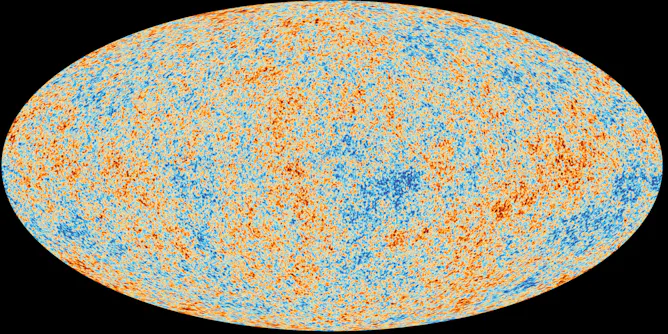
We may be on the cusp of finally breaking the standard model of cosmology.
Articles on Dark matter
Displaying 21 - 40 of 120 articles
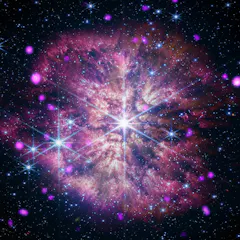
Right now, it looks like cosmology is at a tipping point.

The latest results from the LZ dark matter experiment have drawn a blank – but the elusive particles are running out of places to hide.
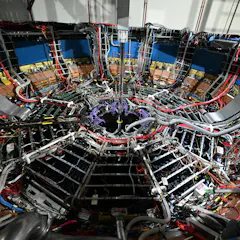
Measurements of 16 ‘antihyperhydrogen’ nuclei may help resolve mysteries of the universe’s exotic matter.
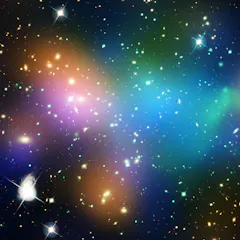
Cosmology does not need dark matter or dark energy in an expanding universe that allows the constants of nature to evolve, and light loses energy as it travels vast distances.
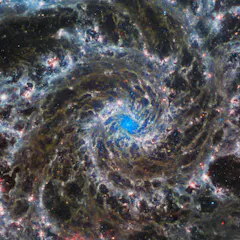
Recent research shows the main alternative theory to dark matter, Milgromian dynamics, is failing.
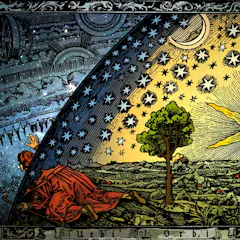
Back when Henk Hoekstra started his PhD, atmosphere turbulence and optical imperfections prevented us from accurately observing dark matter. He tells us why Euclid is a game changer.

An exciting new experiment is being set up at Yale university in the US.
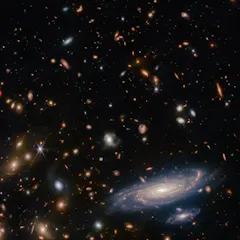
We may be able to find traces of dark matter star explosions.
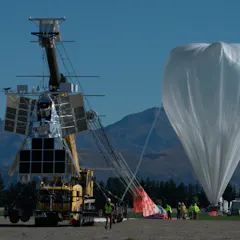
Giant helium balloons are a cheap, more environmentally friendly alternative to rocket launches – and you get the satellite back.
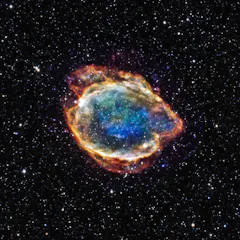
After a decade studying thousands of supernovae, astronomers are still perplexed by the enigma that led Einstein to his ‘greatest mistake’.
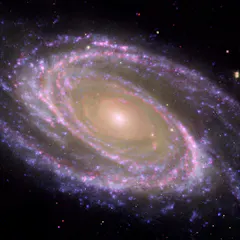
The nature of dark energy remains one of the biggest puzzles in cosmology.

From improving our understanding of dark matter to revealing the location of Earth 2.0, the Extremely Large Telescope promises answers to some of the biggest scientific questions of our time.
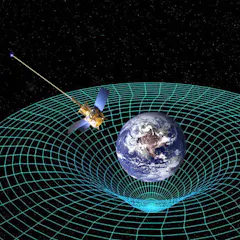
The gravitational field can affect space and time: the stronger gravity is, the slower time moves. This prediction of General Relativity can be used to reveal hidden forces acting on dark matter.
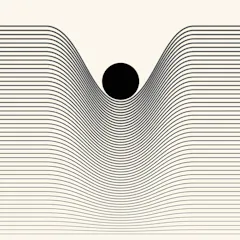
Einstein’s theory of general relativity suggests that our universe originated in a Big Bang. But black holes, and their gravitational forces, challenge the limits of Einstein’s work.

To detect dark matter, you need to build an ultra-sensitive detector and put it somewhere ultra-quiet. For one physics collaboration, that place is almost a mile under Lead, S.D.
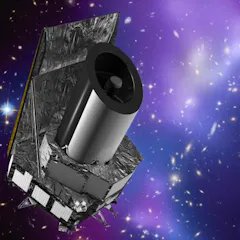
The Euclid mission is preparing to launch on July 1.
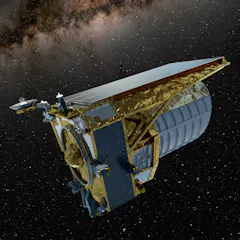
A spacecraft set to launch this year will throw a spotlight on the mysterious ‘dark side’ of the universe.
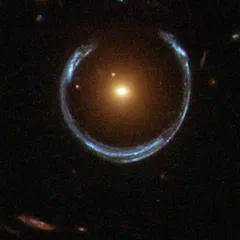
For decades physicists have argued over the nature of the elusive dark matter that pervades the Universe. A clever new study uses gravitational lensing to bring new evidence to the debate.
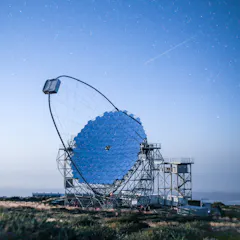
The most energetic events in the universe shower us with unbelievably energetic particles of light. Capturing these can help us to solve some enticing cosmic mysteries.
Top contributors
-

Professor of Astronomy, Liverpool John Moores University
-
Pro Vice-Chancellor and Executive Dean, University of Surrey
-
Professor of Astrophysics, University of Sydney
-
Senior Lecturer, School of Mathematics and Physics, University of Surrey
-
Associate Professor in Astronomy, Monash University
-
Postdoctoral Fellow in Quantum Physics, University of Colorado Boulder
-
Astronomer, CSIRO
-
Professor of astrophysics (dark matter and cosmology), Durham University
-
Pro Vice-Chancellor Flagship Initiatives, Swinburne University of Technology
-
Professor of Astrophysics, Swinburne University of Technology
-
Royal Society University Research Fellow and Lecturer in Particle Physics, UCL
-
Professor of Astrophysics and Royal Society University Research Fellow, University of Hertfordshire
-
Postdoctoral Research Fellow in Astrophysics, University of Portsmouth
-
Professor, Physics & Astronomy, Bishop's University
-
University Distinguished Professor of Astronomy, University of Arizona